The Four Main Cabin Categories
Every cruise ship organizes its accommodations into four broad tiers: inside cabins, oceanview cabins, balcony cabins, and suites. The label tells you what kind of window - if any - you get, which directly shapes how much natural light, fresh air, and private outdoor space comes with your room. Understanding what each category actually delivers day-to-day is the foundation of a good cabin choice.
| Inside cabin typical size | 150-180 sq ft (Varies by cruise line and ship class) |
| Balcony private outdoor area | 35-50 sq ft (typical) (Aft and premium balconies may be larger) |
| Cabin categories | Inside, Oceanview, Balcony, Suite (Standard across mainstream cruise lines) |
| Natural light | None (inside), fixed window (oceanview), glass door (balcony), varied (suite) |
| Private outdoor space | Only balcony and most suite categories |
| Suite extras (common) | Concierge access, priority boarding, butler service (select lines) (Varies significantly by cruise line) |
For a deeper look at how ship type affects the cabin experience, see our guide to cruise ship sizes.
Inside Cabins: No Window, Lower Price
An inside cabin (also called an interior stateroom) has no exterior window or porthole. The room is fully enclosed by other cabins or ship corridors on all sides. That means complete darkness when the lights are off - a genuine benefit for light-sensitive sleepers - but no natural daylight during the day.
Space varies by ship, but most inside cabins on mainstream cruise lines run roughly 150-180 square feet. You get a bed (typically convertible between twin and queen configurations), a small bathroom with shower, a closet, a safe, a television, and modest desk or vanity space. Storage is tighter than it looks on the deck plan - see our packing guide for cabin travelers before you pack.
Inside cabins are typically the lowest-priced category on any sailing. If you plan to spend most of your time on deck, at ports, or in public areas, this category offers solid value.
Oceanview Cabins: Light Without the Balcony
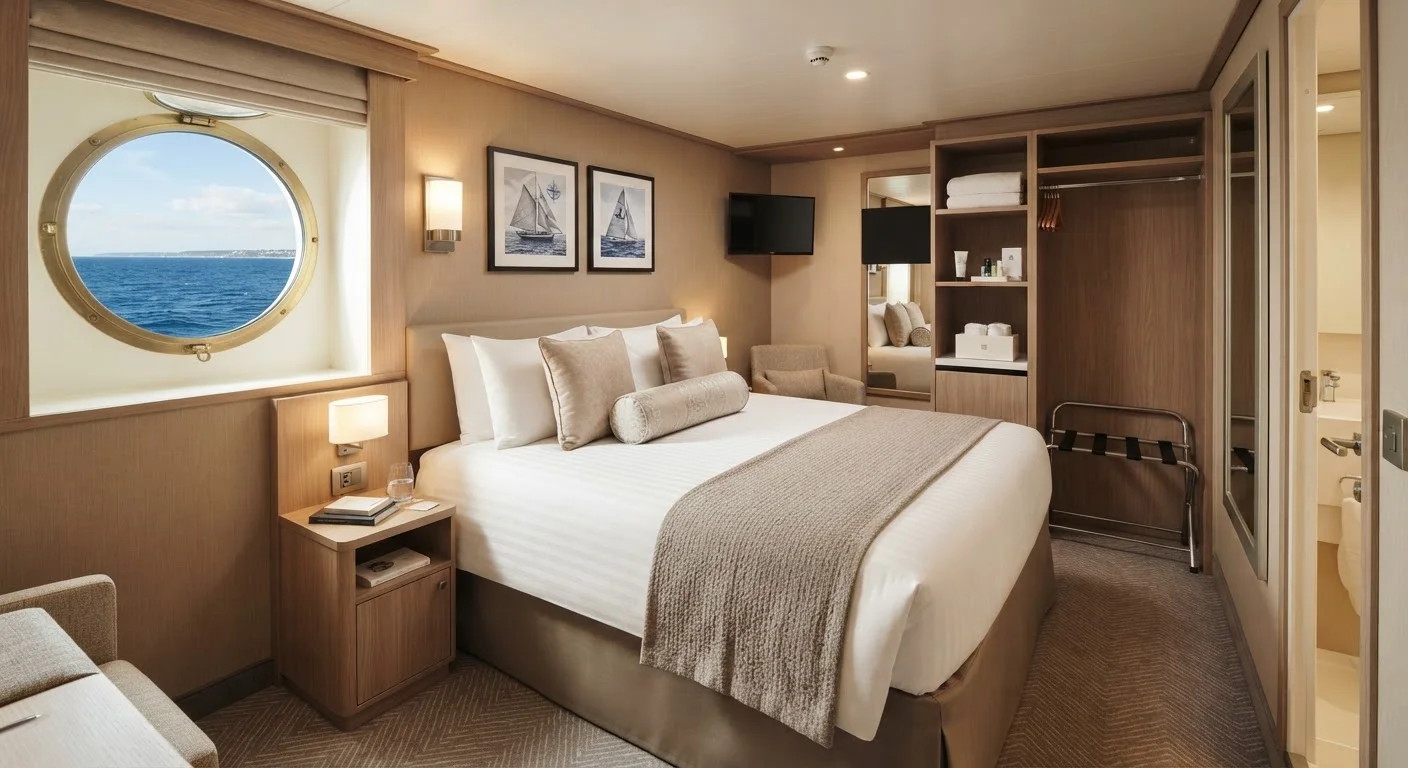
An oceanview cabin adds a fixed, sealed window or porthole to the inside cabin footprint. You gain natural light and a visual connection to the sea, but the window does not open and there is no private outdoor space. On older ships, oceanview windows are often small portholes; on newer vessels they can be floor-to-ceiling picture windows.
The square footage is generally similar to inside cabins, though some ships place larger oceanview rooms on lower decks where balcony construction isn't practical. The tradeoff is location: oceanview cabins often sit on lower or mid-ship decks, which can mean a smoother ride but fewer panoramic vistas.
Inside cabin
A stateroom with no exterior window or porthole, fully enclosed by surrounding ship structure. Typically the lowest-priced cabin category.
Oceanview cabin
A stateroom with a fixed, sealed window or porthole providing natural light and an exterior view. The window does not open and there is no balcony.
Balcony cabin
A stateroom with a sliding glass door leading to a private outdoor deck space. Also called a veranda stateroom.
Mini-suite
A cabin category between a standard balcony room and a full suite, typically featuring a larger floor plan with a defined seating area and larger balcony.
Stateroom
The cruise industry term for any passenger cabin, regardless of category or size.
Aft cabin
A cabin located at the rear of the ship. Aft balconies are often larger but may experience more engine vibration and exhaust depending on the ship.
Balcony Cabins: Private Outdoor Space
A balcony cabin (often called a veranda stateroom) includes a private outdoor area - typically 35-50 square feet - with a sliding glass door, a small table, and one or two chairs. You can step outside in the morning, watch a port approach from your own space, or simply leave the door cracked for fresh sea air. This is the feature most first-timers say they wish they had understood before booking.
The interior square footage is similar to oceanview cabins, though some ships build balcony rooms slightly larger. On upper and aft decks, balconies can be significantly bigger, though aft-facing positions may experience more engine vibration and noise. Forward-facing balconies can be windier in transit.
Balcony cabins carry a noticeably higher price than inside or oceanview rooms. Whether the premium makes sense for your trip depends on itinerary, travel style, and how much time you'll spend in the cabin. Our article comparing inside and balcony staterooms walks through that decision in detail.
Suites: More Space, More Services
Suite categories vary enormously by ship and cruise line, but they share a common thread: substantially more living space and additional services. A standard mini-suite typically separates sleeping and sitting areas within a single room, often with a larger balcony. Full suites add a separate bedroom, a dining area, a larger bathroom with a tub, and sometimes multiple balconies.
Beyond square footage, suites commonly include dedicated concierge access, priority boarding, reserved deck chairs, butler service on some lines, and access to exclusive dining or lounge areas. These perks can meaningfully change the feel of a sailing - though at correspondingly higher fares.
150-180 sq ft
Typical inside cabin footprint
Most mainstream cruise ships offer inside cabins in this range; premium and luxury lines often provide more generous sizing across all categories.
2-3x
Suite vs. inside cabin space multiplier
Full suites on large ships can offer two to three times the floor area of a standard inside cabin, depending on the ship and suite tier.
Suites are worth considering if you're sailing with a group, traveling with young children who need separate sleeping space, or planning a special-occasion voyage where the cabin itself is part of the experience.
Once you've chosen your cabin type, your next planning step is understanding how meals work. See how cruise ship dining is structured for a full breakdown.