What You're Actually Comparing
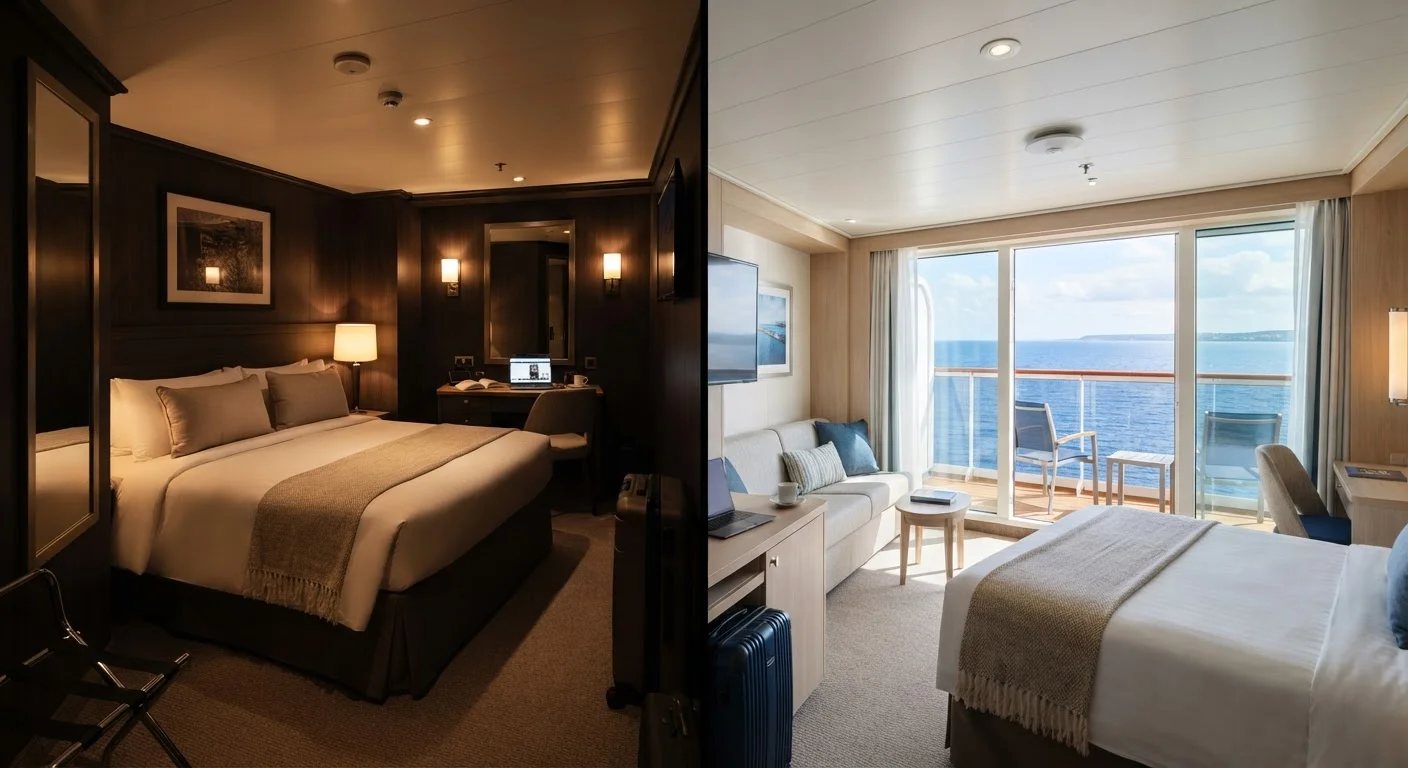
When cruise lines sell cabin categories, they're not just selling square footage - they're selling a specific relationship with light, air, and the sea itself. An inside cabin is an enclosed room with no windows or exterior-facing openings. A balcony stateroom (sometimes called an oceanview veranda cabin) adds a private outdoor deck accessible through a sliding glass door.
Both cabin types are fully functional, self-contained spaces with a bed, bathroom, storage, and climate control. The meaningful differences sit in four areas: cost, light, noise, and how the experience feels during time spent aboard.
For a broader look at how cabin choice fits into the full picture of onboard life, the Onboard Life hub covers what to expect day-to-day once you're sailing.
| Criterion | Inside Cabin | Balcony Stateroom |
|---|---|---|
| Typical cost difference | Lower - baseline cabin tier | Higher - often $200-$600+ more per person |
| Natural light | None - fully enclosed | Yes - glass door and outdoor deck |
| Private outdoor space | No | Yes - private veranda |
| Sleep environment | Pitch dark, ideal for heavy sleepers | Light enters in the morning |
| Noise exposure | Lower - no exterior openings | Wind, ocean, and deck noise possible |
| Best itinerary match | Port-intensive, activity-focused sailings | Scenic routes, sea-day-heavy itineraries |
| Sense of being at sea | Minimal - feels like a hotel room | Strong - visual and sensory connection to ocean |
The Cost Gap - And What It Means in Practice
The price difference between an inside cabin and a balcony stateroom varies by cruise line, ship, itinerary, and booking timing - but the gap is rarely trivial. On a seven-night Caribbean sailing, the difference can range from roughly $200 to over $600 per person depending on the season and ship class. That figure matters because it compounds across two travelers and competes directly with your excursion budget.
30-50%
Typical balcony premium over inside cabin price
Industry pricing patterns generally show balcony staterooms carrying a 30-50% higher base fare than comparable inside cabins on the same sailing.
~180 sq ft
Average inside cabin size on mainstream cruise ships
Most mainstream cruise line inside cabins range from 150 to 185 square feet, with the balcony adding roughly 40-65 square feet of outdoor space in veranda staterooms.
First-timers often underestimate how quickly ancillary costs accumulate onboard. Gratuities, specialty dining, and shore excursions each carry their own price tags. If you haven't reviewed those yet, why first-time cruisers are often caught off guard by extra costs is worth reading before you finalize any cabin decision.
The practical question is not whether a balcony costs more - it always does - but whether the value it delivers justifies the premium given your specific itinerary and travel style.
Light, Air, and the Psychological Difference
Inside cabins are dark. That sounds obvious, but the experiential reality surprises many first-timers. Without a porthole or window, there is no natural light cue for morning, no visual connection to weather or surroundings, and no way to tell whether the ship is at sea or docked. Some travelers genuinely appreciate this - it produces hotel-blackout-level sleep conditions regardless of the time of day. Others find it disorienting after two or three nights.
A balcony stateroom changes this completely. Morning light enters through the glass door, you can hear the ocean when it's calm, and stepping outside for five minutes provides a sensory anchor to where you actually are. On scenic itineraries - Alaska, the Norwegian coast, the Greek islands - that connection is part of the journey, not a luxury add-on.
Balcony Location Affects the Experience
Not all balcony staterooms deliver the same experience. Cabins at the front of the ship tend to be windier and can feel noisier at sea speed, while those directly above nightclub or theater decks may carry sound into late evening hours. When booking a balcony, checking the specific deck plan to identify your cabin's position relative to high-traffic venues and the ship's bow can make a real difference in comfort.
It's worth noting that balcony location on the ship matters. Cabins near the bow (front) can experience significant wind and motion. Cabins above entertainment decks may carry noise into the evening. Midship balconies on upper-middle decks tend to offer the most stable, quiet experience - a detail worth confirming when you select a specific cabin number.
Matching Cabin Type to Your Itinerary
Itinerary type is the single most useful lens for this decision. On a port-intensive Caribbean itinerary with stops every day, you may be in your cabin only to sleep and change clothes. In that scenario, paying a premium for outdoor space you rarely use is difficult to justify.
Contrast that with an Alaska sailing, where the ship often cruises slowly past glaciers and wildlife for extended stretches. A balcony transforms those passages into a private viewing platform. The same logic applies to transatlantic crossings or repositioning cruises with multiple consecutive sea days - a balcony provides meaningful daily use rather than occasional access.
If you're still deciding between cruise types entirely, ocean cruise vs. river cruise explores how ship size, pace, and scenery factor into the broader choice - context that also informs which cabin features matter most to you.
A useful rule of thumb: the more scenic and slow-paced the itinerary, the stronger the case for a balcony. The more activity-driven and port-focused, the easier an inside cabin is to live with comfortably.