What Each Card Actually Is
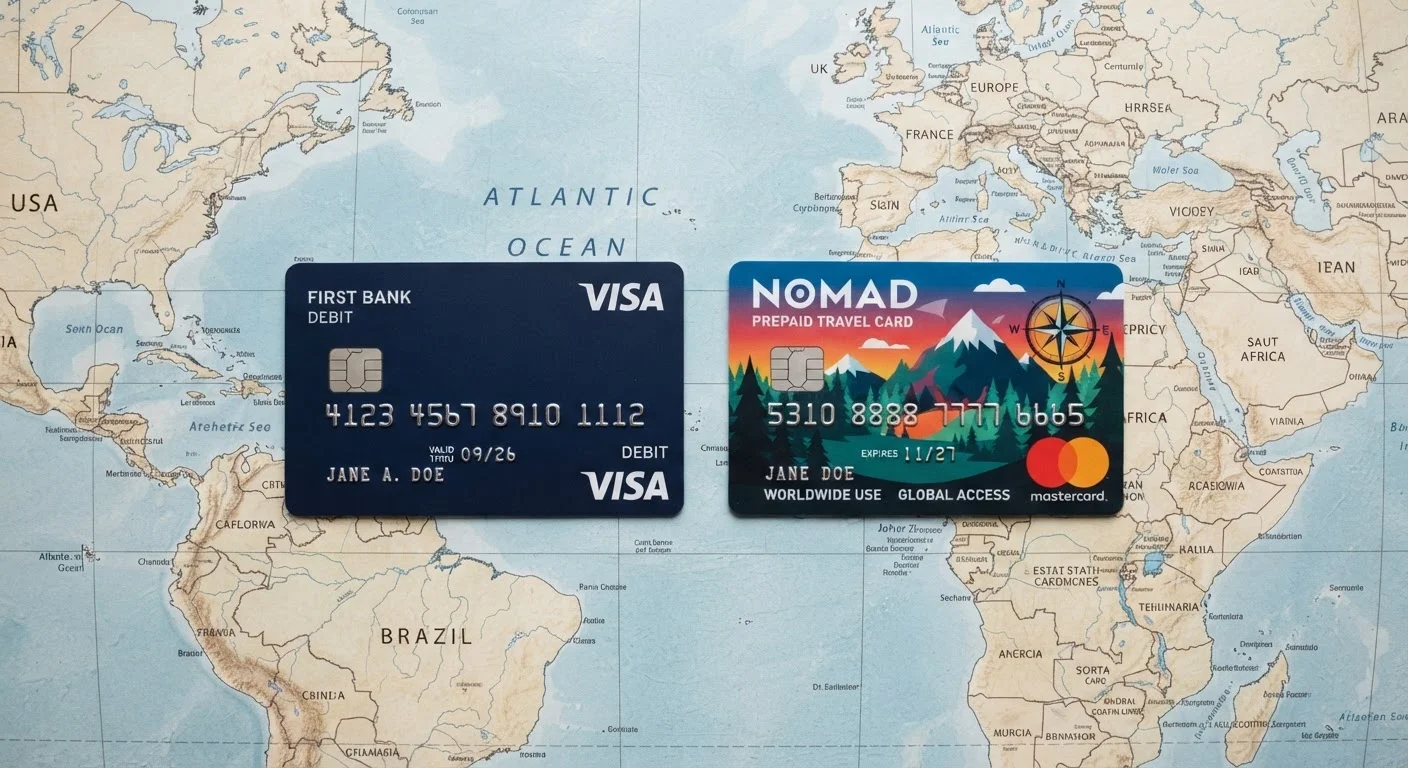
Before comparing fees and features, it helps to understand the fundamental difference between these two tools. An everyday debit card is issued by your bank or credit union and draws funds directly from your checking account in real time. When you use it abroad, your bank converts the foreign currency to US dollars at their exchange rate — often with a foreign transaction fee added on top.
A prepaid travel card works differently. You load money onto the card in advance — either in US dollars (which the card converts when you spend) or in one or more foreign currencies at a rate you accept upfront. The card is not linked to your primary bank account, which means your main funds stay protected even if the card is compromised. For a fuller introduction to how these tools fit into your overall travel money strategy, see Travel Money Explained.
Fee Structures: Where the Real Differences Emerge
Fees are where many first-time travelers get caught off guard. Here is what to watch for with each option.
| Criterion | Everyday Debit Card | Prepaid Travel Card |
|---|---|---|
| Linked to bank account | Yes — draws from checking | No — standalone loaded funds |
| Foreign transaction fee | Often 1–3% (varies by bank) | Often none, but load fees may apply |
| ATM withdrawal fee | Varies; some banks reimburse | Varies by card; check schedule |
| Exchange rate control | Set by bank at time of purchase | Can lock in rate when loading |
| Multi-currency support | No — converts to USD automatically | Often yes — multiple currencies |
| Spending limit control | Capped only by account balance | Capped by loaded amount |
| Fraud exposure | Full account balance at risk | Limited to loaded amount |
| Setup required | None — already in your wallet | Must apply, load, and activate |
Foreign transaction fees on standard debit cards typically run 1–3% per purchase. On a $2,000 trip, that can quietly add $40–$60 to your costs. Some banks — particularly online-focused banks — waive these fees entirely, so checking your account's terms before you leave is essential.
Prepaid travel cards often advertise no foreign transaction fees, but they may charge a load fee when you add money, an inactivity fee if the card sits unused, or a fee to close the card and withdraw remaining funds. Read the fee schedule thoroughly — it is usually available on the card provider's website.
ATM withdrawals deserve special attention. Both card types may charge a flat fee per withdrawal ($2–$5 is common), plus the ATM operator may add its own fee. Minimizing ATM visits by withdrawing larger amounts less frequently is a practical way to reduce these costs. See Cash vs. Card Abroad for a deeper look at managing cash alongside cards.
1–3%
Typical foreign transaction fee on debit cards
Many standard bank debit cards charge this percentage on every international purchase; online and travel-focused banks often waive it.
$2–$5
Common flat ATM withdrawal fee abroad
This fee is charged per withdrawal by many card issuers, separate from any fee the ATM operator itself may add.
Exchange Rates and Currency Control
Exchange rates matter as much as fees, and the two are often bundled together in ways that are not obvious. When you pay with a debit card abroad, your bank applies its own exchange rate at the moment of the transaction — which typically includes a small markup over the mid-market rate (the rate you see on currency converter sites). You do not know the exact rate until after the transaction posts.
Prepaid travel cards allow you to lock in an exchange rate when you load a foreign currency. If the rate is favorable on the day you load, that rate is fixed for those funds. The risk is the reverse: if you load currency and the rate later improves, you have already committed to the earlier rate. This makes prepaid cards a planning tool rather than a guaranteed money-saver — the outcome depends on rate timing.
For travelers visiting a single country, loading the local currency in advance can simplify budgeting considerably. For multi-destination trips across Europe or Southeast Asia, a card that holds multiple currencies may reduce friction and conversion costs. This ties directly into overall trip budget planning — knowing your spending currency in advance helps you set realistic limits.
Security, Liability, and What Happens If Things Go Wrong
This is an area where the two cards behave very differently, and it matters more than many first-timers expect.
If your debit card is stolen and used fraudulently, your bank's liability protection kicks in — but the money may already be gone from your checking account while the dispute is investigated. US federal consumer protection rules (Regulation E) limit your liability for unauthorized transactions, but the timeline for reimbursement varies by bank. Reporting the loss quickly is critical.
A prepaid travel card contains only the funds you loaded — your main bank account is untouched. This caps your maximum loss to whatever is on the card. Many prepaid cards also offer PIN protection and the ability to freeze the card instantly through an app, which adds a practical layer of control while traveling.
Debit Card Fraud Liability: Know Your Rights
In the US, federal Regulation E limits consumer liability for unauthorized debit card transactions, but the protections are strongest when you report the loss promptly — generally within two business days. After that window, your potential liability increases. Always report a lost or stolen card to your bank immediately, even from abroad. Check your bank's specific policies before you travel, as terms vary.
The Prepaid Travel Cards guide covers card protection features and how to handle a lost card abroad in more detail. Most experienced travelers carry at least two payment methods — a debit card and a backup — to avoid being stranded if one is blocked or lost.
Which Card Fits Your First Trip?
There is no single right answer, but there is a practical framework. Start by reviewing your existing debit card's international fee schedule — if your bank charges no foreign transaction fees and reimburses ATM fees, you may not need anything else for a single-country trip.
If your bank charges fees, or if you want stricter spending control, a prepaid travel card loaded with your destination's currency is worth considering. Load only what you plan to spend, keep a record of your fee schedule, and plan to use it alongside — not instead of — a backup payment method.
For a comprehensive view of how these decisions fit into your full financial planning for travel, the Travel Money Complete Planning Guide walks through every stage from pre-trip budgeting to handling emergencies. If you are still deciding whether to travel internationally at all, Domestic vs. International can help you frame that decision first.
This article is for general informational purposes only and does not constitute personalized financial advice. Fee structures, exchange rates, and consumer protections vary by institution and change over time. Verify current terms directly with your bank or card provider before traveling.