Why Your First Five Minutes in a Room Matter
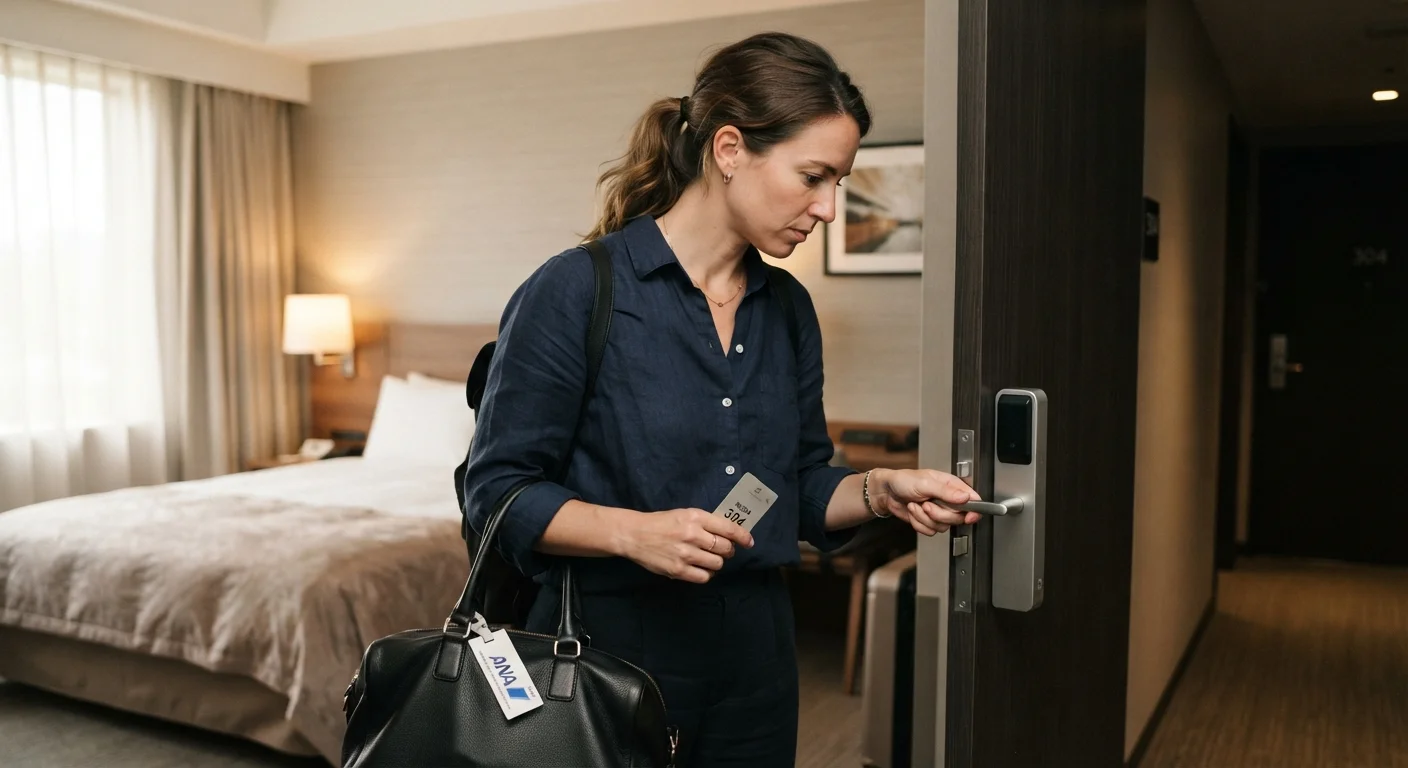
Most accommodation security problems are not the result of elaborate schemes — they are the result of unnoticed vulnerabilities that a brief check would have caught. A broken lock, a door that does not fully close, or an unknown connecting entrance are issues you can address immediately at check-in, before exhaustion sets in and before you have unpacked valuables.
This applies whether you are staying in a full-service hotel, a budget hostel, or a short-term rental. The accommodation type changes the specific risks, but the core habit — do a quick safety sweep before settling in — is universal. If you have not yet booked, our pre-booking checklist covers what to ask about security before you confirm a reservation.
A Door Wedge Costs Under Five Dollars
A rubber door wedge is one of the most practical travel security tools available. It braces the door from the inside and works even when a lock is flimsy — particularly useful in budget hotels, hostels, and older rentals. Pack one and use it every night.
What to Check and What to Do If Something Is Wrong
The steps below are designed to take under 15 minutes. Work through them in order and do not skip the fire exit check — it is the one most travelers skip and the one that matters most in a real emergency.
What you will need
Rubber door wedge
Braces the room door from the inside to prevent unauthorized entry, especially in rooms with weak locks.
Portable door alarm
Attaches to the door handle and emits a loud alert if the door is opened while you sleep.
Small flashlight or phone torch
Helps you navigate unfamiliar corridors during a power outage or fire alarm at night.
Inspect the room door and lock before unpacking
Before you set down your bags, test the door lock from both sides. The deadbolt should engage smoothly and the door should close flush against the frame with no visible gaps. Check whether the door has a chain or secondary latch — use it every time you are inside the room. If the lock feels loose, sticks, or does not engage properly, call the front desk immediately and ask to be moved or have maintenance called.
Check connecting doors and windows
Many hotel rooms have a connecting door to the adjacent room. Verify that it is locked from your side and cannot be pushed open. Similarly, check all windows — they should lock securely. In upper-floor rooms this is less of a physical intrusion risk, but an unsecured window can also be a safety hazard, particularly if you have children with you.
Locate fire exits and emergency evacuation routes
Walk to the nearest fire exit before you unpack. Count the number of doors between your room and the exit — this matters if you need to navigate a smoke-filled corridor in the dark. Look for the posted evacuation map on the back of your room door and note the meeting point outside. Do this even if it feels overly cautious; it takes less than two minutes.
Test the in-room safe and decide what to store
Most hotels and many vacation rentals provide an in-room safe. Test it by setting a code, closing it, and confirming it locks before storing anything inside. Use it for your passport, extra cash, a spare payment card, and any irreplaceable items. If there is no in-room safe, the front desk will typically hold valuables in a secure area — ask at check-in. See our guidance on keeping your belongings safe in unfamiliar places for a broader set of habits worth building.
Note local emergency numbers and the property's address
Write down — or save to your phone — the local emergency services number, the property's full street address, and the front desk phone number. In an emergency, knowing your exact address lets you give clear information to dispatchers. Keep this note accessible, not buried in a bag.
Trust your instincts and request a room change if needed
If something feels off — poor lighting in the corridor, an isolated location within the property, an unusual smell, or an unexplained noise — you are entitled to ask for a different room. Most properties will accommodate a reasonable request without friction. You do not need to justify discomfort.
Verify Emergency Numbers Before You Sleep
Emergency service numbers vary by country — 911 works in the US and Canada but not most international destinations. Write down the local police, fire, and ambulance numbers as soon as you check in. Many hotels list these on a card near the phone, but confirm them with the front desk if you are unsure.
Never Share Your Room Number Publicly
If a front desk agent announces your room number aloud during check-in, politely ask for a new assignment or request they write it down instead. Avoid repeating your room number in elevators or lobbies. This simple habit significantly reduces the risk of opportunistic intrusion.
If you encounter a problem at any point, the correct response is always to contact the front desk first. Document issues with a photo before reporting them, so there is a clear record if the conversation becomes complicated. For a broader walkthrough of what to expect during a hotel stay from check-in onward, see what actually happens from arrival to departure.
Once you are settled and connected to Wi-Fi, take a moment to review your digital security too — hotel networks carry their own risks. Our guide on protecting your data on public Wi-Fi covers the essentials in plain terms.
This article provides general travel safety information for educational purposes. Conditions vary by destination and property type. Always verify local emergency procedures and safety requirements with your accommodation provider and relevant local authorities before and during your trip.