The Core Difference: Breadth vs. Depth
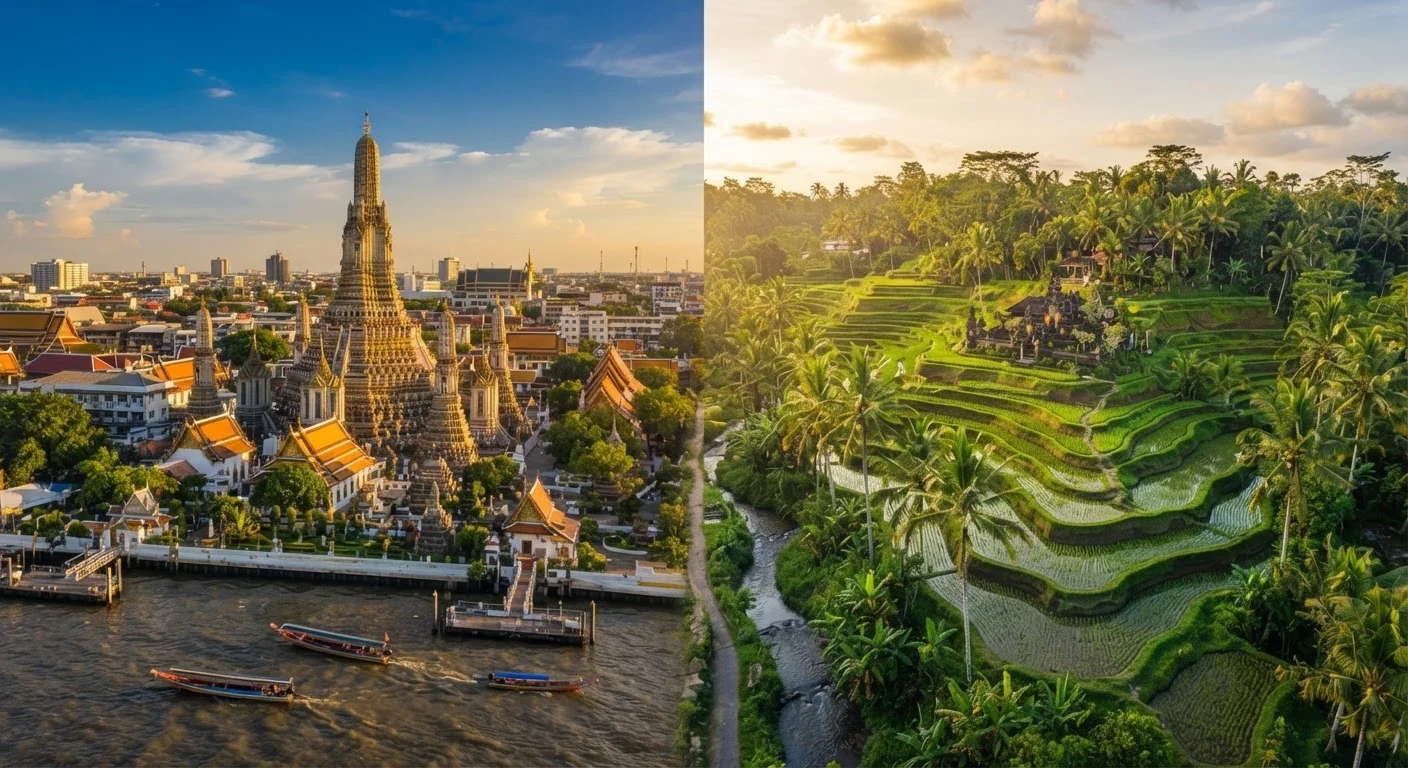
Choosing between Thailand and Bali often comes down to one fundamental question: do you want a trip built around variety, or one built around immersion? Thailand is a country of 77 provinces with distinct regions — the ancient temples of Chiang Mai, the urban density of Bangkok, and the island chains of the Gulf of Thailand and Andaman Sea each feel like a different destination. Bali, by contrast, is a single island within the larger Indonesian archipelago, offering a concentrated but genuinely distinct cultural and physical landscape.
For the first-time traveler worried about making an expensive planning mistake, this distinction matters. A Thailand itinerary requires more decisions — which cities, which islands, how to travel between them. A Bali trip is inherently simpler to scope, though it rewards those who slow down rather than rush. See our guide to choosing the right destination for a first trip before committing to either.
Logistics and Getting Around
Thailand's transport infrastructure is one of the most developed in Southeast Asia. Bangkok's Suvarnabhumi Airport serves as one of the region's largest hubs, with direct flights from major US gateways. Domestic carriers connect Bangkok to Chiang Mai, Phuket, Koh Samui, and beyond. Trains, buses, and ferry services fill the gaps. English is widely used in tourist areas, menus, and transit signage.
Bali is accessed via Ngurah Rai International Airport near Denpasar, and the island itself is navigated primarily by hired driver, scooter, or rideshare app — there is no rail network. Distances between Ubud, Seminyak, Canggu, and the eastern temples can involve significant road time. Renting a scooter is popular among experienced travelers but carries real risk for those unfamiliar with local driving conditions. Hiring a private driver for the day is a practical and widely used alternative.
| Criterion | Thailand | Bali, Indonesia |
|---|---|---|
| Geographic scope | Multi-region country | Single island |
| Getting around | Flights, trains, buses, ferries | Drivers, scooters, rideshare |
| English accessibility | Widely available in tourist areas | Common in tourist zones |
| Primary cultural identity | Theravada Buddhist | Balinese Hindu |
| Best trip length | 10–14 days for multi-city | 7–10 days for single-island depth |
| Traveler infrastructure | Highly developed | Developed in main tourist areas |
| Visa for US passport holders | Visa-free (verify before travel) | Visa-on-arrival (verify before travel) |
For first-timers weighing the broader question of international versus closer-to-home travel, our breakdown of domestic vs. international options lays out what each type of trip actually demands.
Culture, Costs, and Entry Requirements
Both destinations are Buddhist-influenced — Thailand predominantly Theravada Buddhist, Bali distinctively Hindu in a majority-Muslim country. This shapes everything from temple etiquette (covered shoulders, respectful behavior near shrines) to local festivals. Bali's ceremonial calendar is particularly dense; stumbling upon a village procession or temple offering is a genuine first-trip highlight, not a staged tourist event.
Daily costs are broadly similar for independent mid-range travelers: accommodation, meals, and transport can be managed comfortably in both places without luxury-level spending. Bali's more resort-oriented areas (Seminyak, Nusa Dua) skew pricier; Thailand's island resorts similarly vary from backpacker-accessible to high-end.
35M+
International arrivals to Thailand annually
Thailand consistently ranks among the world's most visited countries, according to UN Tourism data.
6M+
Foreign visitors to Bali each year
Bali is Indonesia's single most visited destination, drawing a significant share of the country's total tourism arrivals.
~$50–80
Estimated daily mid-range travel budget
Independent travel blogs and tourism researchers broadly place comfortable mid-range daily spending in a similar range for both destinations, though costs vary by area and travel style.
US passport holders currently receive visa-on-arrival or visa-free access to both Thailand and Indonesia for tourism purposes, but policies change. Always verify current entry requirements through official government sources — the US Department of State's travel pages and the destination country's embassy website — well before your departure date.
Solo travelers specifically should read what the evidence actually shows about solo travel in Southeast Asia — many common fears about the region are overstated, while a few practical cautions are worth taking seriously.
Which One Is Actually Right for You?
Neither Thailand nor Bali is a wrong answer for a first trip — both are well-documented, beginner-accessible destinations with established traveler networks. The real question is what kind of experience you're building toward. If you want to move, explore multiple landscapes, and cover geographic ground, Thailand's infrastructure makes that workable. If you want to settle, absorb, and go deeper in one place, Bali rewards that approach.
Consider also how you handle uncertainty. Thailand's signage, transport options, and sheer volume of traveler-tested itineraries reduce friction. Bali's logistics — particularly getting around the island — require more active problem-solving. Neither should deter a motivated first-timer, but knowing your tolerance for ambiguity helps you plan accordingly. For a broader framework on evaluating any destination fit, see our look at popular vs. off-the-beaten-path choices.
A Note on Travel Safety and Group vs. Solo Planning
Both Thailand and Bali are widely considered accessible for solo travelers, including first-timers. That said, every trip benefits from clear planning around accommodation, transport, and emergency contacts. If you're weighing whether to travel solo or with others, our breakdown of solo vs. group travel safety covers what you should think through before deciding. Always register your trip with the US Department of State's Smart Traveler Enrollment Program (STEP) when traveling internationally.