Getting There: Distance Changes Everything
The single most important difference between these two destinations isn't the culture or the cost — it's the journey itself. From major US cities, flights to Canadian destinations like Toronto, Vancouver, or Montreal typically run two to five hours. Many US residents can even drive across the border for a Canadian trip. Australia is a fundamentally different proposition: expect 14 to 20 hours of flight time, almost always involving at least one connection. That gap affects your trip planning before anything else.
For first-timers already nervous about international travel logistics, this matters practically. Customs, immigration, and the mechanics of international arrival are worth understanding before either trip. See our guide to how international airports differ from domestic ones for a clear walkthrough of what to expect on arrival.
| Criterion | Canada | Australia |
|---|---|---|
| Flight time from US | 2–5 hours (most cities) | 14–20 hours |
| Language | English (French in Quebec) | English |
| Season alignment with US | Same seasons | Reversed seasons |
| Internal travel | Driving viable in many regions | Internal flights often necessary |
| Recommended trip length | 7–14 days comfortable | 14–21 days recommended |
| Entry requirement (US citizens) | Valid passport required | ETA (Electronic Travel Authority) required |
| Relative airfare cost | Generally lower | Significantly higher |
| Iconic natural draw | Rocky Mountains, Great Lakes | Great Barrier Reef, Outback |
Climate, Seasons, and When to Go
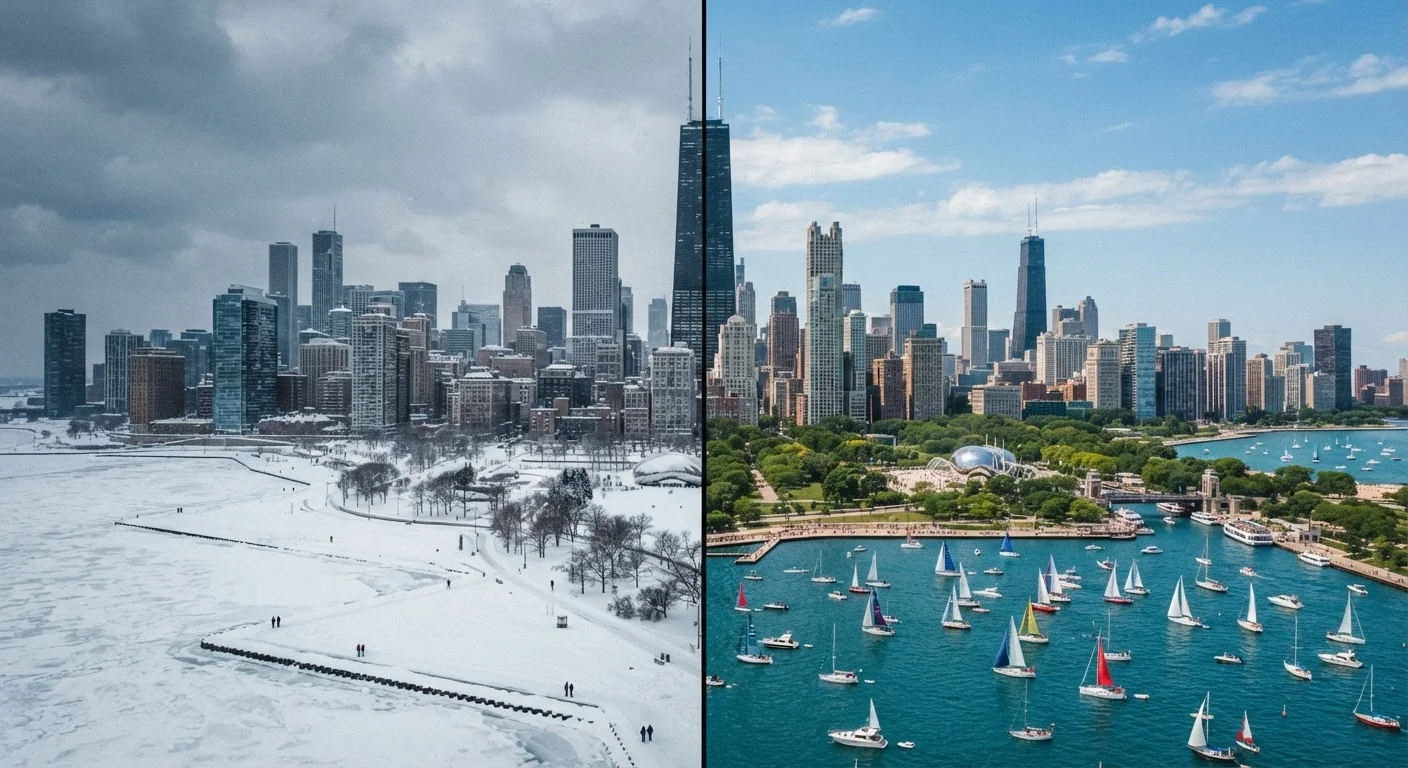
Canada's seasons align with the US calendar — summers are warm and social, winters are genuinely cold, and shoulder seasons (May and September) offer pleasant conditions with thinner crowds. Regional variation is significant: British Columbia's coast is mild year-round, while Quebec winters are severe. Planning around season is straightforward for most US travelers because the reference points are familiar.
Australia operates on a reversed calendar — December is midsummer, July is winter. Crucially, Australia is large enough that its climate varies enormously: the tropical north has a wet season (roughly November through April) when some areas flood and become inaccessible, while the south remains temperate. First-timers often underestimate this internal variation. Visiting both the Great Barrier Reef and Sydney on one trip may mean navigating two very different climate zones simultaneously.
7.7M km²
Australia's total land area
Australia is the world's sixth-largest country by area, roughly equivalent in size to the contiguous United States, making internal distances a key planning factor.
10M km²
Canada's total land area
Canada is the world's second-largest country, but the majority of its population and tourist infrastructure is concentrated within 200 miles of the US border.
~17 hours
Average flight time, LA to Sydney
A nonstop Los Angeles to Sydney flight runs approximately 15–17 hours, making it one of the longer routes available from the US mainland.
Cost Realities: What Your Dollar Actually Covers
On a per-day basis, Canada and Australia sit in a similar range for mid-range travelers. Where they diverge sharply is in the fixed costs. Airfare to Australia from the US is a significant upfront investment compared to the often competitive fares available on US-Canada routes. Internal travel within Australia adds another layer: the country is approximately the size of the contiguous US, and driving between major highlights (Sydney, Cairns, Uluru) is not realistic on most itineraries. Internal flights become a necessity, not a luxury.
Canada, by contrast, allows more control over your budget. Road trips through the Rockies, the Maritimes, or Ontario cottage country are genuinely viable. Cities like Montreal and Quebec City offer walkable experiences without requiring costly internal transport. If you're weighing your first international trip options, the logistics gap between these two countries is worth taking seriously before committing.
Entry Requirements Vary — Verify Before You Book
US citizens need a valid passport to enter both Canada and Australia. For Australia, most visitors also require an Electronic Travel Authority (ETA), which is typically applied for online before departure. Entry rules can change, and requirements differ by nationality. Always verify current requirements through official government sources — such as the US State Department and the destination country's immigration authority — before finalizing your plans.
Experiences: What Each Country Does Best
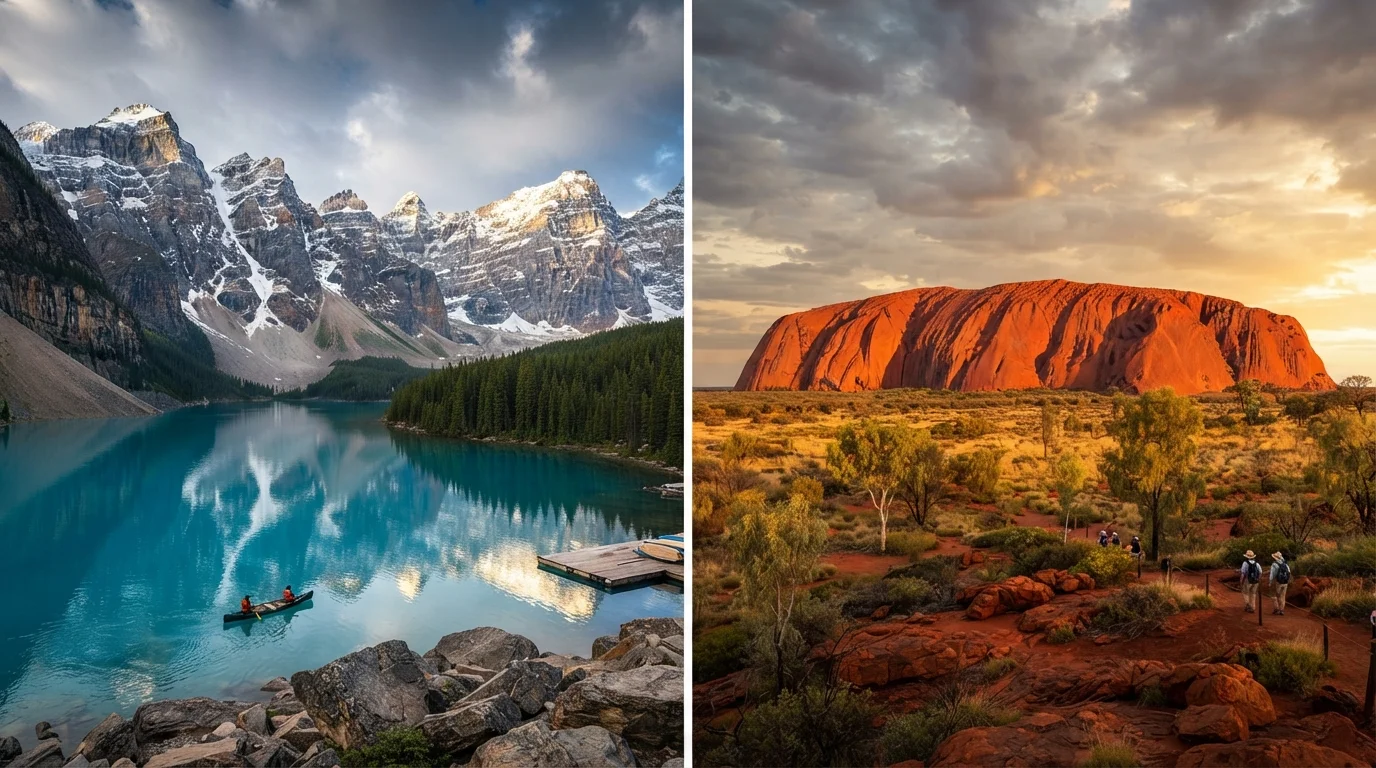
Canada's strengths are substantial and varied. Banff and Jasper National Parks deliver genuinely world-class mountain scenery. Cities like Vancouver and Toronto rank among the most multicultural and livable in the world. Quebec adds a French-influenced cultural dimension unique in North America. Wildlife — from grizzly bears in BC to beluga whales in the St. Lawrence — rivals anywhere on Earth.
Australia's signature experiences are singular. The Great Barrier Reef, the Daintree Rainforest, Uluru, and the Ningaloo Coast represent landscapes found nowhere else. Australian cities — Sydney, Melbourne, Brisbane — are cosmopolitan and visitor-friendly, but it's the natural environment that defines the country's travel identity. If wildlife is a priority, Australia's endemic species (kangaroos, koalas, wombats, cassowaries) add an immediacy that even dedicated nature destinations rarely match.
Travelers curious about how regional differences shape an itinerary might also explore the trade-offs between popular and off-the-beaten-path destinations — a useful frame whether you're planning a city circuit or a wilderness-focused trip.