
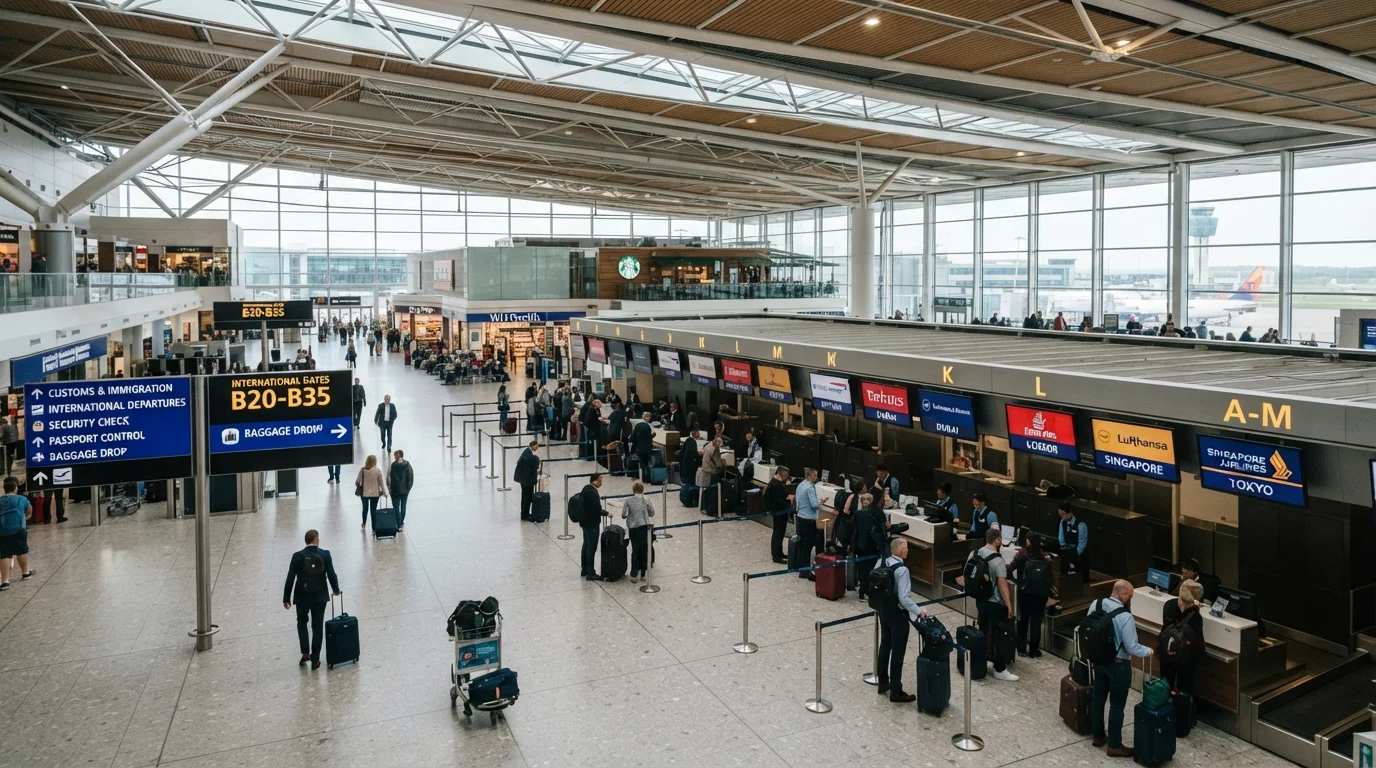
The Core Difference: What Each Airport Type Involves
At its most basic level, a domestic airport handles flights within the same country, while an international airport processes flights crossing national borders. That distinction creates a cascade of procedural differences that affect every stage of your journey - from the moment you arrive at the terminal to the moment you collect your bags.
For domestic travel, the process is relatively streamlined: check in, clear security, find your gate, board. For international travel, you layer on passport control, customs declarations, immigration checks, and potentially longer security queues with stricter screening. If you're planning your first international trip, see our guide on things first-time flyers overlook when booking international flights before you purchase your ticket.
| Domestic Airport | International Airport | |
|---|---|---|
| ID Required | Government-issued photo ID (REAL ID) | Valid passport; visa may be required |
| Recommended Arrival Time | 90 minutes-2 hours before departure | 3 hours before departure |
| Security Screening | Standard TSA checkpoint | TSA checkpoint; additional layers possible |
| Customs & Immigration | Not required | Mandatory upon arrival |
| Checked Bag Fees | Often charged separately | Frequently included in fare |
| Overall Complexity | Lower - fewer steps and documents | Higher - more stages and documentation |
Documentation: What You Need to Bring
For a domestic flight within the United States, a government-issued photo ID - such as a driver's license or state ID - is sufficient for most adults. Under the REAL ID Act, ensure your ID is REAL ID-compliant; check the card for a star marking in the upper corner. Children under 18 are generally not required to show ID for domestic travel.
International travel is a different matter entirely. You must carry a valid passport, and many countries require it to be valid for at least six months beyond your travel dates. Depending on your destination, you may also need a visa obtained in advance. Always verify current entry requirements through official government sources - your destination country's embassy website and the U.S. Department of State travel portal are the most reliable references. Entry rules can change, and no third-party source can guarantee they are current.
Check Passport Validity Well in Advance
Many countries require your passport to be valid for at least six months after your planned return date. If your passport is expiring within the next year, apply for renewal before booking international travel. Standard U.S. passport processing can take several weeks, and expedited services are not always available during peak seasons.
Security, Customs, and Immigration Explained
Both airport types require you to clear a TSA security checkpoint before reaching your gate. The process is largely the same: remove shoes, laptops, and liquids; place bags on the conveyor belt; walk through the scanner. However, international terminals sometimes operate additional security layers, and carry-on liquid rules are enforced more strictly because items purchased post-security in another country may be subject to local rules on arrival.
The biggest procedural difference arrives at your destination. After landing on a domestic flight, you walk off the plane and go straight to baggage claim. After landing internationally, you must pass through immigration and passport control - where an officer verifies your travel documents and purpose of visit - and then through customs, where you declare any goods you're bringing into the country. Failing to declare items accurately can result in fines or confiscation, so complete your customs declaration form honestly during the flight.
For a full walkthrough of what to expect at each stage, our article your first time at an airport covers the domestic process step by step.
Timing and Logistics: How Early Should You Arrive?
For domestic flights, most airlines and airports suggest arriving 90 minutes to two hours before departure. For international flights, the standard recommendation is three hours - and even more during busy travel periods. International check-in desks sometimes close earlier than domestic ones, and airlines are strict about it.
If you're connecting from a domestic flight to an international one, or transiting through a foreign airport, you may also need to clear customs and re-check your bags mid-journey. This process, sometimes called a layover with customs, adds significant time. Always confirm with your airline how transfers work on your specific itinerary.
Baggage rules also diverge. International routes often include a free checked bag allowance in the fare, whereas many domestic routes - particularly on lower-cost carriers - do not. Weight limits, size restrictions, and fees vary by airline and route, so check your booking confirmation carefully. Our related guide on online check-in vs airport check-in explains how early check-in can reduce stress on both domestic and international travel days.
If you're still deciding which type of trip is right for you, weighing domestic vs. international travel options is a useful starting point before you book anything. Once you've decided on an international destination, work through the pre-departure checklist for your first international trip to make sure nothing is missed.
Missing a Customs Declaration Can Be Costly
Customs officers have the authority to fine travelers who fail to declare goods, food items, or cash above reporting thresholds. Always complete your customs form in full during the flight, even if you believe you have nothing to declare - certain food and agricultural products are restricted regardless of value. When in doubt, declare the item and let the officer decide.