What Makes the Grand Canyon Different From Other Popular Parks
The Grand Canyon draws roughly five million visitors a year, which creates a reasonable expectation that it's been figured out — well-signed, easy to navigate, and manageable for any fitness level. That expectation is only partially correct. The South Rim's paved overlooks are accessible to virtually everyone. Below the rim is an entirely different proposition.
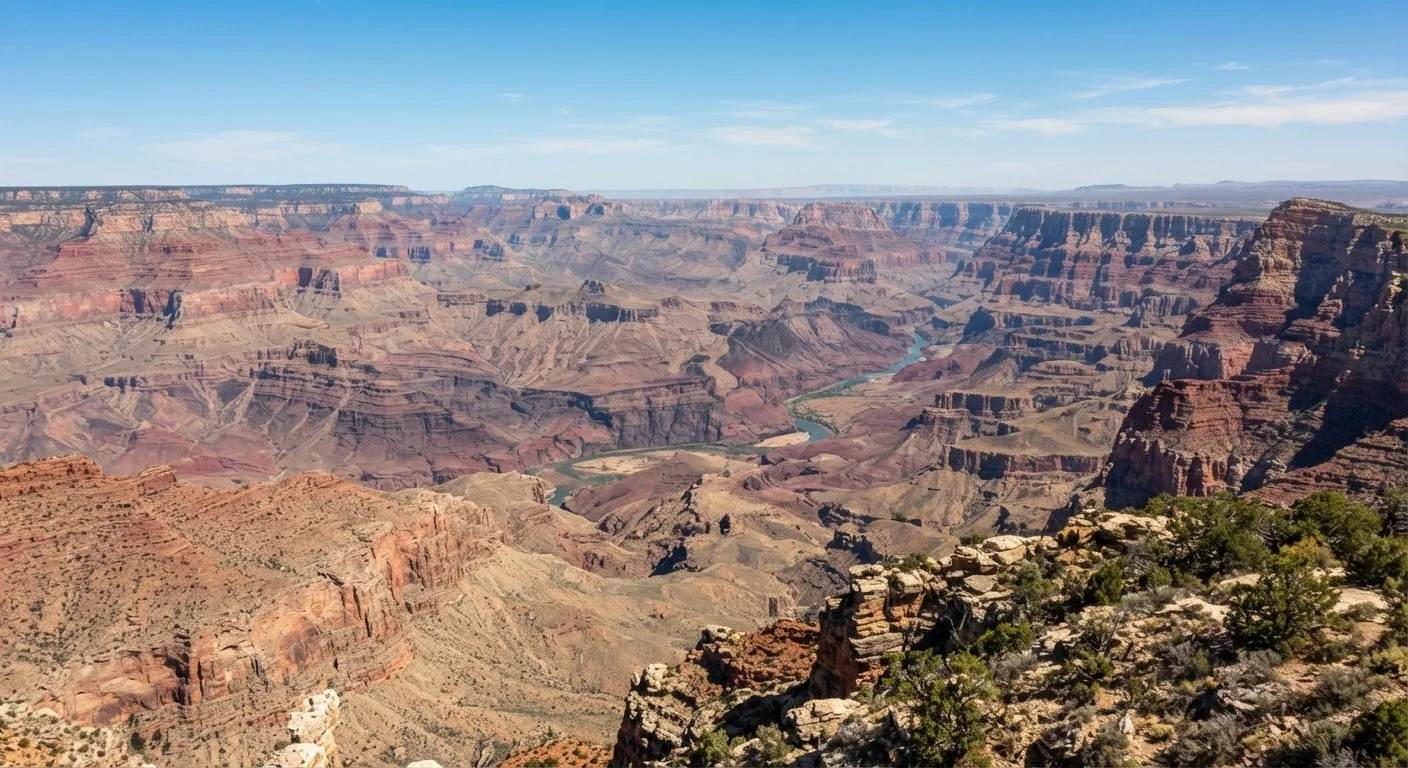
Unlike many national parks where trails gradually ascend from a trailhead, Grand Canyon hikes start with a steep descent — meaning the hardest part of the journey comes at the end, when you're already tired and the midday sun is at its worst. The canyon's sheer vertical drop (over a mile from rim to river) compresses multiple climate zones into a single hike: what begins as a cool, ponderosa-pine forest at the rim becomes a desert environment rivaling Death Valley by the time you reach the Colorado River.
First-time visitors to popular landmarks often encounter surprises. The Grand Canyon's particular surprises, however, carry genuine physical risk — which is why understanding them before arrival matters more here than at most destinations. For a broader look at how well-known destinations can still catch travelers off guard, see our guide to popular vs. off-the-beaten-path destinations.
The Mistakes That Catch First-Timers Off Guard
Treating the canyon like a viewpoint rather than a physically demanding environment.
Why it happens: Most visitors arrive expecting a scenic overlook experience, which the South Rim does provide — but many then decide spontaneously to hike partway down without preparation.
Starting a descent hike in the late morning or early afternoon during summer months.
Why it happens: Visitors often arrive, get inspired by the view, and head down around 10 a.m. — just as temperatures are climbing sharply at lower elevations.
Booking accommodation or permits without accounting for extreme lead times.
Why it happens: First-timers assume popular national parks operate like hotels — book a few weeks out and you're set. The Grand Canyon's most sought-after spots are far more competitive.
Relying solely on cell service for navigation and emergency contact inside the canyon.
Why it happens: Smartphones have replaced paper maps for most travelers, and the assumption that coverage will be available feels reasonable in a heavily visited national park.
Skipping the visitor center and jumping straight to the most crowded viewpoints.
Why it happens: With limited time, visitors head directly to Mather Point or Bright Angel Trailhead without orienting themselves to trail conditions, weather, or shuttle logistics.
Logistical surprises compound the physical ones. Like the hidden charges that ambush new cruisers — explored in our piece on what first-time cruisers don't expect to pay — the Grand Canyon has a category of costs and constraints that aren't obvious until you're already committed. Permit systems, shuttle-only zones, and booking windows are the administrative equivalent of the canyon's physical demands: underestimate them and your trip suffers for it.
Don't Hike to the River and Back in One Day
The National Park Service explicitly advises against attempting a rim-to-river round trip in a single day. The ascent back to the rim is grueling in afternoon heat, and the canyon's temperature can exceed 110°F at inner-canyon levels in summer. Experienced hikers misjudge this regularly. If a rim-to-river experience is your goal, book an overnight stay at Phantom Ranch well in advance.
Safety concerns at the Grand Canyon share some parallels with other iconic natural sites. Yellowstone's thermal areas, for example, present their own set of underappreciated hazards — understanding Yellowstone's thermal features offers a similar framework for responsible visiting.
277 miles
Length of the Grand Canyon
The canyon stretches 277 river miles and reaches depths of over a mile — dimensions that photos and maps consistently fail to convey to first-time visitors.
110°F+
Peak inner-canyon summer temperatures
According to the National Park Service, inner canyon temperatures routinely exceed 110°F in summer months, making midday hiking dangerous even for fit adults.
13 months
Advance booking lead time for Phantom Ranch
Phantom Ranch, the only lodging below the rim, operates a lottery system that fills well over a year out, according to the concessionaire's published guidance.
Canyon Rescues Are Common — and Preventable
National Park Service rangers perform hundreds of search-and-rescue operations at the Grand Canyon each year, with dehydration and heat exhaustion as leading causes. Many involve visitors who underestimated the hike's difficulty or set out without enough water. If you plan to descend below the rim, carry at least one liter of water per hour of hiking, eat salty snacks to retain fluids, and turn back before you feel tired — not after.