Why Hotel Etiquette Matters for First-Time Guests
Hotels run on a set of social norms that experienced travelers absorb over time — but nobody hands you a rulebook at check-in. For first-time guests, not knowing these conventions can lead to awkward moments, missed services, or unintentional rudeness toward staff. The good news: once you understand how the system works, navigating it becomes second nature.
If you haven't yet booked your stay, our guide to hotel booking covers the essentials of finding and reserving a room. And if you want a full walkthrough of arrival to departure, see what actually happens during a hotel stay.
This article focuses on the etiquette layer — the interactions, habits, and small decisions that shape your experience and that of the staff who serve you.
Tipping Housekeeping: When, How Much, and How
Tipping housekeeping is one of the most commonly mishandled aspects of hotel stays, largely because guests don't realize that housekeeping staff often rotate by day. If you leave a single tip at checkout, the person who cleaned your room most of the week may never receive it.
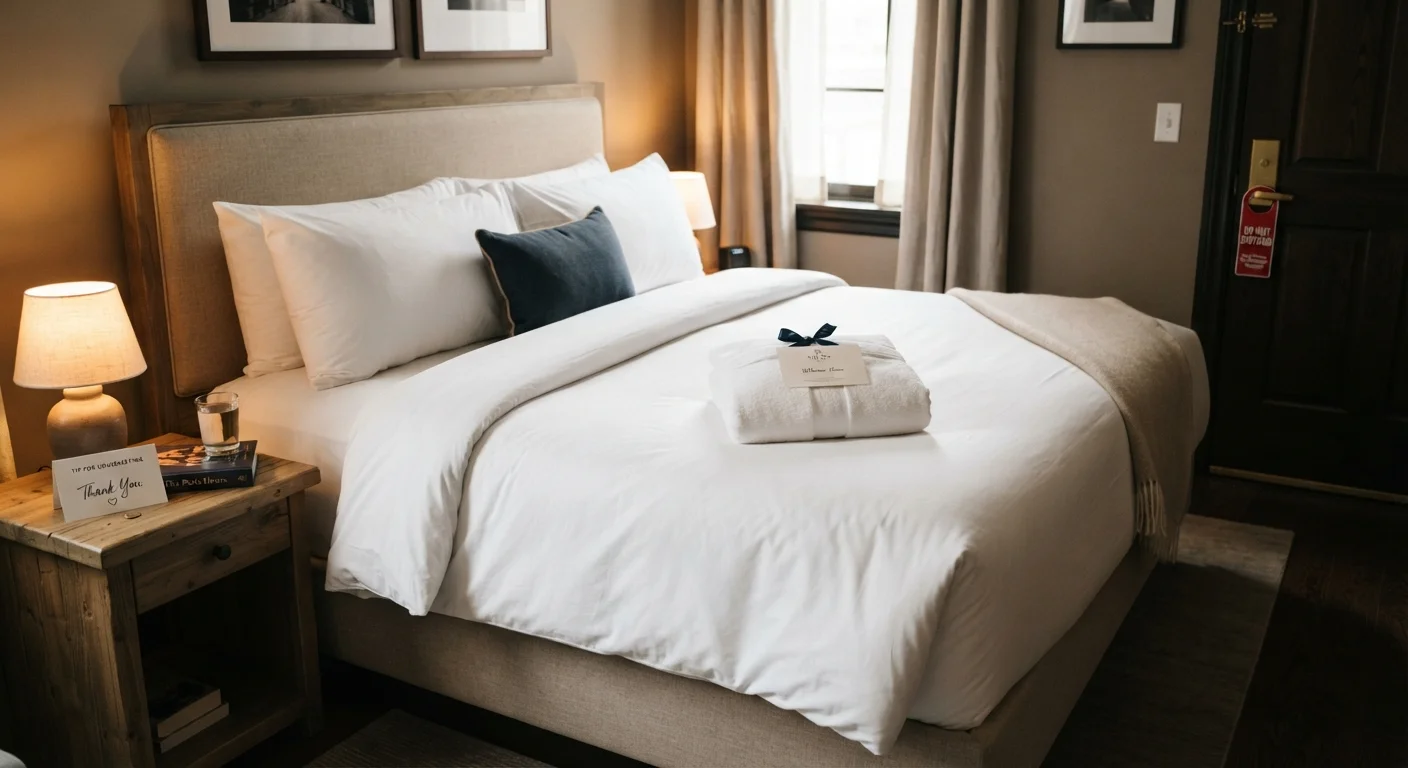
The widely accepted practice in the United States is to leave a tip each morning before you leave the room for the day. Place cash in a small envelope — many hotels provide these, or use whatever is available — along with a note that says "For Housekeeping" to make the intent clear. If your room isn't serviced daily (a common option now), tip on the days service does occur.
How Much to Tip Housekeeping in the U.S.
A commonly cited range for housekeeping tips in U.S. hotels is $2–$5 per night for a standard room, with more appropriate for suites or stays requiring extra cleanup. Budget hotels typically fall at the lower end; upscale properties lean higher. These are general guidelines, not fixed rules — tip based on the service you receive and what your budget allows.
For guidance on tipping norms in other countries, which vary considerably, see our article on tipping around the world.
Managing Housekeeping: Signs, Cards, and Requests
Most hotels give guests two tools for managing room cleaning: a do-not-disturb (DND) sign for the door handle, and a housekeeping request card (sometimes called a make-up-room card). These are not interchangeable.
- Do-not-disturb sign: Hang it when you do not want staff to enter — while sleeping, working, or simply wanting privacy. Remove it when you're ready for service.
- Housekeeping request card: Used to request cleaning when you otherwise might not be in the rotation, or to specify a preferred time.
If you have a late checkout or a long stay and want your room refreshed at a specific time, calling the front desk directly is the most reliable approach. Staff appreciate clear communication far more than guests realize. For broader advice on navigating staff interactions, see what to ask at check-in.
When Hotels Reduce Daily Housekeeping
Many hotels introduced opt-in housekeeping models in recent years, where rooms are cleaned every few days rather than daily by default. If your hotel operates this way, you'll typically receive a card or in-app option to request service. This doesn't change tipping norms — tip on the days cleaning occurs. If you need fresh towels or toiletries between cleanings, call the front desk and they'll bring items to your door.
Room Service and In-Room Dining: Reading the Fine Print
Room service is one of the most appealing hotel perks — and one of the most misunderstood. Before you order, look carefully at the menu. In the United States, room service orders typically include a delivery fee and often a built-in gratuity (usually 18–20%) already added to your bill. That means adding another tip on top is optional, though leaving a small additional amount for exceptional service is appreciated by many guests.
When the order arrives, you don't need to stand awkwardly while the server sets up the tray. It's entirely normal to direct them where to place items and say a simple thank-you. You can leave the tray outside your door when finished, or call the front desk to arrange pickup — leaving a used tray in the hallway for too long can be a courtesy issue for other guests.
If you encounter a billing error or an issue with your order, address it calmly and promptly. Our guide on handling hotel problems offers a practical framework for resolving concerns without stress.
Shared Spaces and Noise: The Etiquette Beyond Your Room
Hotel etiquette extends well beyond your own four walls. Hallways, elevators, pools, and breakfast areas are shared spaces where your behavior affects other guests.
~$2–$5
Typical daily housekeeping tip per night in U.S. hotels
Industry etiquette guides and hospitality worker advocacy groups consistently cite this range as the standard in the United States.
18–20%
Gratuity commonly pre-added to U.S. room service bills
Most U.S. hotel room service menus include a built-in service charge; always check the itemized bill before adding an additional tip.
Most hotels observe quiet hours — typically between 10 p.m. and 8 a.m. — though the specific window varies by property. Keep voices low in corridors, avoid slamming doors, and be especially mindful in properties with thin walls or open-air layouts. If a neighboring guest's noise is affecting your stay, contact the front desk rather than confronting them directly — staff are trained to handle this diplomatically.
In shared amenity areas like pools or fitness centers, follow posted rules, replace equipment or towels after use, and don't reserve lounge chairs with belongings when you're not present. These same principles apply aboard cruise ships — see our piece on cruise ship etiquette for how shared-space norms translate to a floating hotel environment.
Being a considerate guest isn't just about following rules — it signals respect for the staff and fellow travelers who share the space with you. Small habits, practiced consistently, make a meaningful difference.