The Three Systems You'll Encounter
Public transport fare collection has evolved into three broad categories that cover the vast majority of networks worldwide. Understanding which category a city's system falls into tells you exactly what to prepare before you arrive.
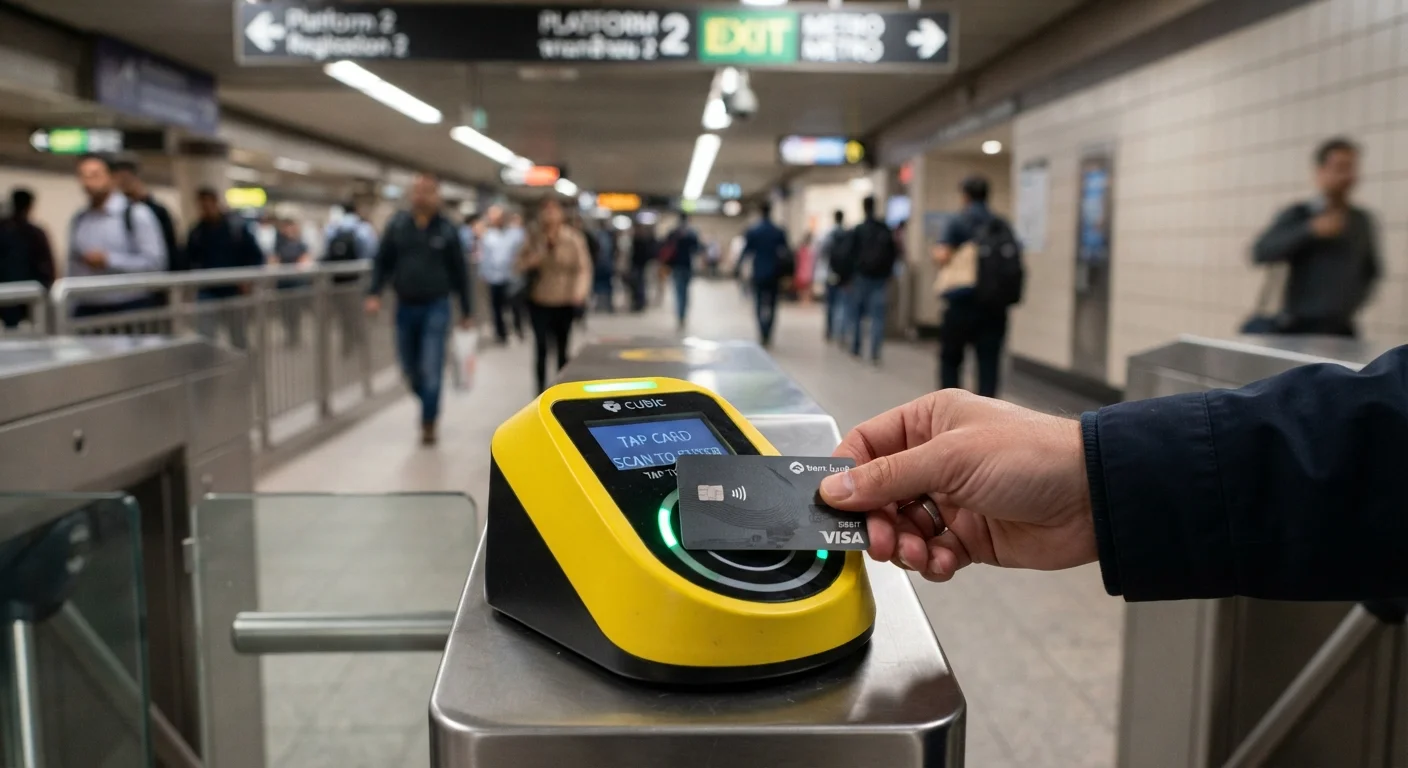
Contactless bank cards and mobile wallets work on networks that have invested in open-loop readers — the same tap-to-pay infrastructure used at coffee shops. You touch your Visa, Mastercard, or phone to the reader, and the fare is charged directly. London, New York, Sydney, and an expanding list of cities now accept this method. No separate card is needed.
City-issued transit cards are proprietary, rechargeable cards sold by the local authority. Examples include Tokyo's Suica, Hong Kong's Octopus, Chicago's Ventra, and Washington D.C.'s SmarTrip. You buy the card at a station, load money onto it, and tap in and out. These systems are often closed-loop, meaning the card works only on that city's network (though some regional cards have expanded coverage).
Paper and magnetic-strip tickets remain the universal fallback. You purchase a single-journey or multi-journey ticket from a machine or ticket window, and either insert it into a turnstile slot or show it to a conductor. Some older systems still use punch cards or paper passes that require stamping in a validation machine onboard or at the platform.
Card Clash: A Common Contactless Pitfall
If you carry multiple contactless cards in the same wallet, the reader may detect more than one card and decline the transaction or charge the wrong card. This is called "card clash." To avoid it, remove the specific card you want to use from your wallet before tapping, or use a single card in a dedicated card holder. Mobile wallets generally handle this automatically by letting you select the active payment method.
Why It Matters: Fare Rules Differ Sharply Between Systems
Each payment type comes with its own rules around pricing, entry, and exit — and mixing them up is one of the most common and avoidable mistakes first-time riders make. See our breakdown of common beginner transit errors for the full picture.
Pricing: Transit cards almost always charge a lower per-ride fare than paper tickets on the same line. On some networks the difference is significant — up to 30–40% less per journey. If you plan to ride more than a handful of times, the card usually pays for itself quickly, even after accounting for the refundable deposit.
Tap-in and tap-out requirements: Open-loop contactless systems and many transit card networks require you to tap both when you board and when you exit. This is how the system calculates distance-based or zone-based fares. Forgetting to tap out can result in the maximum fare being charged automatically. Paper tickets on flat-fare systems (where every ride costs the same regardless of distance) usually don't require an exit tap.
Fare zones add another layer of complexity. If your journey crosses zone boundaries, your fare increases. How zones are structured and priced varies widely by city, so it's worth understanding the basics for wherever you're headed.
100+
Cities worldwide now accepting open-loop contactless transit payment
According to Visa's transit payment program data, over 100 cities had implemented open-loop contactless readers on at least part of their network as of recent reporting.
Up to 40%
Potential per-ride savings using a transit card vs. paper ticket
On networks that offer both options, transit card fares are frequently discounted relative to single paper ticket prices, with the gap varying significantly by city.
3–5 min
Typical time lost at the gate without the right payment method
Transit authorities and traveler reports consistently note that unprepared riders cause delays for themselves and others when discovering payment incompatibilities at the fare gate.
How to Figure Out What a City Uses Before You Arrive
A few minutes of research before your trip eliminates almost all fare-related surprises at the gate.
- Check the transit authority's official website. Every major city transit network publishes its accepted payment methods. Look for a "Fares" or "How to Pay" section. This is the most reliable source.
- Look up whether contactless is accepted. If the site mentions tap-to-pay or open payments, your regular contactless card or phone wallet will likely work. If it only mentions a named card (e.g., "OV-chipkaart" in the Netherlands), you'll need to obtain that card.
- Check deposit and refund policies for transit cards. If you're visiting for only two or three days, factor in the deposit cost when deciding whether a transit card is worth it. Many cards allow you to refund the deposit and remaining balance at the end of your trip at a service counter.
- Download the city's transit app before landing. Many networks now offer mobile top-up and journey planning through an official app. Understanding what transit apps offer can save significant time when navigating an unfamiliar system.
Get Your Transit Card on Arrival Day
If the city you're visiting uses a dedicated transit card, pick one up as soon as you clear the airport — most major international airports have transit card machines or service desks near the exit. Loading an initial amount that covers your first day gives you one less thing to manage when you're tired from travel. Keep your receipts in case you want a refund on the deposit when you leave.
For a complete walkthrough of how to plan and execute a transit journey from start to finish, see our end-to-end guide to riding transit in an unfamiliar city.
Practical Validation: The Step Many Travelers Miss
Paying for a ticket and validating a ticket are two different things on many networks — particularly in continental Europe and parts of Latin America. On these systems, you buy your ticket from a machine and then must insert or scan it in a separate validation device, often located on the platform or onboard the vehicle. An unvalidated ticket is legally equivalent to no ticket.
On tap-in systems (most transit cards and open-loop contactless), the tap itself is the validation — no extra step needed. On open-platform systems common for buses and trams in some cities, there may be no physical barrier at all, but inspectors routinely check for validated tickets. These are sometimes called "honor-based" or "proof of payment" systems.
If you're unsure whether you need to validate, watch what other riders do before boarding, or ask station staff. It's a small step that prevents a potentially costly fine. Budget-conscious travelers will also want to think about how transit costs fit into their overall trip spending — the travel money hub covers practical ways to manage day-to-day costs abroad.
“The single biggest source of confusion for new transit riders isn't route maps or timetables — it's not understanding how the fare system works before they get to the gate.”
— Urban Mobility Research, Transport Policy Journal, Academic publication on public transport user behavior