Why the Choice Actually Matters
Picking the wrong transit mode on an unfamiliar trip doesn't just waste time — it can mean arriving late, getting lost, or standing at the wrong stop for twenty minutes. Most major cities offer both buses and metro (subway) systems, and they are designed to complement each other, not duplicate each other. Understanding how they differ helps you treat them as tools rather than interchangeable options.
If you're still figuring out how you'll get from the airport into the city first, see our overview of airport transfer options before diving into city transit choices.
| City Bus | Metro | |
|---|---|---|
| Speed | Variable — affected by traffic | Fast and consistent |
| Coverage | Extensive, reaches most streets | Limited to fixed corridors |
| Predictability | Lower, especially at peak hours | High — scheduled and tracked |
| Ease of use for beginners | Moderate — route-reading required | Easier — maps and signs are clear |
| Accessibility | Varies by city and vehicle | Varies — lifts not always present |
| Best journey type | Short local hops, off-grid spots | Cross-city, major destinations |
How Metros Work — and When They Shine
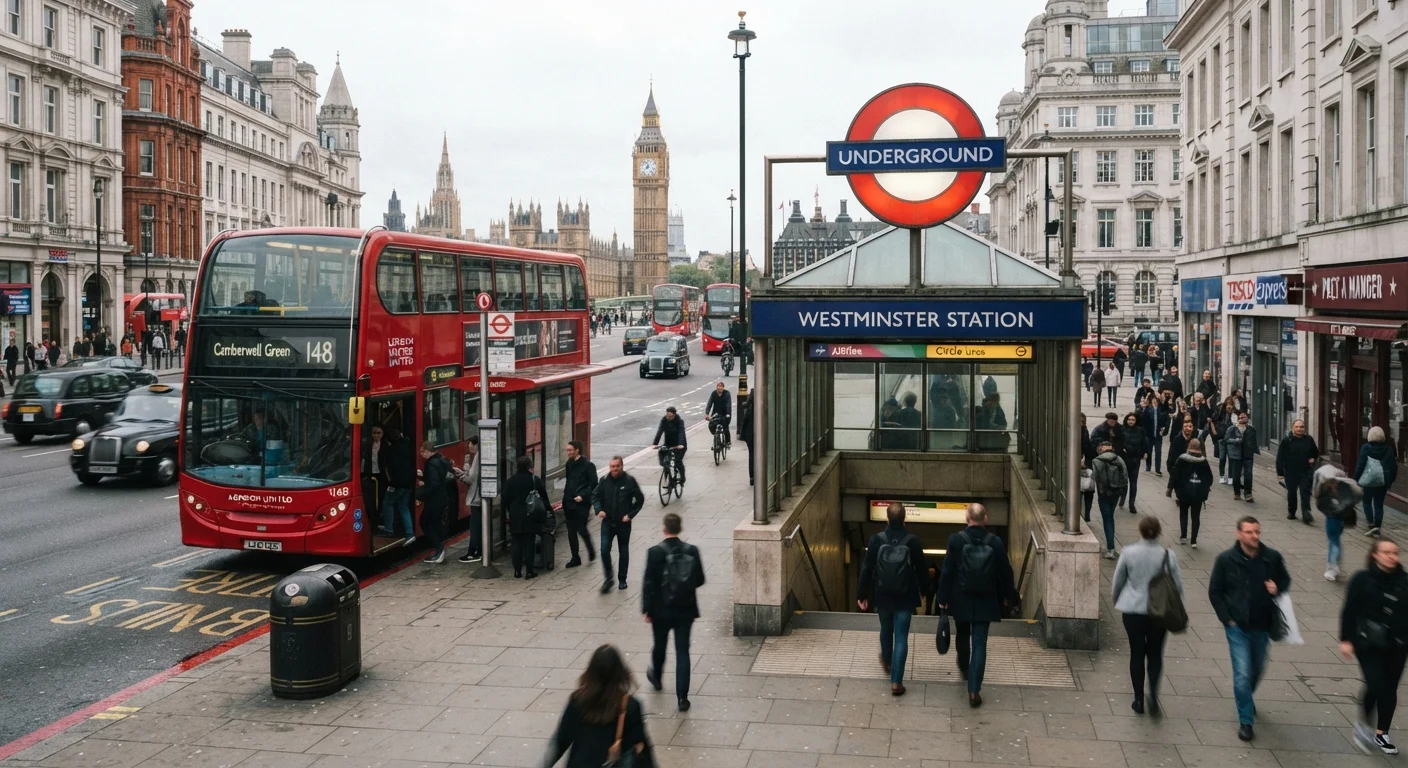
A metro (also called a subway, underground, or rapid transit) runs on dedicated tracks, usually underground or elevated, completely separated from road traffic. That isolation is the key advantage: trains run on fixed schedules, are rarely delayed by congestion, and can cover long distances across a city in predictable time.
Metro lines work best when your origin and destination are both close to stations. In cities like New York, Paris, Tokyo, or Mexico City, station density is high enough that this is true for most tourist-facing destinations. You board, ride, exit — no traffic variables.
Check Station Distance Before Assuming Metro Is Fastest
A metro journey that looks quick on a map can take longer than expected once you add walking to the entrance, descending to the platform, waiting, riding, and exiting. Use a transit app to see total door-to-door time — not just in-vehicle time — before deciding metro is the faster choice.
The trade-off is rigidity. Metro lines follow fixed corridors. If your hotel or destination is several blocks from the nearest station, the metro gets you close but not there. Factor in that last-mile walking distance before assuming metro is fastest.
How City Buses Work — and When They're the Better Call
City buses run on surface streets, stopping at marked shelters or poles along a defined route. Because they share roads with cars, travel times vary — a bus that takes 15 minutes at midday may take 35 in evening rush hour. That unpredictability is the main downside for first-time visitors.
The upside is coverage. Bus networks reach neighborhoods, residential streets, and local destinations that metro lines never touch. If you're heading somewhere off the main tourist circuit — a local market, a quiet residential district, a community attraction — there's a reasonable chance a bus gets you closer than the metro does.
Buses are also useful for short hops within a single neighborhood when walking feels too far but taking the metro (with its entrance, platform, and exit overhead) would take longer overall. For realistic comparisons of transit versus other options, read our breakdown of when public transit actually beats a taxi.
Practical Decision Framework
Use these questions to decide quickly at trip-planning time:
- Is my destination within a 10-minute walk of a metro station? If yes for both ends of the journey, take the metro.
- Am I traveling during peak traffic hours? If yes, the metro's traffic-free track is a major advantage.
- Is my destination in a dense, well-mapped part of the city? Metro wins. If it's in a less-central area, check bus routes.
- Do I have heavy luggage or mobility considerations? Metro stations vary widely in accessibility — escalators and lifts aren't universal. Our guide on accessibility on public transit covers what to verify before relying on either system.
- Am I on a tight schedule? Metro is more reliable for time-sensitive trips.
Many cities also integrate both systems under a single fare card — you can tap on a metro, tap off, and board a connecting bus without buying a new ticket. Check whether your destination uses a unified payment system; it often makes the bus a natural extension of your metro journey rather than a separate decision. To understand how fares add up across both modes, see our guide to single tickets versus multi-day passes.
Before you travel, download a transit app for your destination city — they can show real-time arrivals for both buses and metros in one interface. Our article on transit apps worth knowing before you land explains what to look for.