Why the Question Is More Complicated Than It Looks
First-time travelers often arrive in a new city and reach for a taxi or rideshare out of habit. It feels faster — no timetables to decode, no crowded platforms, and the car drops you right at the door. But in many large cities, that assumption quietly costs people both time and money.
The real measure of travel time is door-to-door: from the moment you step outside your hotel to the moment you walk through your destination's entrance. When you factor in the walk to the cab, waiting for the driver, traffic, and finding the drop-off point, public transit frequently comes out ahead — especially in city centers. See our guide to estimating realistic travel time for a full breakdown of how to calculate this properly before you leave.
Myth
A taxi always gets you there faster because it goes directly to your destination.
Fact
Direct routing doesn't help when traffic is stationary. In congested city centers, a metro that bypasses road gridlock often delivers a meaningfully shorter door-to-door time.
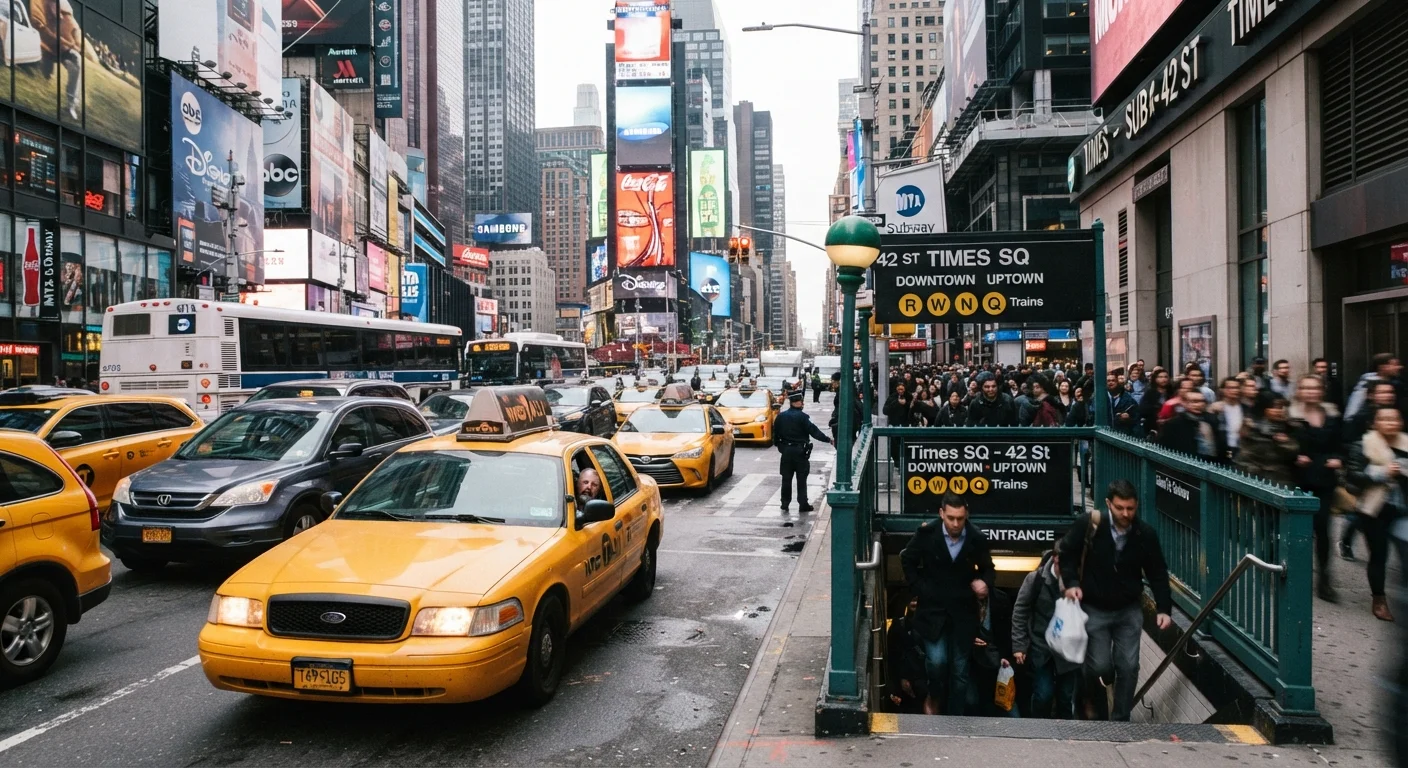
The appeal of a direct route is real, but road-based transport shares infrastructure with every other vehicle. During peak morning and evening hours in cities like New York, London, or Chicago, surface traffic can slow a taxi to a crawl. A subway running on its own dedicated track is simply not subject to the same bottleneck. Studies of urban commute patterns in several major cities have consistently found that rail-based transit outperforms taxis on many central-city corridors during rush hour — though exact margins vary by city and route.
Myth
Public transport is only for locals who know the system — tourists will get lost.
Fact
Most major city transit networks have English signage, color-coded maps, and real-time apps designed specifically for infrequent users.
The learning curve is real but short. Metro systems in cities that attract significant international visitors — Paris, Tokyo, Singapore, Mexico City — invest heavily in multilingual wayfinding precisely because confused tourists slow down stations. Before your first journey, download the city's official transit app or use Google Maps in transit mode: it gives you platform numbers, number of stops, and transfer points turn by turn. The city bus vs. metro guide explains how to choose the right mode once you're comfortable with the basics.
Myth
Taking a taxi is always safer than public transport, especially at night.
Fact
Safety depends on the specific city, neighborhood, and operator — not the mode of transport itself.
Licensed taxis and regulated rideshares offer accountability through driver registration and GPS tracking, which matters. But a well-lit metro station in a city with strong transit infrastructure is not inherently dangerous. Conversely, accepting an unlicensed taxi outside an airport or train station is a documented risk in many destinations. The key is using licensed, verifiable operators when taking a cab, and staying aware of your surroundings on public transit just as you would anywhere. Neither mode is universally safer — local context matters far more than the vehicle type. For more on this, see common airport transfer myths.
Myth
Public transport is always the cheaper option, so it's the smart default.
Fact
Transit is usually cheaper per trip, but the cost of your time, comfort, and potential missed connections also enters the calculation.
A single metro fare is almost always less expensive than a taxi ride covering the same distance. That economic advantage is real and consistent. However, cost isn't only about the fare. If a transit journey requires two transfers, involves significant walking with luggage, and arrives 20 minutes before a reservation you can't afford to miss, the higher taxi fare may be the financially rational choice when you account for the full picture. Treat transit as the default for routine sightseeing and a taxi or rideshare as a deliberate tool for specific circumstances — not a luxury or a fallback.
When the Calculation Tilts Each Way
Neither mode wins every route. The honest answer is that context determines everything. Here are the conditions that actually shift the balance:
- Peak hours in a dense center: Metros and light rail almost always beat road traffic. Trains don't sit at red lights.
- Late-night travel: When transit frequency drops to every 30 minutes or service ends, a taxi or rideshare is both faster and more practical.
- Heavy luggage or group travel: Navigating stairs, turnstiles, and crowded carriages with large bags tilts strongly toward a taxi — speed aside.
- Destinations off the transit grid: If your target is a suburban attraction or an address poorly served by stops, a direct ride wins by default.
- Short hops under half a mile: Walking often beats both options once you factor in the wait.
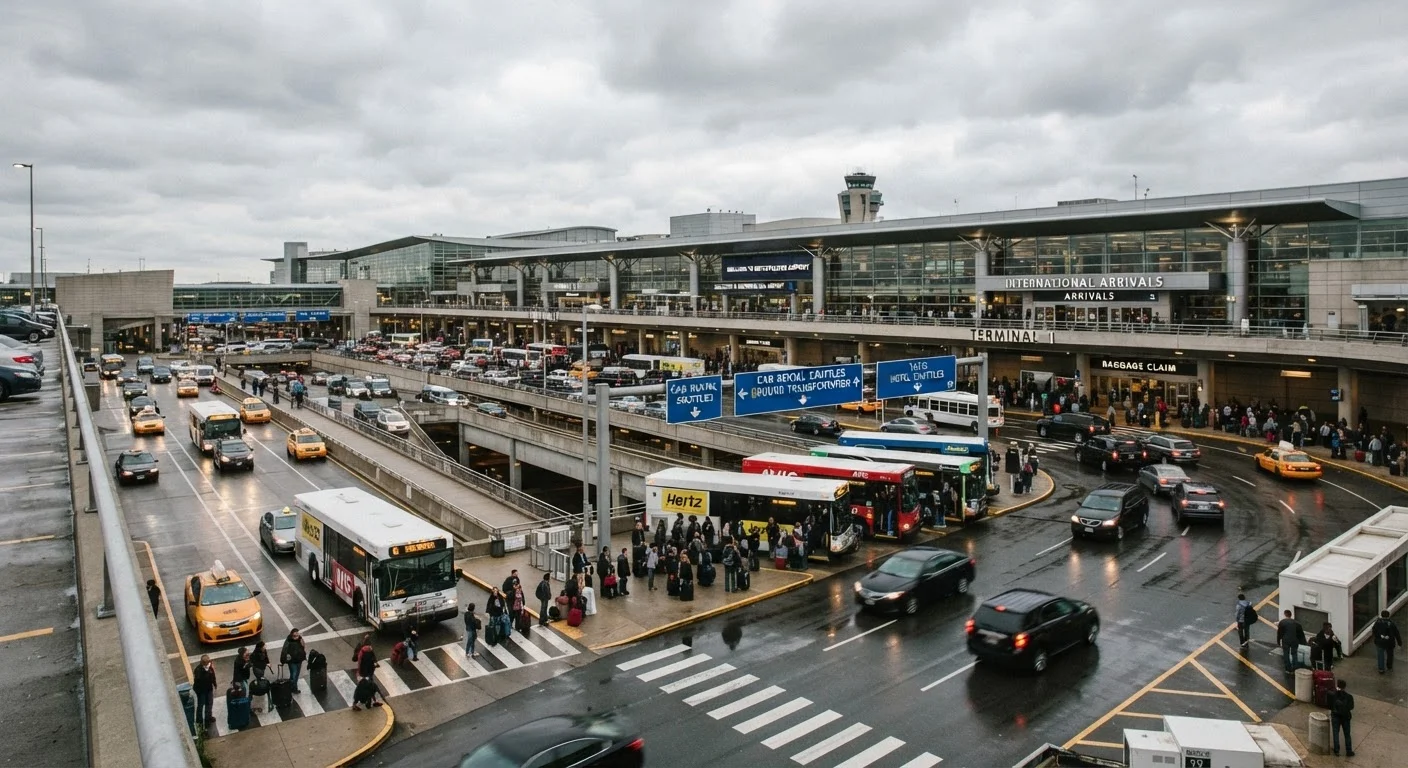
For airport routes specifically, a dedicated rail link or express bus frequently outpaces a taxi by a significant margin during busy periods. Our article on airport transfer options walks through the trade-offs for each method.
40–50%
Average speed reduction for urban road traffic at peak hours
Traffic engineering research across major global cities consistently documents this range of speed loss during morning and evening rush periods compared to off-peak conditions.
2–3 min
Typical headway for a busy urban metro line
High-frequency metro lines in cities like Tokyo, Paris, and New York run trains every two to three minutes during peak hours, minimizing platform wait time substantially.
The most useful habit to build is checking a transit app — Google Maps, Citymapper, or a local equivalent — before every journey. Toggle between driving and transit mode and compare the total times, not just the in-vehicle segment. You'll quickly develop an instinct for which mode makes sense where. You can also read more about why transfers take longer than maps suggest to sharpen your planning further.
Don't Forget the Last-Mile Walk
Transit apps show travel time between stops, not between your exact start and end points. Always check how far the nearest station is from your origin and how far the destination stop is from where you're actually going. A ten-minute train journey with a fifteen-minute walk on each end is a thirty-five-minute trip — that's important context before you dismiss a taxi as unnecessary.