Why Accessibility Varies So Much Between Networks
No two transit systems handle accessibility the same way. A network built in the 1970s may have retrofitted only a fraction of its stations with elevators, while a newer system might offer step-free access at every stop. This inconsistency is one of the most important things for travelers with mobility needs to understand before relying on public transit abroad.
The gap between a transit system's official accessibility commitments and what passengers actually experience can be significant. Lifts break down. Gap-bridging ramps require staff assistance that isn't always available. Tactile paving may exist on platforms but not on street-level approaches. Planning around the best-case scenario often leads to real problems on the day.
When researching a destination, go beyond the transit authority's general accessibility page. Look specifically for: which individual stations are step-free end-to-end (entrance to platform), whether lift outages are reported in real time, and whether assistance services require advance booking. The right transit apps can surface live lift status and accessible-route filtering that static maps don't show.
Key Accessibility Features to Research by Mode
Different transit modes present different challenges. Here's what to look for with each:
Metro and Subway
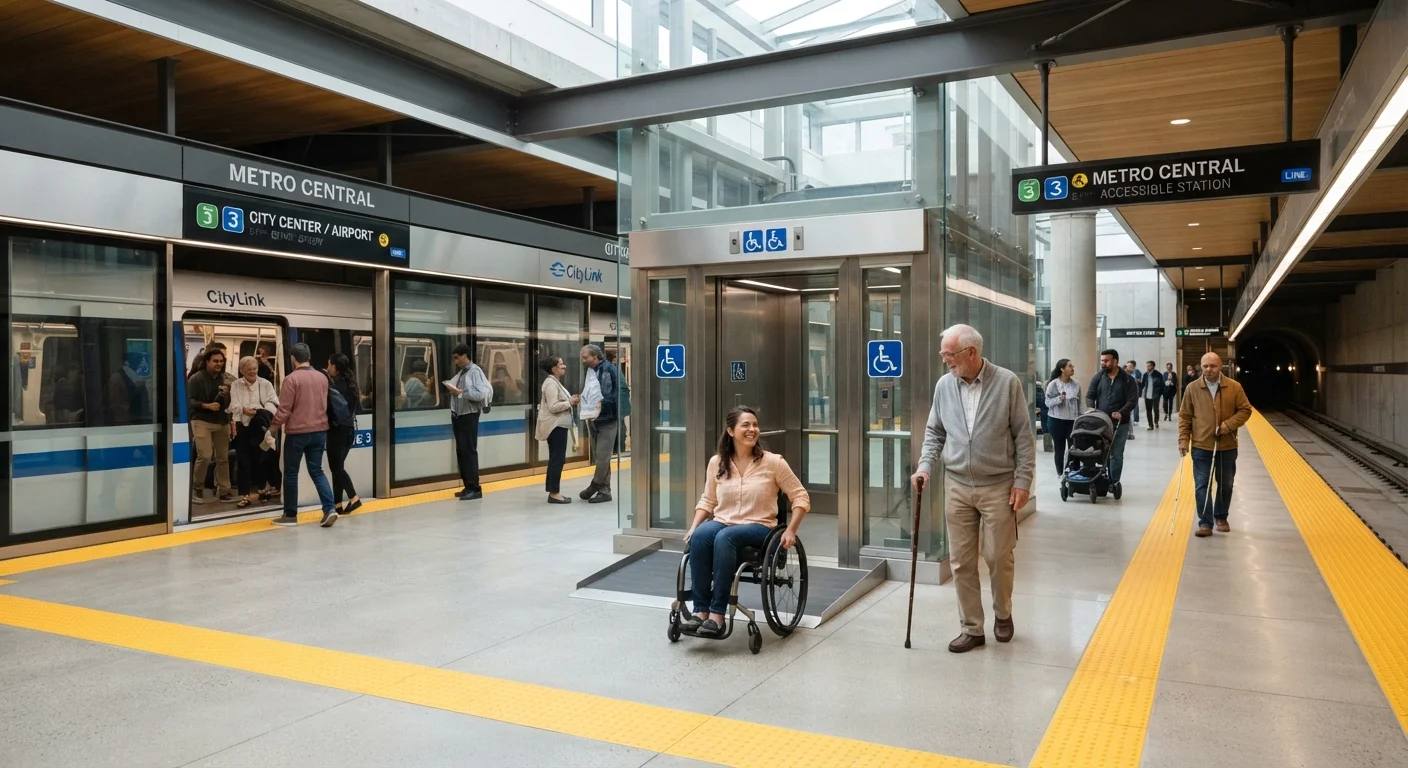
- Step-free access: Confirm that your specific origin and destination stations — not just some stations — have working elevators or ramps from street to platform.
- Platform gap and height: The space and height difference between the train door and the platform edge varies. Some systems use boarding ramps or gap fillers; others do not.
- Priority spaces: Most modern metros have designated wheelchair spaces, but their position in the train may matter if only certain doors align with ramps.
City Bus
- Low-floor and kneeling buses: Many cities now run low-floor buses that kneel toward the curb. Availability varies by route and time of day.
- Ramp deployment: Retractable ramps are common, but drivers may need to be flagged to deploy them. Know the process in advance.
- Stop infrastructure: Even if the bus is accessible, the pavement or kerb at your stop may not be.
For a broader comparison of how these modes differ in practice, see city bus vs. metro.
Step-Free Access
A route from street level to the transit vehicle that involves no stairs or steps. This typically requires elevators, ramps, or both to be operational at every stage of the journey.
Gap Filler / Boarding Ramp
A bridging device deployed between the train door and the platform edge to eliminate the gap. Some systems deploy these automatically; others require a staff member to assist.
Kneeling Bus
A bus that can lower its suspension on the boarding side to reduce the step height from the curb. Common on modern low-floor bus fleets in many cities.
Priority Space
A designated area on a vehicle reserved for passengers with disabilities, wheelchair users, or those with reduced mobility. Other passengers are generally expected to vacate if needed.
Tactile Paving
Textured ground surface indicators — typically raised dots or bars — installed to guide visually impaired travelers along safe walking paths and toward platform edges.
Passenger Assistance Service
A formal program offered by some transit networks where trained staff help passengers with mobility needs board, transfer between platforms, or navigate stations. Advance booking is usually required.
Requesting Assistance and Booking Support in Advance
Many transit networks offer formal passenger assistance programs — staff who meet travelers at a gate, operate boarding ramps, or escort passengers between platforms. However, these services almost always require advance notice, sometimes 24 to 48 hours ahead of travel.
Before your trip, check whether the transit authority offers a dedicated accessibility helpline or online booking form. Traveling during peak hours may limit the availability of assistance staff, so factor that into your timing. It's also worth confirming the procedure if a lift is out of service when you arrive — some networks have a duty officer protocol; others leave passengers to find an alternative route independently.
Reviewing your planned route the evening before departure is especially useful when accessibility is a factor. The pre-journey checklist covers exactly this kind of preparation, including how to verify live disruptions that affect accessible routes. Remember that priority seating norms also vary by country — knowing when and how to ask others to vacate a priority space reduces friction on board.
Accessibility provisions, assistance service availability, and infrastructure standards change over time. Always verify current conditions directly with the transit authority before travel, and check your government's travel advisory pages for any relevant destination-specific guidance.