Boarding the Plane
If you've already made it through security and to the gate, the hardest part is behind you. For a full walkthrough of everything that happens before you board, see our airport step-by-step guide.
Boarding is announced in groups - usually labeled by number, zone, or a tier like "priority" or "basic economy." Your boarding pass shows your group. Don't rush to form the line early; wait until your group is called, then scan your pass at the reader and follow the jet bridge onto the plane.
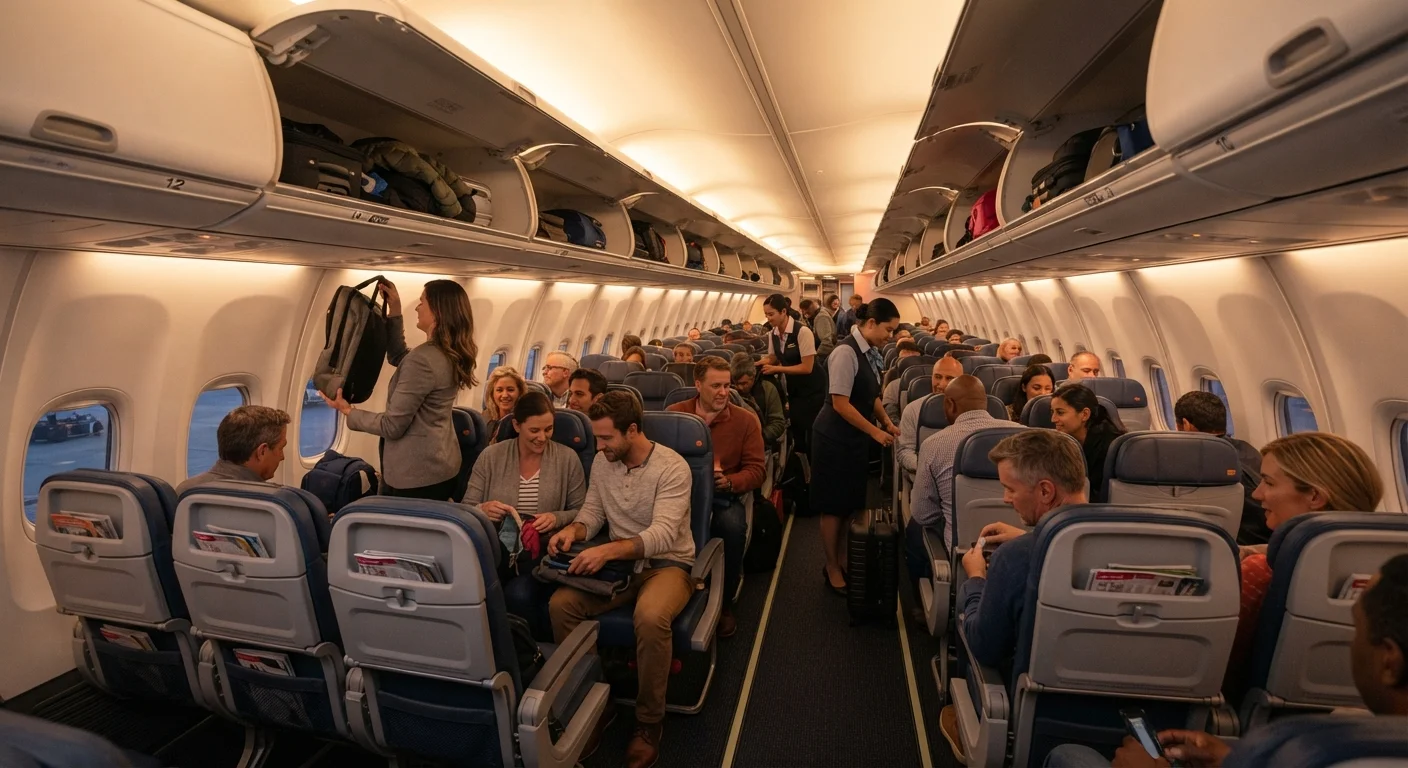
As you step inside, a crew member will greet you and can confirm which direction your row is in. Row numbers increase as you move toward the back of the plane. Check your boarding pass for your row and seat letter - A through C are typically window and middle on one side, D through F on the other.
Jet bridge
The covered walkway that connects the airport gate to the airplane door, allowing passengers to board without going outside.
Boarding group
A number or label on your boarding pass that tells you when it is your turn to board the plane - called in sequence by gate staff.
Overhead bin
The storage compartment above your seat, used for carry-on bags during the flight.
Cruising altitude
The stable, high-altitude flight level the plane maintains for most of the journey, typically between 30,000 and 38,000 feet on domestic US flights.
Thrust reverser
A mechanism that redirects engine power forward to help slow the aircraft rapidly after touchdown on the runway.
Turbulence
Irregular air movement that causes the aircraft to shake or bump during flight. It is common and aircraft are designed to handle it safely.
Getting Settled in Your Seat
Stow your carry-on bag in the overhead bin directly above or near your seat as soon as you reach it - this keeps the aisle clear for other boarding passengers. Place smaller items like a purse or personal bag under the seat in front of you, where they must stay for takeoff and landing.
Once seated, buckle your seatbelt low across your hips and leave it fastened whenever you are in your seat. Locate the safety card in the seat pocket in front of you - reading it takes about two minutes and tells you exactly where the emergency exits are on your specific aircraft.
Put the essentials within arm's reach
Before stowing your bag, pull out anything you'll want during the flight - headphones, a snack, medication, or a book. Once the overhead bin is closed and the plane is taxiing, accessing it again is inconvenient. Keeping a few items in your seat pocket saves you from climbing over seatmates mid-flight.
Flight attendants will conduct a safety demonstration before departure, covering seatbelts, oxygen masks, and exits. Pay attention even if you feel self-conscious - it is genuinely useful information for first-time flyers.
Takeoff: What to Expect
Once the plane pushes back from the gate, it will taxi - drive slowly along the airfield - to the runway. This can take anywhere from a few minutes to 20 minutes depending on airport traffic. You'll feel gentle turns and hear the engines at low power.
At the runway, the engines will increase to a loud, steady roar, the plane will accelerate rapidly, and within seconds you'll feel the nose lift. That slight pressure you feel pushing you back into your seat is completely normal - it's just acceleration. Shortly after liftoff you may hear clunks and mechanical whirring as the landing gear retracts into the fuselage. This is one of the most common sounds that surprises new flyers, but it's routine.
If you find takeoff stressful, our article on flying with anxiety offers practical techniques to stay calm during this phase.
During the Flight
Once the seatbelt sign turns off - usually a few minutes after reaching cruising altitude - you're free to move around the cabin. The sign is your guide throughout the flight: when it comes back on, return to your seat and refasten your belt. Turbulence can occur at any time, and the crew will always warn you when they can.
To decode the chimes, lights, and announcements you'll hear throughout the flight, check out our guide on what every announcement, bell, and light on a plane actually means.
If you need a flight attendant, press the call button on the panel above your head - don't hesitate to use it. Restrooms are at the front and back of the cabin. On longer flights, service carts with drinks and snacks will come through the aisle; the crew will let you know what's available.
Turbulence is not an emergency
Bumpy air during the flight is the single thing that surprises nervous first-timers most. Modern aircraft are engineered to flex and absorb turbulence - it is genuinely routine. When the seatbelt sign comes on during rough air, fasten your belt and remain seated; that is exactly what the sign is for.
For more on the small habits that make flying easier, see things first-time flyers wish they'd known.
Landing and Deplaning
Descent begins 20-40 minutes before landing on most domestic flights. You'll feel the plane angle slightly downward and hear the engines change pitch. The crew will ask you to return your seat to an upright position, stow tray tables, and fasten your seatbelt. You may feel pressure in your ears as the cabin altitude changes - yawning, swallowing, or chewing gum can help equalize it.
On final approach, the runway lights and ground will come into view. The moment of touchdown - wheels contacting the runway - involves a firm jolt and then rapid deceleration as the brakes and thrust reversers engage. This is all normal and expected.
Once the plane reaches the gate and the seatbelt sign turns off, the cabin will begin to deplane row by row from the front. Remain seated until the rows ahead of you have cleared. Collect all your belongings from the overhead bin and under-seat area, and proceed toward the exit. If you have a connecting flight, check the signs in the terminal for your next gate immediately after exiting.
You've landed - your first flight is complete. If you're continuing your trip, our Airport Know-How hub has everything you need to navigate the terminal with confidence.