Arriving at the Airport: Timing and Orientation
The moment you step inside an airport for the first time, the scale of it can feel overwhelming. Hundreds of signs, moving walkways, and crowds all compete for your attention. The good news: airports follow a consistent logic, and once you understand the flow, it becomes much easier to navigate.
For domestic U.S. flights, plan to arrive at least two hours before departure. For international flights, allow three hours. These buffers exist because check-in, security, and the walk to your gate all take time - and lines can be unpredictable.
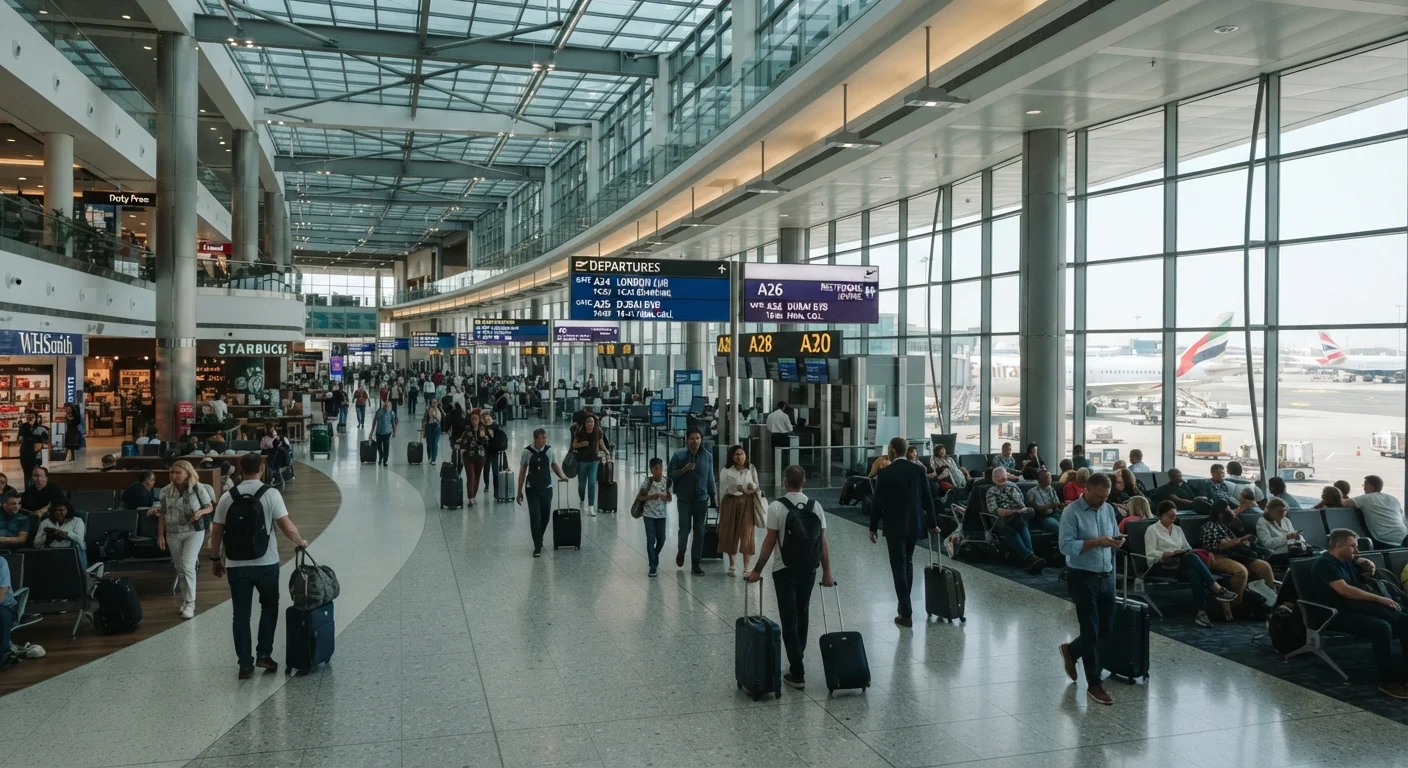
When you enter the terminal, look for the Departures section (not Arrivals). Large overhead screens list flights by destination and airline, showing check-in counter locations and, later, gate assignments. Take a moment to locate your flight before moving anywhere else.
International Airports Work Differently
If your first flight is an international one, the airport experience includes additional steps: passport control, customs declarations, and sometimes separate international terminals. Allow extra time and review the specific procedures for your departure airport in advance.
If you haven't booked your flight yet, see our complete first-time booking guide before your travel day.
Check-In: Dropping Your Bags and Getting Your Boarding Pass
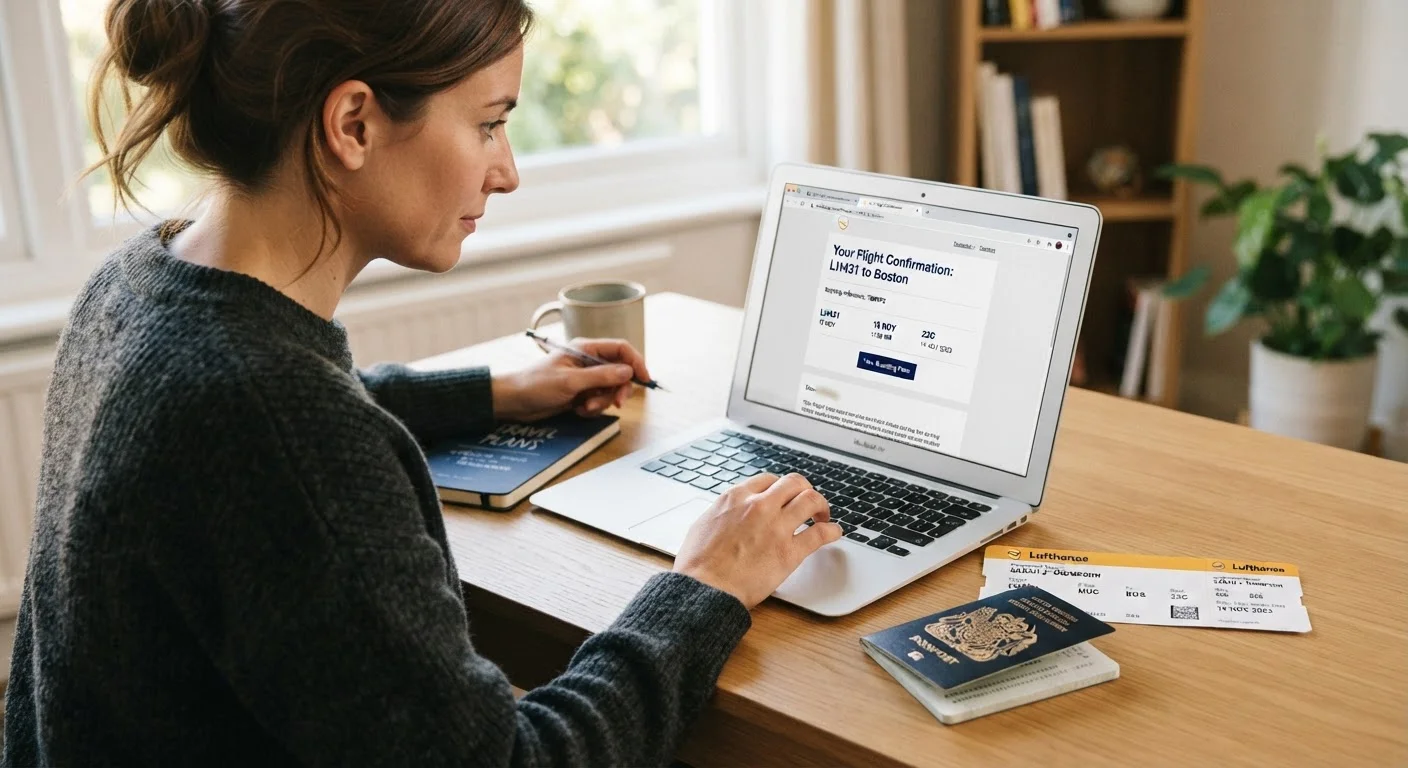
Check-in is the process of confirming you're on the flight and, if you have checked luggage, handing it over to the airline. You have two main options: online check-in (done from your phone or computer, typically 24 hours before departure) or airport check-in at the counter.
If you checked in online and only have a carry-on, you may be able to go directly to security - skipping the counter entirely. If you have bags to check, you'll use a bag drop counter, which is typically faster than the full check-in line. Our guide on online vs. airport check-in explains the trade-offs in detail.
At the counter or kiosk, you'll present your ID (and passport for international travel) and receive a boarding pass - either printed or added to your phone's wallet. This document is essential: it shows your flight number, seat, gate, and boarding group. Keep it accessible for the rest of your journey.
Screenshot Your Boarding Pass Before You Fly
Save a screenshot of your mobile boarding pass before leaving for the airport - not just the app. If you lose cell service or your airline app crashes, you'll still have the barcode accessible directly from your photo library. Make sure your screen brightness is turned up all the way when you present it at security and the gate.
Security Screening: What to Expect at the Checkpoint
TSA (Transportation Security Administration) security screening is the step that causes the most first-timer anxiety - but the process is straightforward once you know the rules.
As you approach the checkpoint, you'll place your carry-on items into plastic bins. Laptops and large electronics must come out of bags and go in a separate bin. Liquids must follow the 3-1-1 rule: each container must be 3.4 oz (100 ml) or less, all containers must fit in a single clear quart-sized zip-top bag, and you may carry one such bag per person.
You'll walk through either a metal detector or a body scanner. If selected for additional screening, stay calm - an officer will guide you through a brief pat-down or bag check. Remove your shoes, belt, and jacket before your turn to keep the line moving.
Boarding pass
A document (paper or digital) that confirms your seat on a specific flight. It contains your name, flight number, departure gate, seat number, and boarding group.
TSA
The Transportation Security Administration - the U.S. government agency that operates airport security checkpoints and screens passengers and luggage before they board flights.
Checked baggage
Luggage that you hand over to the airline at check-in to be stored in the aircraft's cargo hold, rather than carried onto the plane with you.
Carry-on
A bag you bring onto the plane and store in the overhead bin or under the seat in front of you. Size and weight limits vary by airline.
Jetbridge
The enclosed walkway that connects an airport gate directly to the door of the aircraft, allowing passengers to board without going outside.
3-1-1 rule
The TSA rule for liquids in carry-on bags: containers must be 3.4 oz (100 ml) or less, placed in 1 clear quart-sized zip-top bag, with 1 bag per passenger.
For safety tips that extend beyond the airport checkpoint, the Staying Safe hub covers essential practices for first-time travelers.
Finding Your Gate and Waiting to Board
Once you're through security, you're in the secure (airside) zone. Gates are labeled with a letter and number combination - such as B12 or C4 - and are grouped into concourses or terminals. Follow the overhead signs toward your gate letter first, then your gate number.
Confirm your gate on the departure screens before settling in. Gate assignments can change, especially if your departure is more than an hour away. Screens near your gate will also display your flight's status: On Time, Delayed, or Boarding.
Use the waiting time to visit the restroom, grab food or water (you can bring a filled bottle from past security), and charge your devices. Our article on making the most of airport waiting time offers practical ways to stay comfortable before your flight.
Note that the airport experience differs significantly if you're flying internationally. Domestic vs. international airports breaks down exactly how the process changes.
Boarding the Plane: The Final Steps
Boarding is announced at the gate, usually 30-45 minutes before departure. Airlines board in groups - typically numbered or labeled (Group 1, Group 2, etc.) - indicated on your boarding pass. Priority and first-class passengers board first, followed by families with young children, and then the remaining groups in sequence.
When your group is called, join the line and have your boarding pass and ID ready. The gate agent will scan your boarding pass and you'll walk down the jetbridge - the enclosed walkway connecting the gate to the aircraft door. A flight attendant will greet you and direct you to your seat.
Stow your carry-on in the overhead bin directly above or near your seat (not at the front of the plane). Place smaller items under the seat in front of you. Once seated, fasten your seatbelt and pay attention to the safety demonstration - it's brief, and it matters.
After your flight lands, check out our step-by-step airport transfer guide to navigate confidently from the arrival terminal to your destination.
Don't Leave the Gate Area Before Boarding
Once your gate is announced, stay within hearing range of it. Final boarding calls happen quickly and gates can close 10-15 minutes before the scheduled departure time. If you wander to a shop or restaurant in a different concourse, you risk missing your flight even if you return before the posted departure time.