
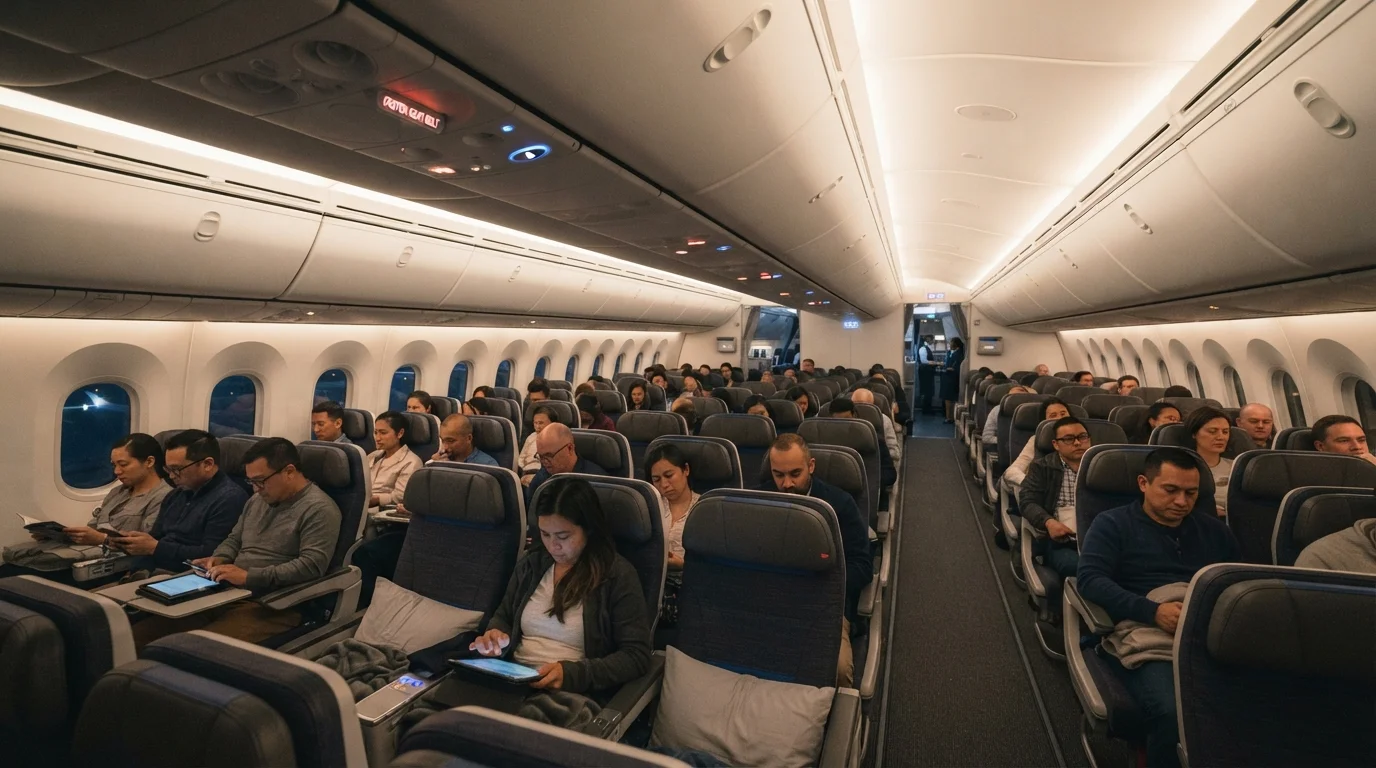
The Chimes: What Each Sound Is Telling You
From the moment you board until the aircraft parks at the gate, a series of chimes punctuates the flight. Each has a purpose, and none should cause alarm once you know the code.
A single chime during boarding usually signals a change in door status - for example, doors have been armed or disarmed - or a routine crew-to-crew intercom message. You'll likely hear it several times before departure without any accompanying announcement.
A single chime mid-flight most often means a passenger has pressed the call button to request assistance, or a crew member is contacting another station via the intercom. No action is needed from other passengers.
Multiple rapid chimes (sometimes called a "chime cascade") are an internal crew alert. On many aircraft, a specific pattern - such as three consecutive chimes - signals that crew members need to communicate urgently. You may notice flight attendants pause and listen or pick up a handset. This is standard operational communication, not a distress signal.
Chime Patterns Vary by Airline
Airlines program their chime systems differently, so a two-chime sequence may mean something distinct on one carrier versus another. The meanings described here reflect common industry conventions, not universal standards. If you're unsure what a signal means on your specific flight, a flight attendant will always clarify.
For a broader look at what happens onboard, see our step-by-step first flight guide.
Lights: Seatbelt Signs, Cabin Dimming, and Overhead Panels
The lights above your seat are your visual dashboard for the flight's status.
| Seatbelt sign meaning | Return to your seat and buckle up immediately |
| Single low chime (during boarding) | Cabin crew alert or door status change |
| Single chime (mid-flight) | Passenger call button pressed or crew intercom |
| Three-chime sequence | Often an emergency or urgent crew communication signal (varies by airline) |
| Fasten seatbelt light on during cruise | Turbulence ahead - stay seated with belt fastened |
| "Prepare for landing" announcement | Crew stows carts, checks seats, dims cabin lights |
| Cabin lights dimmed at night | Aids eye adjustment in case of emergency evacuation |
The fasten seatbelt sign is the most important light to watch. When it illuminates - accompanied by a chime - you are being instructed to return to your seat and buckle your belt without delay. It comes on routinely during takeoff, landing, and any time the pilots anticipate turbulence. Keeping your belt loosely fastened throughout the flight is a widely recommended habit, since turbulence can occur without advance warning.
Cabin lights dimming before landing at night serves a safety function rather than a cosmetic one. Aviation authorities require this so that passengers' eyes adjust to lower light levels, which makes the bright emergency lighting strips on the floor easier to follow quickly in an unlikely evacuation scenario.
The call button light above your seat - usually orange or red - illuminates when you press the attendant call button and stays on until a crew member responds and resets it. Pressing it a second time cancels the request on most aircraft.
Learn more about the pre-takeoff sequence in our guide to what happens between the cabin door closing and takeoff.
Announcements: Captain, Crew, and What They're Really Saying
Every announcement follows a recognisable pattern once you've heard a few flights. Here's how to read them.
Fasten Seatbelt Sign
An illuminated overhead symbol instructing all passengers to buckle their seatbelts. It is activated by the flight deck crew and may be switched on at any point during the flight.
Cabin Crew Call Button
An overhead button passengers press to request assistance from a flight attendant. It typically triggers a single chime and illuminates a small light above the seat.
Cockpit (Flight Deck)
The forward compartment of the aircraft where the pilots operate the plane. Announcements from the captain originate here via the public address (PA) system.
PA System
Public Address system - the intercom network used by the captain and cabin crew to broadcast announcements throughout the cabin.
Turbulence
Irregular air movement that causes the aircraft to bump or sway. It is a normal part of flight and rarely indicates danger, though the seatbelt sign is typically activated during turbulent periods.
Deadhead Crew
Off-duty airline staff traveling as passengers, often to position themselves for another flight. They may be seated in the cabin but are not on duty for that flight.
The captain's welcome announcement typically covers the flight duration, cruising altitude, expected weather en route, and arrival time. The tone is deliberately calm and matter-of-fact. If the captain mentions turbulence, it is informational - an early heads-up to stay buckled.
"Cabin crew, prepare for takeoff" (or an equivalent phrase) is directed at flight attendants, not passengers. It signals that the pilots have received clearance and are approaching the runway. Crew members take their jump seats in response.
"Cabin crew, prepare for landing" triggers the final cabin check - tray tables stowed, seats upright, carry-on items secured, lavatories cleared. This is not an emergency signal; it is a coordinated pre-arrival procedure.
Unannounced extended silence is not a warning sign. Pilots are focused on flying and communicate with crew only when necessary. Silence simply means nothing needs to be communicated to the cabin right now.
If you'd like to build your overall airport confidence alongside your in-flight knowledge, the Airport Know-How hub is a useful starting point.
Flight procedures and signal conventions may vary between airlines and aircraft types. Always follow the specific instructions given by the crew on your flight.