Why Flying Triggers Anxiety - And Why That's Normal
Fear of flying affects a substantial portion of the traveling public. It doesn't mean something is wrong with you - it means your nervous system is reacting to an unfamiliar environment where you feel little control. That combination of novelty, confinement, and altitude is genuinely unusual for a human brain, and anxiety is one natural response to it.
What makes flight anxiety particularly persistent is the cycle it creates: an unfamiliar sound or movement triggers worry, worry triggers physical symptoms (racing heart, tense muscles, shallow breathing), and those physical symptoms feel like confirmation that something is wrong. Breaking that cycle is the core goal of everything in this guide.
It also helps to separate fear from risk. Aviation has an extraordinarily strong safety record developed over decades of engineering, regulation, and crew training. If you want to challenge some of the stories your brain tells you about flying, our article on flying myths that make first-timers more nervous is a useful companion to this one.
Knowledge Reduces the Fear of the Unknown
Anxious flyers often find that learning about how aircraft work - even at a basic level - makes unfamiliar sounds and sensations far less threatening. You don't need to become an aviation expert; understanding just a few key facts about what happens during takeoff, cruise, and landing can meaningfully reduce the 'what was that?' spiral. Consider reading about the flight phases before you travel.
What Those Sounds and Sensations Actually Mean
One of the fastest ways to reduce anxiety is to replace the unknown with the known. Here is what several common and alarming-sounding events actually are:
- Loud thud after takeoff: The landing gear retracting into the fuselage - entirely expected.
- Engine whine changing pitch: Pilots adjusting thrust during climb or descent, just as you would ease off a car's accelerator.
- Clicking or clanking beneath your feet: Often the flap mechanisms adjusting, or temperature expansion in the airframe.
- Sudden drops or shaking: Turbulence - pockets of uneven air that feel dramatic from inside the cabin but are a routine part of flight. Our dedicated guide on what turbulence really is explains the physics in plain language.
- Pressure in your ears: Cabin pressure equalizing during ascent and descent. See why your ears pop and how to ease the pressure for simple relief techniques.
Knowing the cause of a sound shifts it from a threat signal to neutral information. That cognitive shift alone can reduce the spike of anxiety it triggers.
When to Seek Professional Support
If flight anxiety is severe enough that you avoid travel altogether, or that the anticipation causes significant distress days or weeks before a flight, it may meet the threshold of a specific phobia. Cognitive behavioral therapy (CBT) and exposure-based therapies have a strong evidence base for treating phobias including fear of flying. Speak with a licensed mental health professional to explore options that are appropriate for your situation.
Step-by-Step Techniques to Use Onboard
The following steps are ordered so you can apply them progressively - start with breathing, then layer in additional strategies as needed. You don't need to use all of them; find what works for your body and mind.
Use controlled breathing to calm your nervous system
Anxiety triggers shallow, rapid breathing, which in turn worsens physical anxiety symptoms. Slow, deliberate breathing signals to your nervous system that you are safe. Try box breathing: inhale for 4 counts, hold for 4, exhale for 4, hold for 4. Repeat for at least 2 minutes.
Another effective pattern is an extended exhale - breathe in for 4 counts and out for 6 or 8. The longer exhale activates the parasympathetic nervous system, which counteracts the fight-or-flight response.
Ground yourself using the 5-4-3-2-1 technique
When anxious thoughts spiral, grounding brings attention back to the present moment and interrupts the cycle. Work through each sense in turn:
- Name 5 things you can see (seat fabric, window shade, overhead light).
- Name 4 things you can physically feel (armrest, seatbelt, air from the vent).
- Name 3 things you can hear (engine hum, air conditioning, a nearby conversation).
- Name 2 things you can smell (even faint scents count).
- Name 1 thing you can taste.
The exercise is not about positive thinking - it is about redirecting cognitive resources away from anxious projection and back into the sensory present.
Prepare a distraction kit before you board
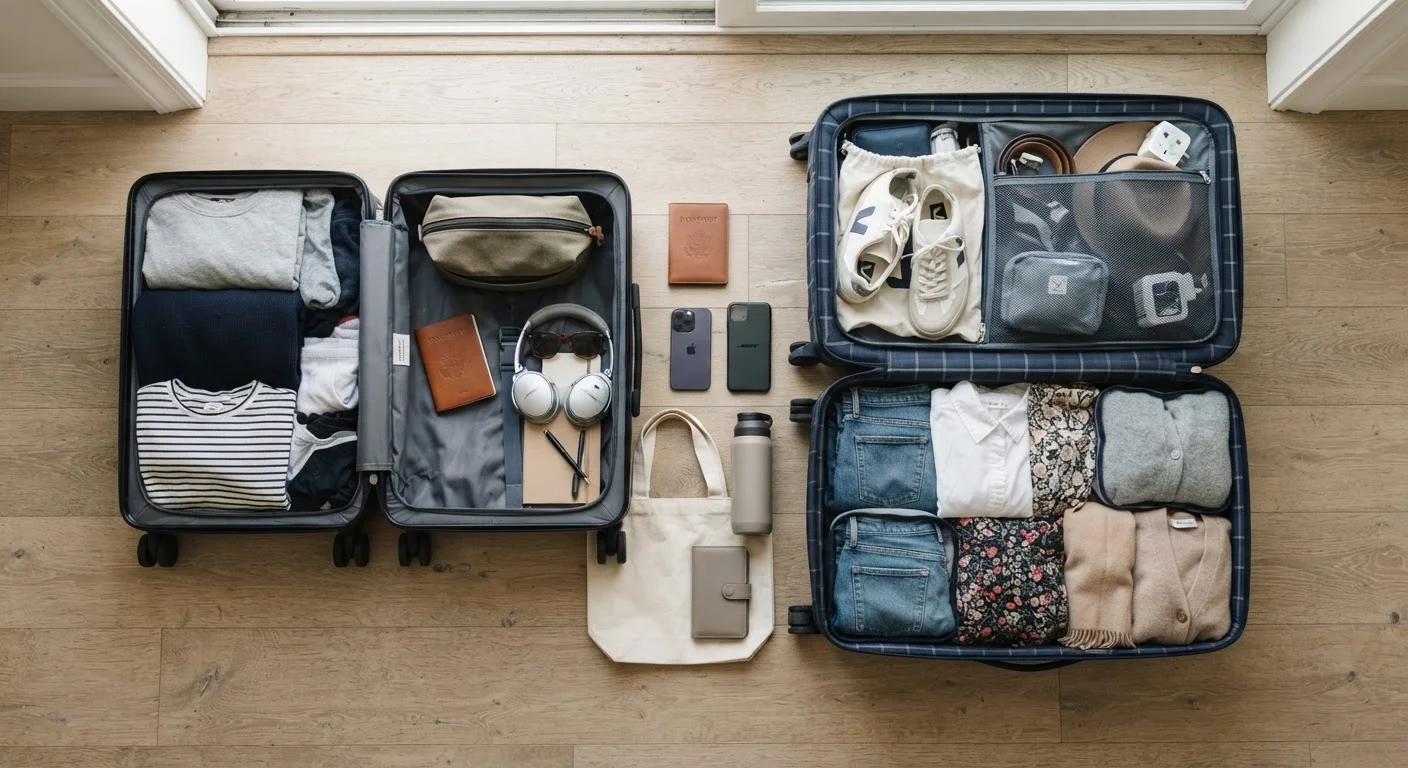
Distraction is a legitimate and effective anxiety management tool - not avoidance. Load your phone or tablet before you board with content that absorbs your attention: a podcast series, an audiobook, a downloaded TV show, a puzzle game. Passive content (something playing in the background) is less effective than something that requires your active attention.
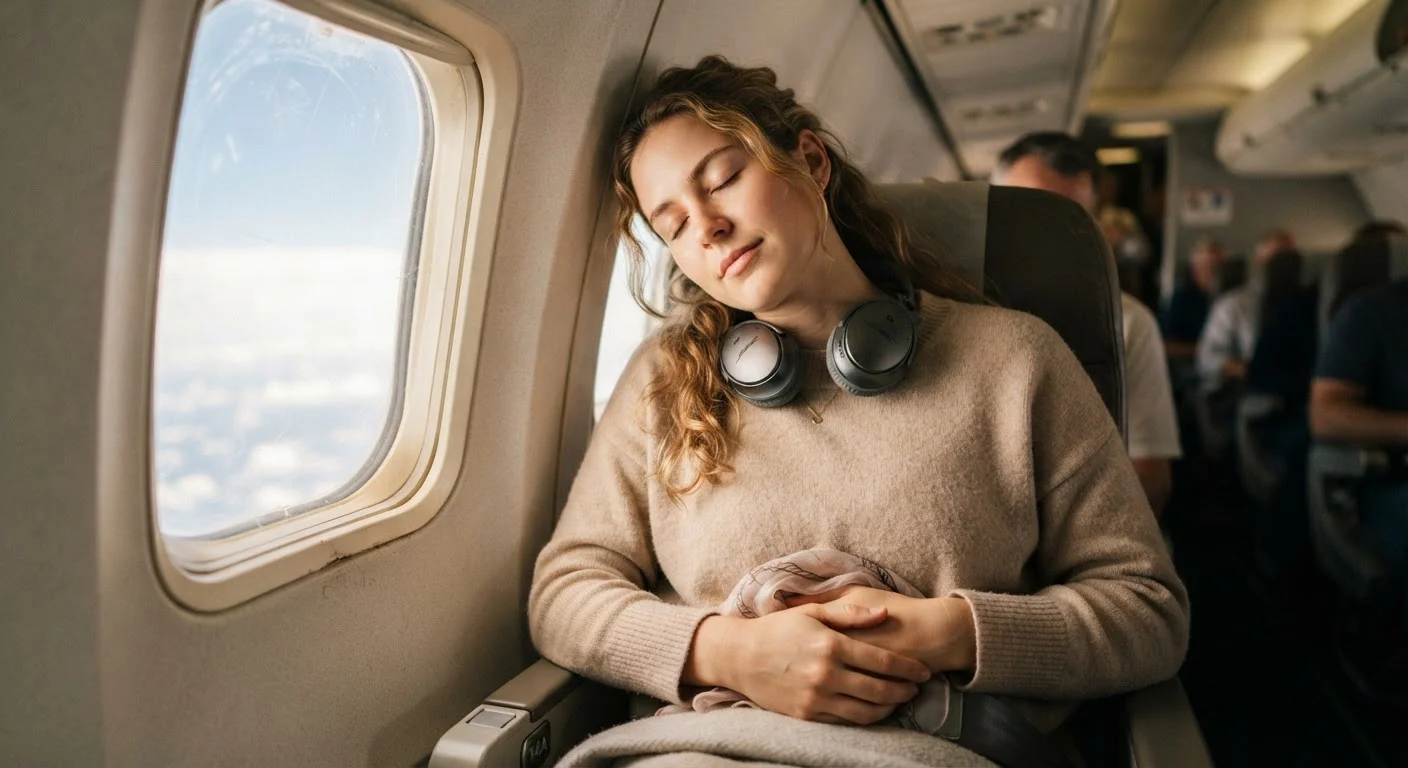
Noise-canceling headphones can also help by reducing the ambient engine roar, which many anxious flyers unconsciously monitor for changes.
Manage your physical comfort
Physical discomfort amplifies anxiety. Address the basics: stay hydrated (alcohol and caffeine both worsen anxiety symptoms and dehydration at altitude), wear loose and comfortable clothing, and use a neck pillow or rolled jacket to reduce tension. If you feel claustrophobic, try directing the overhead air vent toward your face - increased airflow often eases that sensation quickly.
For longer flights, gentle movement - ankle circles, shoulder rolls, brief walks to the galley - helps prevent the physical restlessness that feeds anxious thinking. Our guide on keeping your body comfortable on a long-haul flight covers this in more detail.
Talk to the crew if you need reassurance
Flight attendants are trained professionals who have worked with anxious passengers many times. If you are feeling overwhelmed, a quiet word with a crew member - letting them know you are a nervous flyer - often results in small but meaningful acts of support: a check-in during turbulence, an explanation of an unusual sound, or simply a calm presence nearby.
You do not need to manage your anxiety entirely alone for the duration of the flight.
If you'd like a broader picture of what to expect from the moment you board until you land, the guide Your First Flight, From Boarding to Landing walks through the entire experience so nothing catches you off guard.
This article provides general wellness information for educational purposes. It is not a substitute for advice from a qualified mental health professional. If flight anxiety significantly affects your life, consider speaking with a licensed therapist, particularly one familiar with cognitive behavioral therapy (CBT) or exposure-based approaches.