Why the Cabin Environment Changes Everything
Flying isn't just a change of location - it's a change of environment that directly affects your body. Cabin pressure in a typical commercial aircraft is equivalent to being at roughly 6,000-8,000 feet above sea level, even when the plane is flying much higher. At that pressure, humidity inside the cabin typically drops below 20% - far drier than most indoor environments on the ground.
This matters for what you eat and drink because your body works harder to stay hydrated, your nasal passages dry out (reducing your ability to detect flavors), and your digestive system can be more sensitive to gas expansion. Research from Fraunhofer Institute for Building Physics, cited frequently in aviation wellness contexts, has suggested that altitude can reduce taste sensitivity for sweet and salty flavors by as much as 30%. That's why food that tastes perfectly seasoned in a test kitchen can seem flat at 35,000 feet.
Understanding this helps you make smarter choices - not out of fear, but out of practical awareness. For related physical discomforts during longer flights, see our guide to keeping your body comfortable on a long-haul flight.
A Note on Cabin Pressure and Digestion
Gas naturally expands in lower-pressure environments - the same principle that causes sealed chip bags to puff up inside a cabin. This applies to gas inside your digestive tract, which can make bloating feel more pronounced than it would on the ground. It's not dangerous, but it's worth bearing in mind when choosing what to eat before and during your flight. If you're already prone to digestive sensitivity, erring on the side of simpler, plainer foods is a reasonable precaution.
What to Drink - and What to Go Easy On
Water is the single most important thing you can consume on a plane. Aim for around 8 ounces of water per hour of flight - more than you might instinctively want, since the dry cabin suppresses the sensation of thirst. Most airlines offer complimentary water, and flight attendants will usually refill your cup on request.
Alcohol: Contrary to a persistent myth, alcohol doesn't get you drunk faster at altitude - but it does accelerate dehydration, which compounds how tired and foggy you feel upon landing. If you choose to drink, match each alcoholic drink with a glass of water.
Caffeine: Coffee and tea are dehydrating in larger quantities. One cup is unlikely to cause problems, but relying on multiple cups of coffee to stay alert will cost you in dryness and disrupted sleep. If you're hoping to sleep on the flight, see our practical guide to sleeping on a plane without arriving exhausted.
Carbonated drinks: Gas expands at altitude, which means carbonated beverages can contribute to bloating and discomfort more than they would on the ground. This doesn't mean you must avoid them entirely, but it's worth being aware of if you're prone to bloating.
Best Practices for Eating Onboard
Drink water consistently throughout the flight, not just when thirsty.
Thirst signals are blunted in the dry cabin environment, meaning you can become meaningfully dehydrated before you notice. Consistent intake prevents headaches, fatigue, and the foggy feeling many people attribute to 'jet lag' but is partly dehydration.
Choose light, easily digestible foods over heavy or greasy options.
Your digestive system can be sluggish at altitude because gas in the gut expands with reduced cabin pressure. Heavy, fatty meals increase the risk of bloating, nausea, and general discomfort during and after the flight.
Limit salty snacks even though they may taste more appealing at altitude.
Because salt and sweet flavors are harder to detect in the cabin, you may crave or reach for saltier options. But high sodium intake worsens fluid retention, making swelling in the feet and ankles more pronounced - a common discomfort on longer flights.
Avoid eating a large meal right before boarding if you're prone to motion sensitivity.
A full stomach combined with even mild turbulence can cause queasiness in people who are sensitive to motion. Eating lightly before boarding gives your body more flexibility to handle any unexpected movement.
Pre-order a special meal if you have dietary requirements.
Standard airline catering is produced in large quantities and may not accommodate specific dietary needs reliably. Most carriers allow meal customization at booking or up to 24-48 hours before departure, reducing the risk of having nothing suitable to eat.
The habits you build around eating and drinking in the air have a direct effect on how you feel at your destination. Poor choices aren't dangerous, but they can make your first hours after landing unnecessarily uncomfortable. For a broader look at how onboard decisions shape your landing day, see small onboard habits that quietly ruin your landing day.
Managing Expectations Around Airline Meals
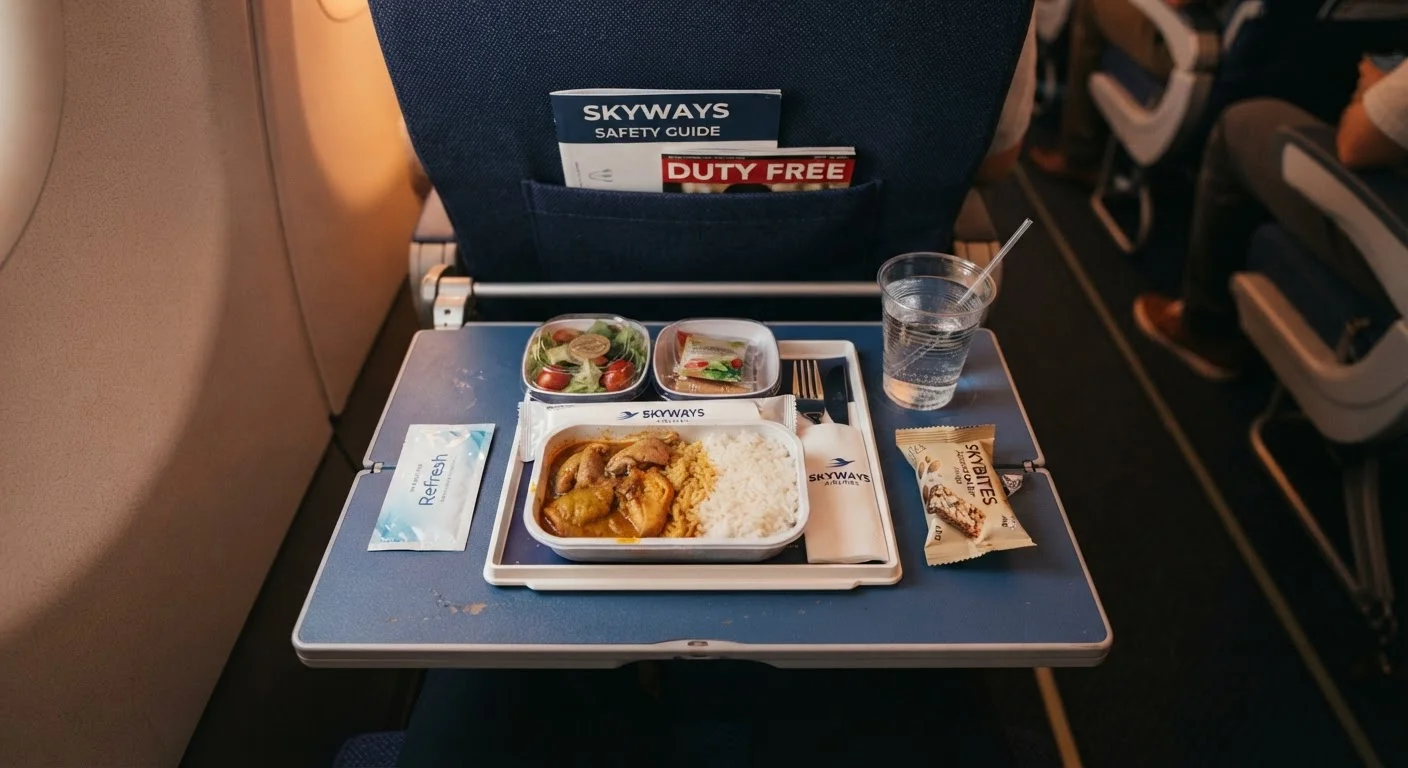
First-time flyers are sometimes surprised that airline meals taste different from food prepared on the ground - now you know why. Reduced taste sensitivity plus the stress of reheating pre-cooked food means airline catering is rarely going to be the highlight of your trip. That's okay. Approach it as functional fuel rather than a dining experience.
“Airline food is engineered for an environment that works against flavor. The real goal of eating on a plane isn't enjoyment - it's arriving in good shape.”
— Charles Spence, Professor of Experimental Psychology, University of Oxford, known for research on multisensory perception and flavor
If your flight is long enough to include a meal service, eating something - even if underwhelming - is generally better than arriving hungry and irritable. If you have dietary requirements, most airlines allow you to pre-order a special meal (vegetarian, gluten-free, low-sodium, etc.) when you book your ticket. This is worth doing in advance if your needs are specific.
For shorter flights, many airlines offer only snacks or buy-on-board options. Packing your own light snacks - think crackers, a banana, nuts in small quantities, or a sandwich from the terminal - gives you more control and ensures you aren't caught without options if service is limited. Avoid pungent foods like strong cheeses or fish out of courtesy to fellow passengers in a confined space.
If you're prone to anxiety while flying, knowing what to expect from the food and drink service can be one less thing to worry about. For broader support, our guide to flying with anxiety covers practical techniques for staying calm onboard.
Pack Smart for Short-Haul Flights
On flights under two hours, airlines frequently offer no complimentary meal - just a snack, or nothing at all. A small, self-packed meal from the terminal can be a genuine comfort. Focus on foods that travel well, don't require refrigeration, and won't disturb nearby passengers. Individually wrapped items are easiest to manage on a tray table.