Why Long-Haul Flights Are Hard on the Body
A flight lasting eight hours or more places real physical demands on your body. Cabin air is pressurized to roughly the equivalent of sitting at 6,000-8,000 feet above sea level, which lowers the amount of oxygen your blood absorbs and causes the air to become very dry - typically around 10-20% humidity, compared to 30-60% indoors at home. Add prolonged sitting in a confined space, disrupted sleep, and crossing multiple time zones, and it's easy to understand why many passengers step off feeling stiff, puffy, headachy, or exhausted.
The good news is that most of these effects are manageable with a handful of consistent habits. None require special equipment or a business-class seat - just a bit of awareness before and during the flight. For a deeper look at what crossing time zones does to your internal clock, see our practical reference on jet lag and long-haul flights.
Best Practices for In-Flight Physical Comfort
The following practices address the most common physical complaints on long flights - from circulation and hydration to posture and fatigue. Build as many of these into your routine as possible.
Drink water consistently throughout the flight - aim for roughly 8 ounces per hour of flying.
Cabin air is extremely dry, and the body loses moisture faster than it would at ground level. Even mild dehydration contributes to headaches, fatigue, and difficulty concentrating, making the flight feel far longer and more uncomfortable.
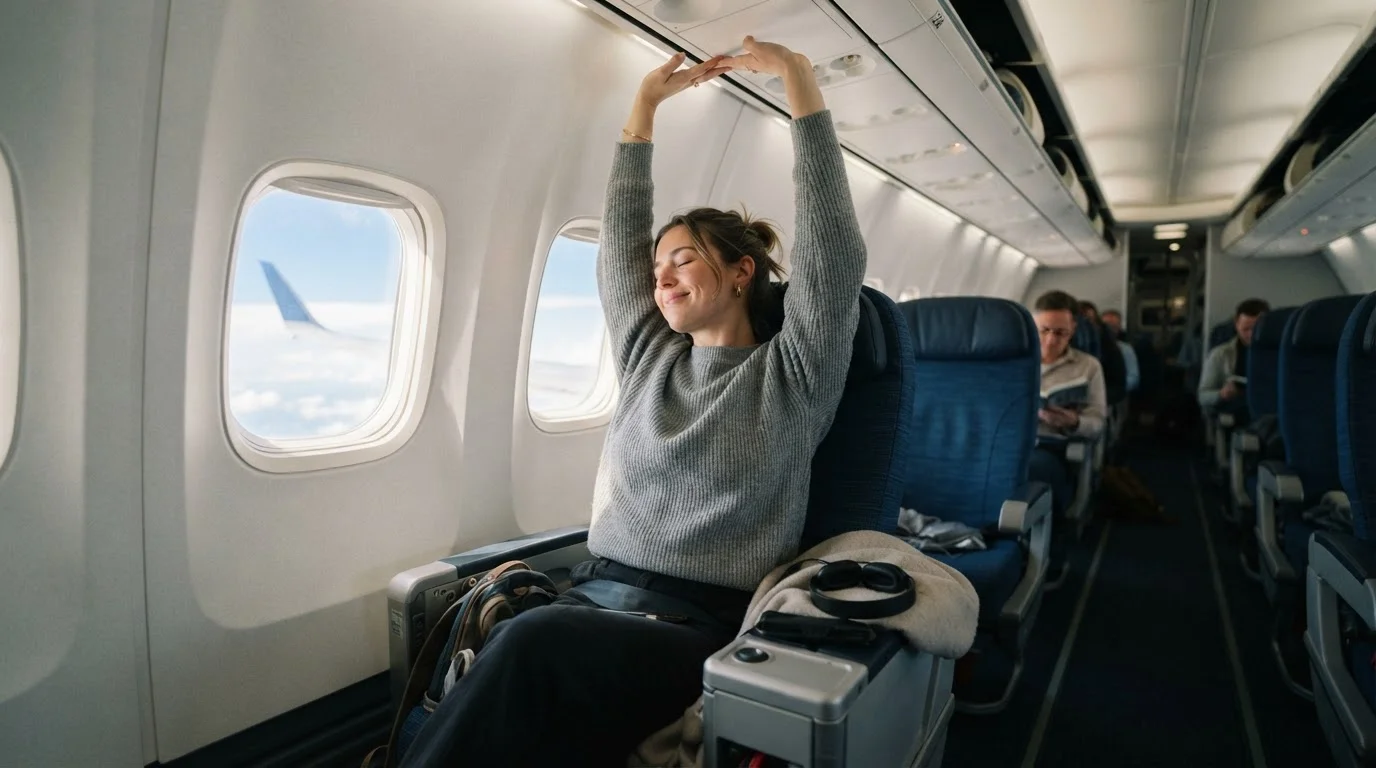
Get up and walk the aisle - or do seated leg exercises - at least once every 60 to 90 minutes.
Sitting still for hours slows circulation in the legs, causing swelling and stiffness and, in rare cases, increasing the risk of deep vein thrombosis (DVT). Consistent movement keeps blood flowing and reduces the heaviness many passengers feel in their lower limbs by landing.
Support your neck and lower back with a travel pillow and rolled blanket.
Economy seats are not designed for extended neutral posture. Without support, the head droops forward and the lumbar spine loses its natural curve, causing the neck and back stiffness that many travelers confuse with inevitable jet lag.
Limit alcohol and caffeine, especially in the first half of the flight.
Both substances are diuretics that increase fluid loss at a time when the body is already contending with dry cabin air. Alcohol also disrupts sleep architecture, meaning you may doze off more easily but wake feeling less rested.
Wear compression socks for flights longer than six hours.
Graduated compression socks apply gentle pressure that helps push blood back up the legs toward the heart, directly countering the pooling effect of prolonged sitting. They are particularly useful for travelers who already experience swelling or have a sedentary job.
Use a sleep mask and earplugs or noise-canceling headphones to create a rest-friendly environment.
Cabin lighting and ambient noise - engine hum, announcements, other passengers - disrupt the light sleep stages that are most restorative. Blocking both gives your nervous system a better chance to recover. Our guide to sleeping on a plane covers timing and posture in detail.
What to Eat, Drink, and Wear
Your choices before boarding shape how your body holds up in the air. On the food and drink side, alcohol and caffeine both accelerate dehydration at altitude, so treat them as occasional extras rather than defaults. Heavy, salty meals can worsen bloating, which is already more likely in a pressurized cabin because gases in the body expand slightly at altitude. See our article on eating and drinking on a plane for specific guidance on what to choose from the trolley.
Moisturizer and Eye Drops Are Worth Packing
Cabin humidity is low enough that skin, lips, and eyes can feel noticeably dry within a few hours. A small travel-size moisturizer and a bottle of preservative-free artificial tears (available over the counter at most pharmacies) can provide significant relief. Contact lens wearers often find switching to glasses for the flight more comfortable.
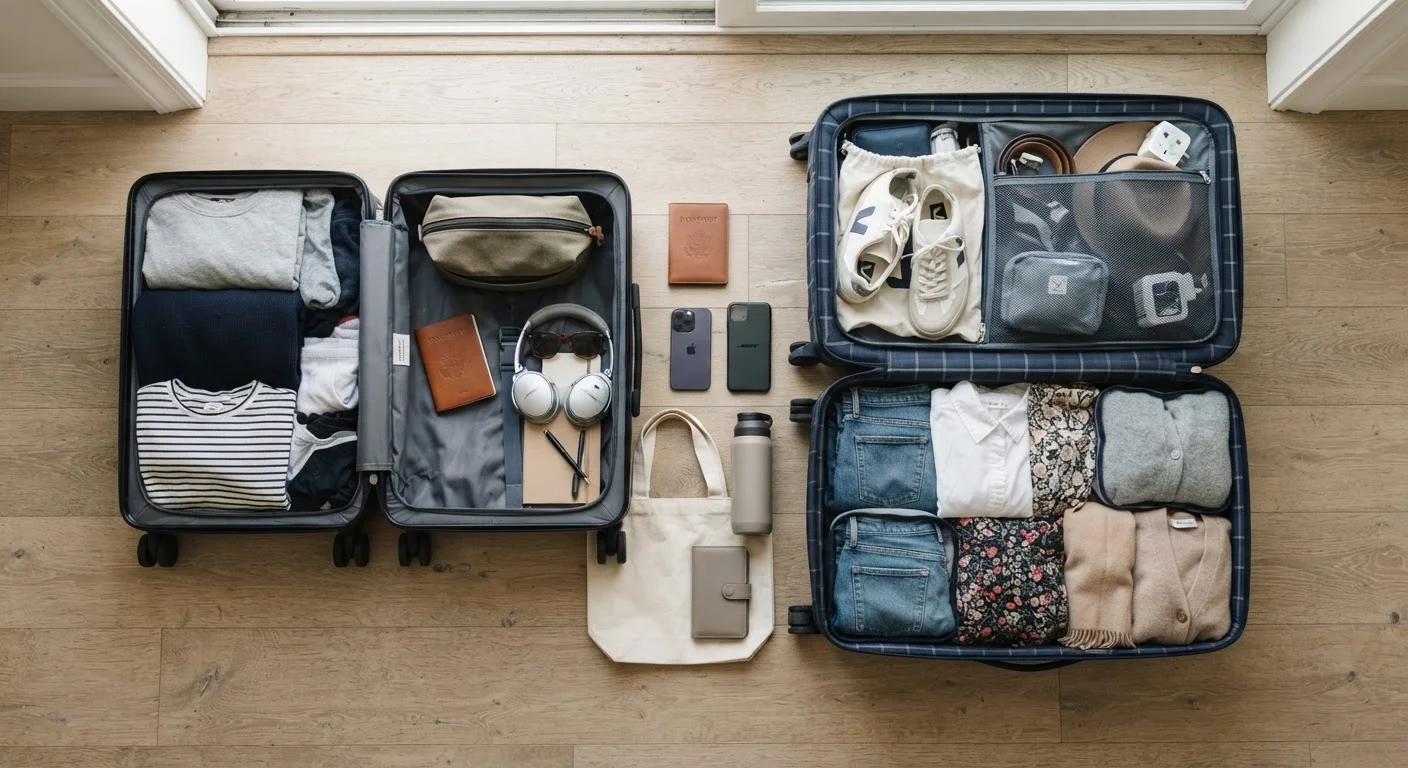
For clothing, think comfort over appearance. Loose-fitting layers work best because cabin temperature can swing noticeably depending on your seat position and how full the flight is. Slip-on shoes are practical - feet can swell enough that lace-ups become tight - and compression socks (available at pharmacies) are worth wearing on flights over six hours if you are prone to leg swelling. Check with your doctor if you have any circulatory concerns before using compression garments.
If staying calm in the air is also on your mind, our companion piece on flying with anxiety covers evidence-based techniques for keeping nerves in check during the journey.
Quick Actions You Can Take Right Now
If your flight is coming up soon, these are the most immediate steps worth taking before you board.
Once you land, give yourself time to rehydrate, walk around, and adjust before making any demanding plans. A smooth airport transfer is easier when you feel physically settled - our airport transfers guide can help you plan the last leg of your journey with minimal stress.