Why the Flight Itself Sets the Tone for Your Trip
Most first-time travelers focus their anxiety on the airport - security lines, gate changes, boarding procedures. But once you're seated, a different set of decisions begins quietly shaping how you'll feel when you land. The habits you fall into during the flight don't just affect comfort in the air; they carry over directly into your first hours at your destination.
Whether you're dealing with a short two-hour hop or a longer haul, the same patterns tend to catch new flyers off guard. The good news is that none of them are hard to fix once you know what to watch for. For context on what else can catch you off guard, see our honest onboard advice for first-time flyers.
The Most Common Onboard Mistakes - and How to Avoid Them
The following mistakes are easy to make because they feel harmless in the moment. Your body won't register the consequences until you're standing in a baggage claim or trying to navigate a new city.
Drinking too little water throughout the flight.
Why it happens: Passengers often avoid drinking water to minimize trips to the restroom, especially in window or middle seats. Cabin humidity levels are typically very low - often below 20% - which accelerates fluid loss without obvious thirst signals.
Drinking alcohol or caffeine in place of water.
Why it happens: The novelty of complimentary drinks or the desire to relax or stay awake leads many first-time flyers to reach for wine, beer, or coffee without thinking of the dehydrating effects.
Staying rigidly still in your seat for the entire flight.
Why it happens: New flyers often feel self-conscious about disturbing seatmates or don't realize that inactivity during longer flights can cause noticeable stiffness and, on longer journeys, contribute to circulation concerns.
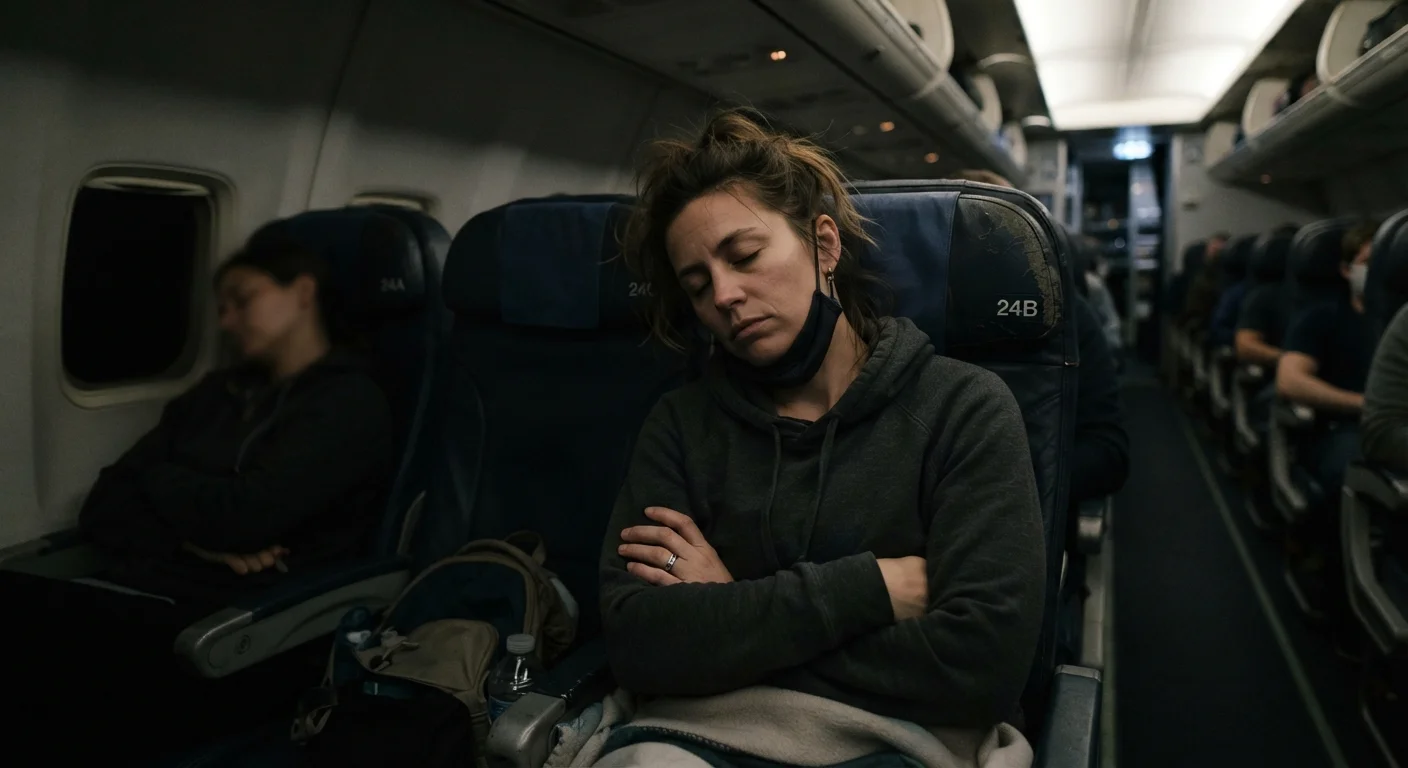
Fighting sleep on overnight or red-eye flights.
Why it happens: Excitement, anxiety, or the urge to watch in-flight entertainment keeps many travelers awake through flights that were designed to allow sleep. Arriving without rest then depletes the entire first day.
Ignoring posture and seat position during the flight.
Why it happens: Economy seats encourage slouching, and passengers often lean awkwardly against windows or slide down in their seats without noticing. This places sustained stress on the lower back, neck, and hips.
Skipping a meal or eating poorly to avoid feeling full onboard.
Why it happens: Nervous flyers sometimes skip eating to reduce nausea risk, and others simply don't plan ahead for flights without meal service. Arriving hungry compounds fatigue and cognitive fog.
Below 20%
Typical cabin humidity level during flight
Commercial aircraft cabins are pressurized to conditions drier than most deserts, according to aviation health guidance, contributing significantly to passenger dehydration.
~6-8 hrs
Sleep lost by many red-eye travelers
Research on travel fatigue consistently shows that passengers who forgo sleep on overnight flights experience cognitive impairment and reduced physical energy for 24-48 hours post-arrival.
How These Habits Stack Up Against Each Other
No single mistake on this list is catastrophic on its own. The problem is that they tend to compound. A passenger who skips water, has two glasses of wine, avoids moving for four hours, and powers through an overnight flight without sleeping arrives at their destination running on a significant deficit - physically and mentally.
These Habits Compound Quickly
Dehydration, poor sleep, and prolonged immobility are each manageable on their own - but most travelers experience all three simultaneously. The combined effect can feel like mild illness by the time you reach your hotel. Building even one or two corrective habits into your flight routine makes a measurable difference in how functional you feel on day one.
This compounding effect is one of the core reasons travel itineraries fall apart by day two. When your body hasn't recovered from the flight, over-scheduled plans become impossible to keep. Protecting your landing day starts in the air.
Before you even reach your seat, small missteps at the airport can also cost you energy. Our guide on what slows travelers down at the airport covers the pre-boarding habits worth fixing too.
Once you've landed and checked in, a few equally simple habits at your accommodation can carry the momentum forward - see lodging habits that make every trip smoother for practical guidance.