Why Fare Classes Matter More Than You Think
When you search for a flight, you see a price - but that price is tied to a bundle of rules and benefits that vary far more than the seat location suggests. Two passengers sitting in the same Economy cabin may have paid different amounts and be subject to entirely different cancellation policies, baggage allowances, and upgrade eligibility.
Understanding fare classes helps you avoid two common mistakes: overpaying for features you don't need and underpaying for a ticket that punishes you if your plans change. For a deeper look at how these tiers appear during booking, see our guide to reading a flight search results page.
4
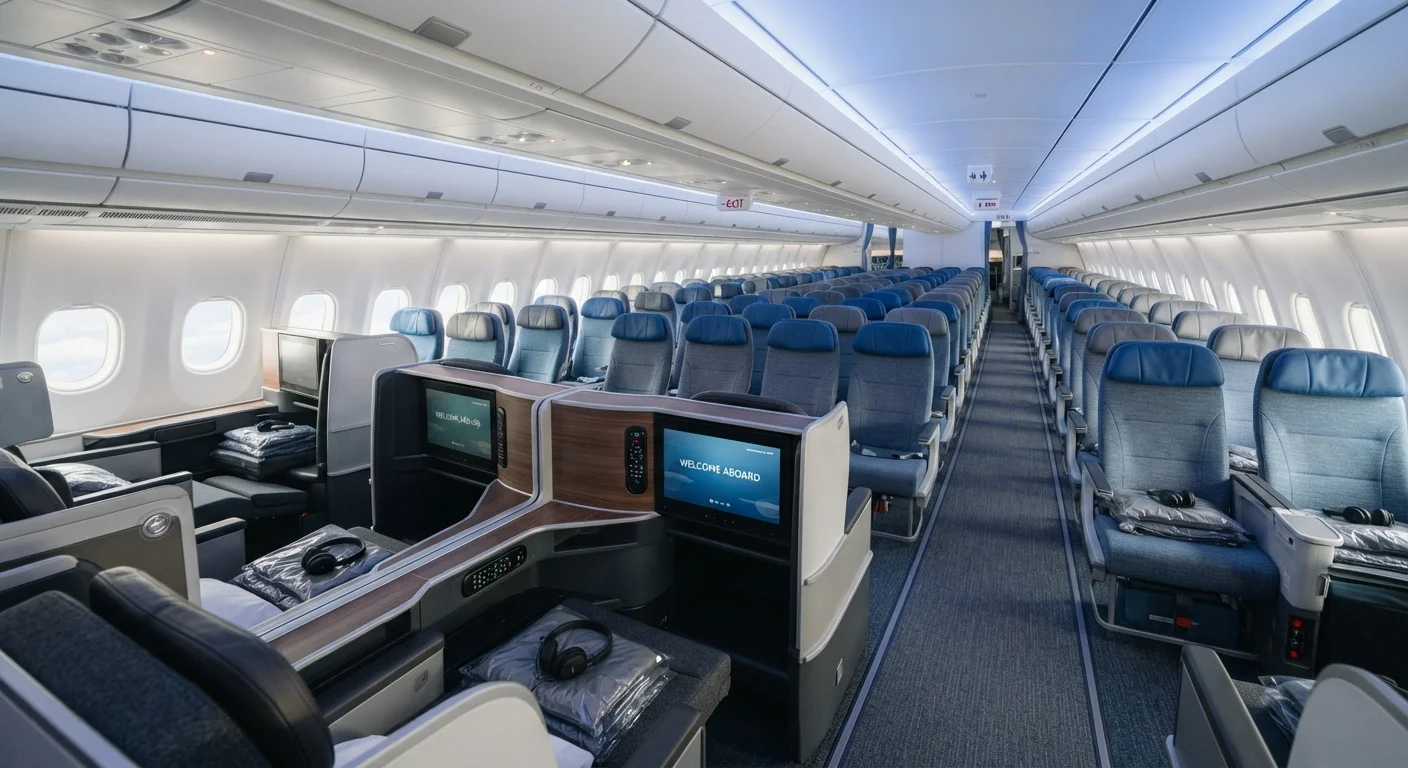
Primary cabin tiers on most commercial aircraft
Economy, Premium Economy, Business, and First Class represent the standard fare class structure used by major international airlines.
~30-32"
Typical Economy seat pitch (legroom)
Seat pitch varies by airline and aircraft type; short-haul low-cost carriers sometimes configure tighter rows than full-service carriers.
35-38"
Typical Premium Economy seat pitch
Premium Economy configurations differ by airline - some carriers offer considerably more space than others on the same route type.
Economy Class: The Baseline Explained
Economy is the standard cabin on virtually every commercial flight. Seats are the smallest on the plane, typically 17-18 inches wide with 30-32 inches of legroom (called seat pitch), though this varies by aircraft and airline.
Within Economy, many airlines now sell multiple fare types that look similar at checkout but differ significantly in the fine print:
- Basic Economy: The lowest published price. Usually non-refundable, non-changeable, and may restrict carry-on bags to a personal item only. Seat selection is often unavailable or costs extra.
- Standard Economy: Allows seat selection, one carry-on bag, and changes for a fee. Partial refunds may be available depending on the airline.
- Flexible Economy: The highest Economy price tier. Typically fully changeable and sometimes refundable. May earn more frequent flyer miles.
The takeaway: never assume all Economy tickets are equal. Read the fare rules carefully before you confirm.
Always Check the Fare Rules Before Booking
Before confirming any Economy ticket, locate the fare rules link on the booking page - it will tell you whether changes are permitted, what the cancellation policy is, and what baggage is included. Spending two minutes reading these rules can save you from unexpected fees if your plans change.
Premium Economy: The Middle Ground
Premium Economy sits physically and economically between Economy and Business Class. It emerged as airlines recognized that many travelers want more comfort on longer flights but aren't ready to pay full Business Class fares.
Typical Premium Economy upgrades over standard Economy include:
- Wider seats (usually 18-19 inches) with 35-38 inches of pitch
- Enhanced meal service and dedicated overhead bin space
- Priority boarding and, on some routes, a checked baggage allowance
- More generous change and cancellation policies
Premium Economy is often a genuinely practical choice for flights over six hours, where the added comfort offsets the price difference meaningfully. The category is less standardized than Economy, so what one airline calls Premium Economy may differ considerably from another's version.
Business Class: What You're Actually Paying For
Business Class is designed around productivity and rest on long-haul routes. On international flights, the defining feature is the lie-flat seat - a seat that fully reclines into a flat bed, typically 6 to 6.5 feet long. This is the primary reason many travelers pay a significant premium for transcontinental or transoceanic routes.
Beyond seating, Business Class commonly includes:
- Direct aisle access for every passenger on wide-body aircraft
- Multi-course meal service with expanded menu options
- Priority check-in, security (where available), and boarding
- Access to airport lounges
- Generous checked baggage allowances
- Fully flexible or heavily discounted change and cancellation terms
On domestic U.S. flights, what airlines label as "First Class" is often equivalent to what international carriers call Business Class - recliner seats rather than lie-flat beds. This naming inconsistency can confuse first-time buyers. It mirrors the kind of label ambiguity you encounter in other travel categories, like hotel room tiers where names don't always match expectations.
First Class: The Highest Tier - and Its Limitations
True First Class - a separate cabin above Business - is increasingly rare. It exists primarily on select international routes operated by a small number of carriers. Where it does exist, First Class typically offers enclosed private suites, refined dining experiences, and a high staff-to-passenger ratio.
For most first-time flyers booking domestic U.S. routes or common international routes, you are unlikely to encounter a genuine First Class product. What is advertised as "First" on domestic flights is generally a domestic Business/First hybrid with wider recliner seats, complimentary drinks, and snacks - not a full international First Class experience.
Domestic vs. International First Class
The term 'First Class' means something very different depending on the route. On domestic U.S. flights, it typically refers to a premium Economy-adjacent product. On select international routes, it describes a full private suite. If a genuine international First Class product is important to you, verify the specific aircraft and seat configuration before booking.
Understanding what each cabin actually delivers - rather than what the label implies - is central to making a cost-effective booking decision. The same principle applies across other travel verticals: decoding cruise fares requires the same kind of scrutiny about what a base price truly includes.