The Core Mission: Safety, Not Suspicion
For many first-time flyers, the security checkpoint feels like the most nerve-racking part of the airport experience. The queues, the bins, the body scanners - it can all feel oddly personal. But understanding what screeners are actually trained to find makes the whole process far less intimidating.
The primary objective of airport security is to prevent weapons, explosives, and other items capable of endangering a flight from getting on board. Officers are not searching for contraband in the general sense, reviewing your personal documents beyond your boarding pass and ID, or judging the contents of your luggage. They are looking at density, shape, and the presence of specific threat signatures - both on your person and in your bags.
In the US, the TSA uses a layered approach. No single technology does everything; instead, X-ray imaging, explosive trace detection swabs, body scanners, and trained officer observation work together. This is why you may sail through one day and be asked a quick question the next - the system is designed to be unpredictable as a deterrent.
TSA PreCheck and Trusted Traveler Programs
Travelers enrolled in TSA PreCheck, Global Entry, or NEXUS may use dedicated lanes with expedited screening - typically without removing shoes, laptops, or light jackets. These programs involve a background check and application fee. If you fly frequently, they can significantly reduce checkpoint stress, but they are entirely optional and standard screening remains perfectly manageable for any prepared traveler.
What the X-Ray Machine Actually Sees
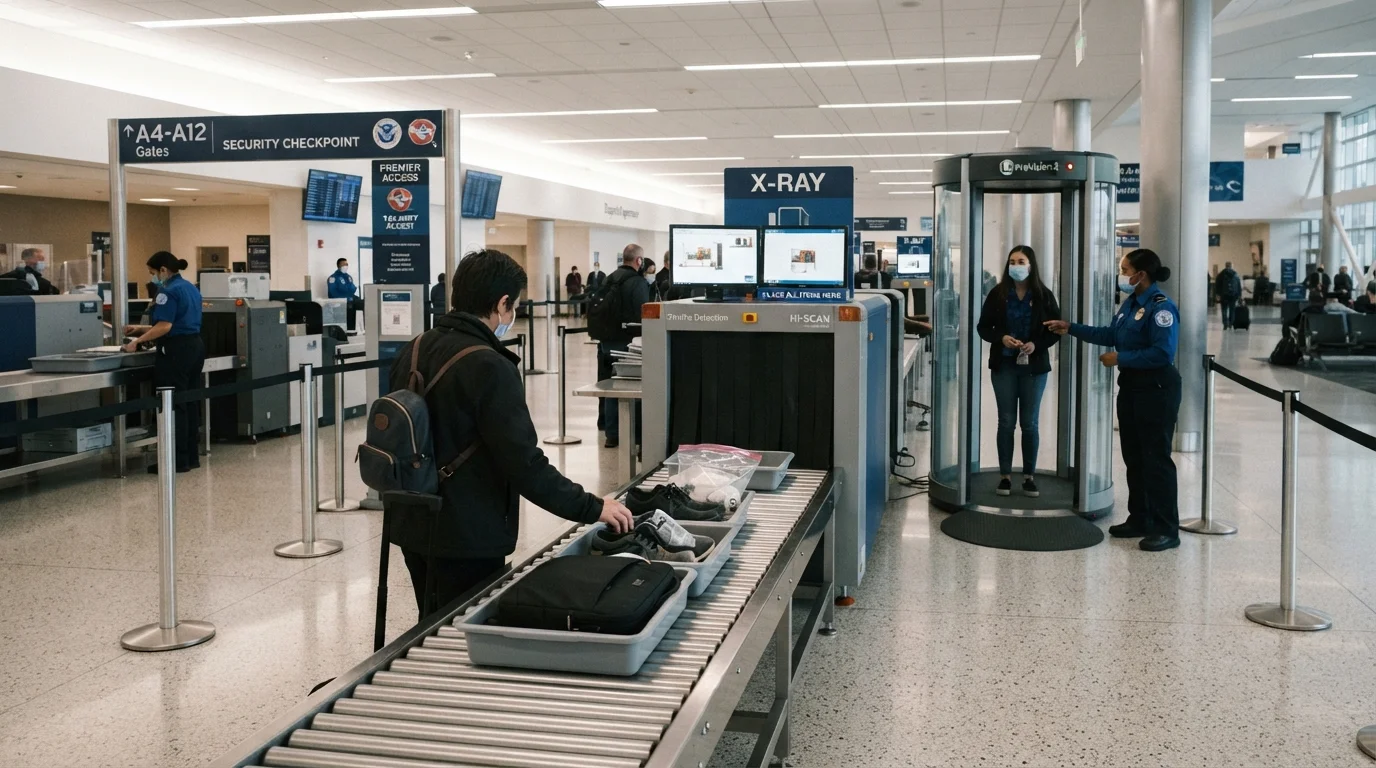
When your carry-on travels through the X-ray machine, the image officers review is color-coded by material density, not a photograph of your items. Dense materials - metals and some plastics - appear in darker tones. Organic materials like food, clothing, and paper show up differently. The goal is to spot shapes that match known threat profiles or areas that are obscured because items are packed too tightly.
This is why a very full, tightly packed bag is more likely to result in a secondary inspection - not because you've done anything wrong, but because the image is hard to read clearly. Spreading items out across your bag, keeping cords and cables bundled, and removing bulky electronics helps officers see your bag quickly and move on.
See our step-by-step guide to clearing the security conveyor for exactly what to remove and how to organize your bin.
~4.5M
Passengers screened by TSA daily
TSA reports screening an average of approximately 4.5 million passengers and crew per day across US airports, underscoring that the checkpoint process is highly systematized and routine.
~4,600
Firearms intercepted at checkpoints in a recent year
TSA publishes annual data showing thousands of firearms detected at checkpoints each year, the vast majority of which are loaded - illustrating why screening protocols exist.
3.4 oz
Maximum liquid volume allowed in carry-on
This limit, also expressed as 100 ml, applies to each individual container of liquid, gel, or aerosol placed in carry-on baggage and has been standard TSA policy since 2006.
Body Scanners: What They Do and Don't Reveal
The walk-through body scanners used at US airports (called Advanced Imaging Technology, or AIT) detect anomalies on or against your body using millimeter-wave imaging. The image shown to the officer is a generic, featureless avatar - not a realistic scan of your body. If the machine flags something, the officer will see a highlighted area on that avatar and ask you about it or conduct a brief, targeted pat-down.
Common triggers include forgotten items in pockets, certain underwire bras, layered or bulky clothing, and medical devices worn on the body. If you wear an insulin pump, prosthetic, or other medical device, you can inform the officer before scanning. You also have the right to request a pat-down instead of the scanner if you prefer.
Body scanners do not screen inside the body, and they do not interact with your carry-on or checked bags - those go through the separate X-ray conveyor. If you're traveling with medications or medical equipment, see our article on traveling with medications and airport security rules for specific guidance.
What Triggers a Closer Look - and What Doesn't
A secondary bag inspection or a pat-down is not an accusation - it's a routine part of a system designed to catch the rare bad actor without delaying the vast majority of law-abiding travelers. Common, completely innocent triggers include:
- Tightly packed or layered clothing in a carry-on that obscures the X-ray image
- Food items with dense or irregular shapes, such as a block of cheese or a jar of nut butter
- Cords and cables coiled together in a bundle
- Metal in pockets that wasn't removed before the metal detector or body scanner
- Forgotten items - a water bottle left in a side pocket is one of the most common delays
Items that will definitely draw attention include anything resembling a weapon, realistic-looking toy guns, large quantities of undeclared powder, and liquids over the permitted limit that weren't placed in a clear bag. If you're unsure whether something is permitted, the TSA website maintains a searchable database of allowed and prohibited items.
For a broader look at what international screening differences to expect, our guide on domestic vs. international airport experiences covers how the process changes when you fly abroad.
Pack Your Bag With the X-Ray in Mind
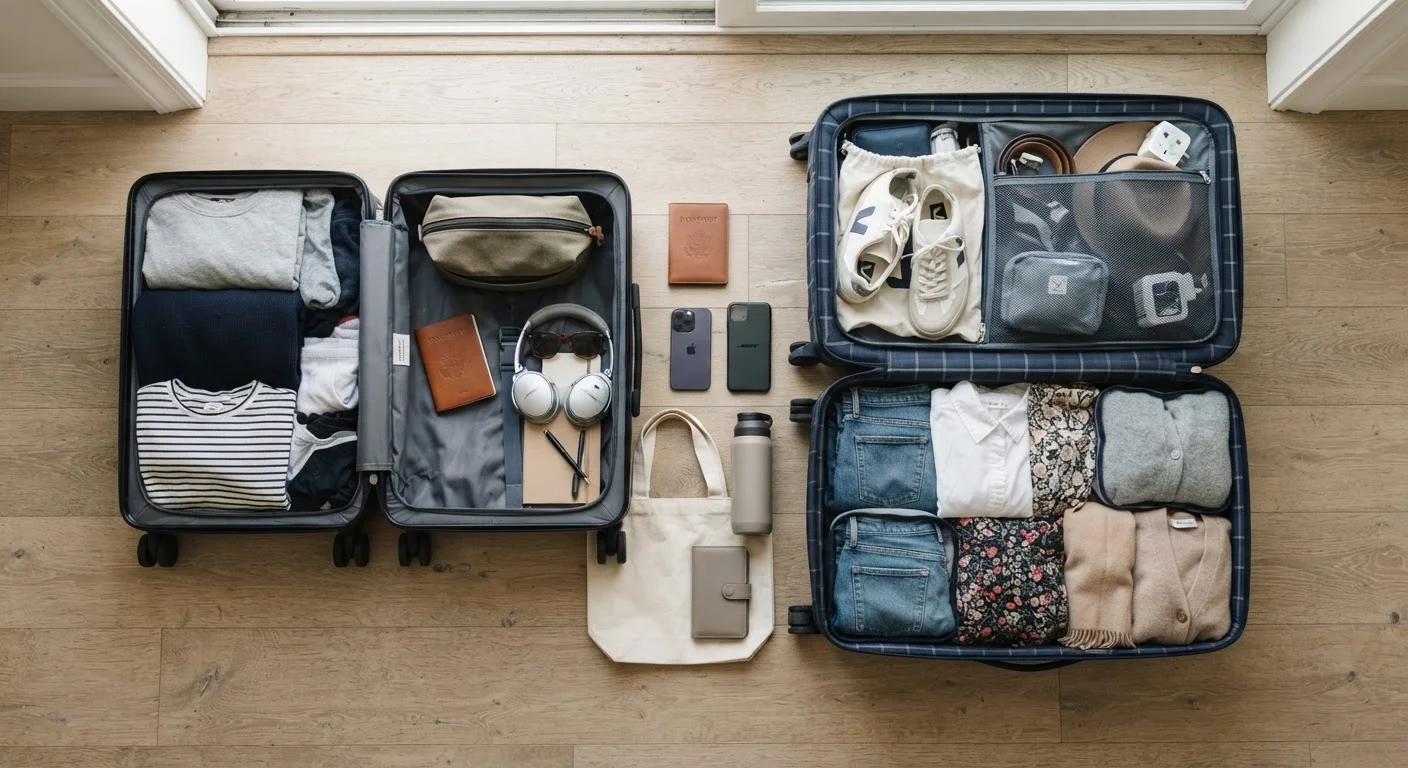
Before you zip your carry-on, do a quick mental scan: Is your laptop easy to pull out? Are your liquids in a clear, accessible bag at the top? Have you emptied your pockets? A bag that's easy to read on an X-ray screen is a bag that gets waved through quickly. Spending two minutes organizing before you leave for the airport can save ten at the checkpoint.
Moving Through With Confidence
The most effective thing a first-time traveler can do is arrive prepared and unhurried. Give yourself enough time so you're not rushing, which is when most mistakes happen. Wear shoes that slip on and off easily, avoid heavy metal accessories on travel days, and have your ID and boarding pass ready before you reach the front of the line.
If you get a bag pulled or an alarm triggers, stay calm and cooperative. Officers deal with thousands of passengers a day; a friendly, unhurried response to their questions is genuinely the fastest way through. Most secondary inspections take under two minutes.
It also helps to know that some widely held beliefs about what security can and cannot detect are inaccurate. Our article on common airport security myths addresses some of the most persistent misconceptions so you're not caught off guard.
For general safety awareness throughout your journey, the essential safety practices for first-time travelers hub is a useful companion resource before you depart.