Why Airport Security Myths Persist
Airport security procedures are shaped by federal regulation, technological upgrades, and ongoing policy changes - none of which get wide media coverage. Most travelers absorb their understanding of the process from friends, social media, or a single past experience that may no longer reflect current rules. The result is a set of persistent myths that cause unnecessary stress, slow down checkpoints, and occasionally lead to real problems like surrendered items or missed flights.
The myths below are among the most commonly repeated. Each one is addressed with what current TSA policy and screening technology actually say - not what rumor suggests. For a deeper look at what screeners are specifically trained to detect, see what airport security is actually checking for.
Myth
As long as I remove all my metal, I won't trigger the scanner.
Fact
Modern millimeter-wave body scanners detect both metallic and non-metallic items, including dense organic materials.
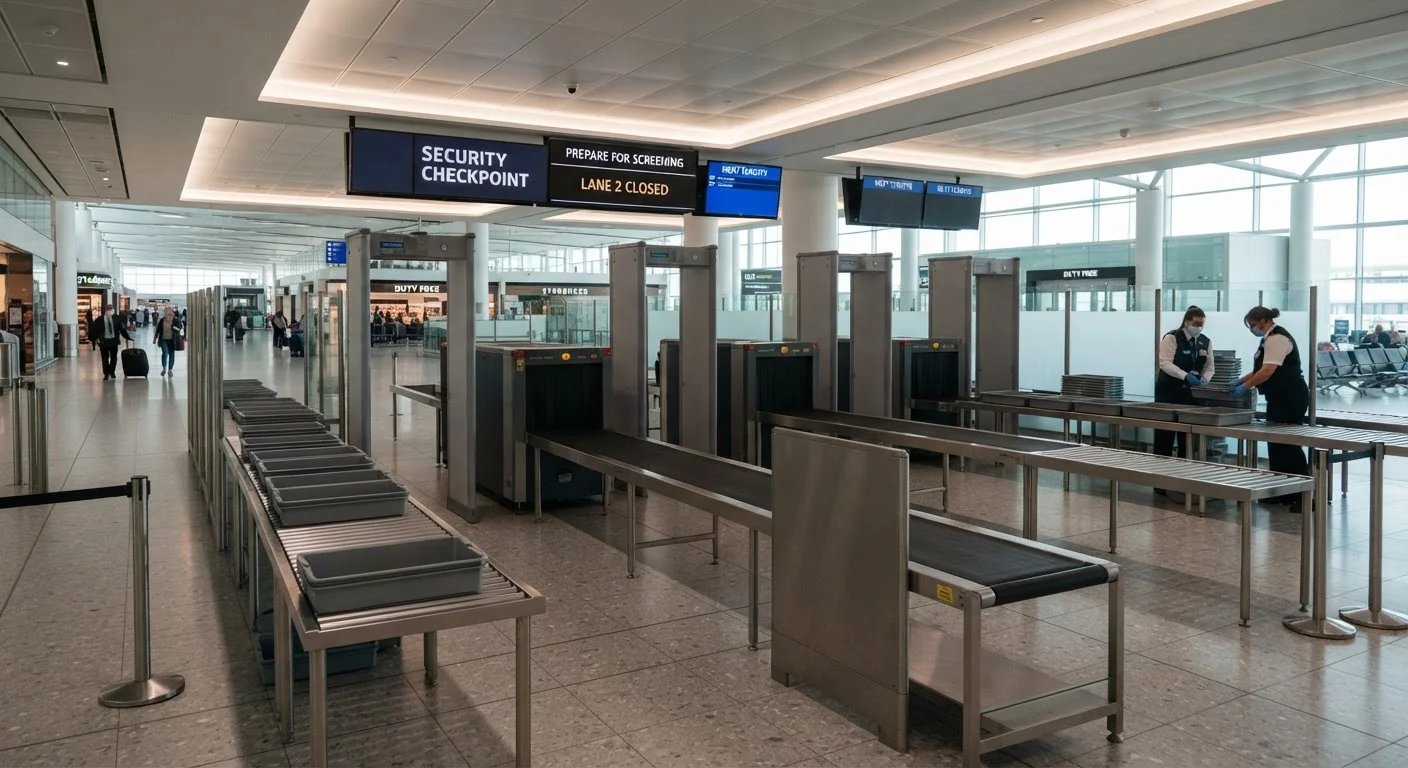
Many travelers prepare by emptying pockets of coins and keys, assuming metal is the only concern. However, the full-body scanners now standard at most U.S. airports use millimeter-wave technology that creates a generic outline of the body and flags any anomaly - metallic or otherwise. This includes items like thick paper stacks, certain food items, and non-metallic objects that appear dense to the scanner. If the scanner flags something, a TSA officer will conduct a targeted pat-down of that specific area. Removing metal is still worthwhile - it reduces the chance of incidental alarms - but it is not a complete guarantee.
Myth
The 3-1-1 liquids rule applies to everything you're carrying, including checked bags.
Fact
The 3-1-1 rule applies only to liquids in your carry-on bag. Checked luggage has different, more permissive rules.
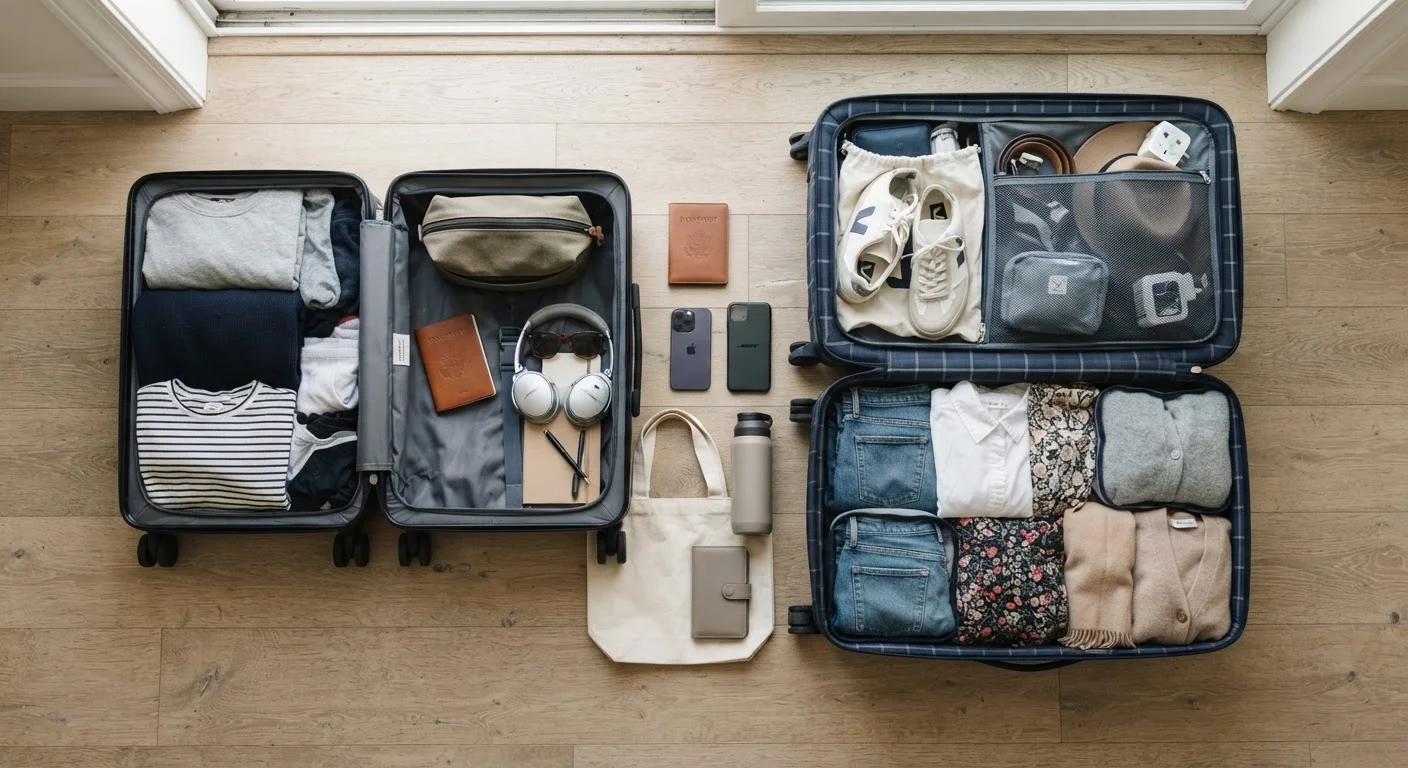
The TSA's 3-1-1 rule - each liquid in a container of 3.4 oz (100 ml) or less, all fitting in one quart-sized clear bag, one bag per person - governs only what passes through the security checkpoint in a carry-on. Full-size shampoo bottles, larger containers of sunscreen, and similar items are generally permitted in checked bags, subject to airline weight limits. There are also exceptions to the carry-on rule itself: medically necessary liquids, baby formula, and breast milk may exceed 3.4 oz but must be declared separately at the checkpoint. See our guide to clearing security without holding up the line for a full breakdown of what to remove and how to pack.
Myth
TSA PreCheck means you always get through the fast lane.
Fact
PreCheck eligibility speeds up most screenings, but lanes may close or your boarding pass may not display the indicator on a given flight.
TSA PreCheck membership removes the need to remove shoes, laptops, liquids, belts, and light jackets at participating airports and airlines. However, the PreCheck lane is not always open at every checkpoint or at every hour. Staffing, terminal layout, and airline participation all affect availability. Additionally, the PreCheck indicator (a small logo or the letters "TSA PRE") must appear on your boarding pass for that specific flight - it does not appear automatically every time, particularly if you book through certain third-party platforms or if there is a data mismatch. Always confirm the indicator is printed on your pass before heading to the PreCheck lane.
Myth
You have to surrender anything the TSA asks for, even if you don't know why.
Fact
You have the right to ask what rule applies before deciding whether to surrender an item or return it to your checked bag.
Travelers sometimes feel pressured into discarding items without understanding why. In reality, if a TSA officer flags something in your bag, you can ask which rule is being applied and whether you have the option to check the item instead of surrendering it. If you are at the checkpoint early enough, many airports allow you to return to the check-in area to transfer flagged items to a checked bag. You will not always have time for this, but it is a legitimate option worth knowing about - especially for expensive or sentimental belongings. Screeners are there to enforce security rules, not to take your property arbitrarily.
Myth
Arriving two hours early is always enough, no matter what airport or season.
Fact
Recommended lead times vary significantly by airport size, season, and whether you have checked baggage.
The "two hours before departure" guideline is a reasonable baseline for mid-sized domestic airports during off-peak periods. At major hub airports - particularly during summer travel season, spring break, or major holidays - security wait times can exceed an hour on their own. International departures typically require three hours or more due to additional document checks and longer queues. The TSA's airport wait-time data, available on the agency's website, can help you gauge expected waits. When in doubt, build in extra time: arriving early costs you a longer wait at the gate, while arriving late can cost you the flight.
What to Do If You're Unsure at the Checkpoint
Uncertainty at the security lane is normal for first-time flyers, and it is far better to ask than to guess. TSA officers field questions constantly and are required to explain which rule applies to a flagged item. If you are anxious about the process, arriving early gives you a buffer to move slowly, ask questions, and repack if needed without the pressure of a departure clock.
Don't Joke or Make Ambiguous Statements at Checkpoints
Statements that could be interpreted as threats - even offhand jokes about weapons, bombs, or bypassing security - are taken seriously by federal security staff and can result in significant delays, removal from the checkpoint, or legal consequences. This applies at U.S. airports under federal law. If you have a genuine concern or question, phrase it clearly and calmly as a question.
Misunderstandings about security are also common in other travel contexts. For example, assumptions about what car rental insurance covers - addressed in our piece on common rental car assumptions that cause real problems - follow a similar pattern: a small knowledge gap creates an avoidable and expensive mistake. Building the habit of verifying rules before you travel pays off across every part of your trip.