
What Check-In Actually Does
Check-in is the step that converts your booking into an active boarding pass. Until it happens, you have a reservation - but not formal permission to board. The airline confirms your identity, collects any government-required travel information, assigns or confirms your seat, and issues the document (printed or digital) that gets you through the gate.
There are two main ways to complete this: online (also called web check-in or mobile check-in) or in person at the airport counter or kiosk. Both accomplish the same core task. What differs is the timing, the flexibility, and the situations where one method simply won't work. Understanding those differences before travel day means one fewer thing to figure out when you're already nervous. See our full airport walkthrough for how check-in fits into the broader terminal experience.
Online Check-In: Pros and Cons
Most airlines open online check-in approximately 24 hours before scheduled departure. You log into the airline's website or app, confirm your details, choose or confirm a seat, and receive a digital or printable boarding pass. For carry-on-only travelers on domestic routes, this can be the only airport step you skip entirely.
Skip the ticket counter line entirely
With a boarding pass already on your phone, you bypass the main check-in queue and move directly to security - a significant time saving at busy airports.
Secure your preferred seat early
Checking in the moment the window opens (usually 24 hours out) gives you the first pick of remaining seats before other passengers on your flight do the same.
Boarding pass on your phone before you leave home
A digital boarding pass means one less document to manage or lose, and it can be scanned directly at security and the gate without printing anything.
Confirms your booking is active
Successfully completing online check-in is a useful signal that your reservation is in order - it can surface name mismatches or booking issues while you still have time to call the airline.
That said, online check-in has real limits. Some airlines charge a fee to check a bag at the counter if you checked in online without prepaying - always read your fare rules. If your name on the booking doesn't exactly match your government ID, the system may flag the discrepancy and send you to a counter anyway. And if your phone dies or you lose your PDF boarding pass, you'll still need airport staff to reissue it.
Doesn't work for all international routes
Many airlines require in-person document verification for international travel, meaning you'll still visit a counter even after completing online check-in.
Tech failures can leave you without a boarding pass
If your phone battery dies, the app crashes, or the airline's system has an outage, you'll need airport staff to reissue your boarding pass - which takes time you may not have built in.
Name mismatches require counter intervention
If your booking name doesn't match your government ID exactly, online check-in may be blocked and you'll need an agent to resolve the discrepancy before you can board.
Special service requests often need human handling
Wheelchair assistance, unaccompanied minor paperwork, oversized or fragile baggage, and medical equipment arrangements are reliably handled only at a staffed counter.
International travel adds more complexity. Many airlines require agents to physically inspect passports, visas, or entry documentation before issuing a boarding pass - even if you completed online check-in. In those cases, online check-in handles your seat assignment but doesn't eliminate the counter visit. Always check your airline's specific requirements for international routes, and verify entry requirements with official government sources before you travel.
Airport Check-In: When It's Still the Right Call
Airport check-in - whether at a staffed counter or a self-service kiosk - remains the required path in several common scenarios. If you're checking baggage, you'll need to drop it with an agent regardless of how you obtained your boarding pass. If you're traveling internationally, document verification may be mandatory. Travelers with special service requests (wheelchair assistance, unaccompanied minor arrangements, oversized items) should always go to the counter.
When You Must Go to the Counter
Some situations always require an in-person interaction regardless of your check-in method: checking oversized or fragile items, traveling with pets in the cabin, resolving a booking name error, or presenting paper travel documents required by a foreign government. If any of these apply to your trip, budget extra time at the airport and head to the counter first. When in doubt, call the airline ahead of travel day to confirm what will be handled where.
For first-time flyers, airport check-in also offers something online check-in cannot: a real human to answer questions. That reassurance has genuine value. Agents can confirm you're at the right terminal, flag a seat upgrade opportunity, or catch a documentation issue before it becomes a boarding problem. The trade-off is time - counter queues can be long during peak travel windows, which is exactly why arriving early matters more than most first-timers expect.
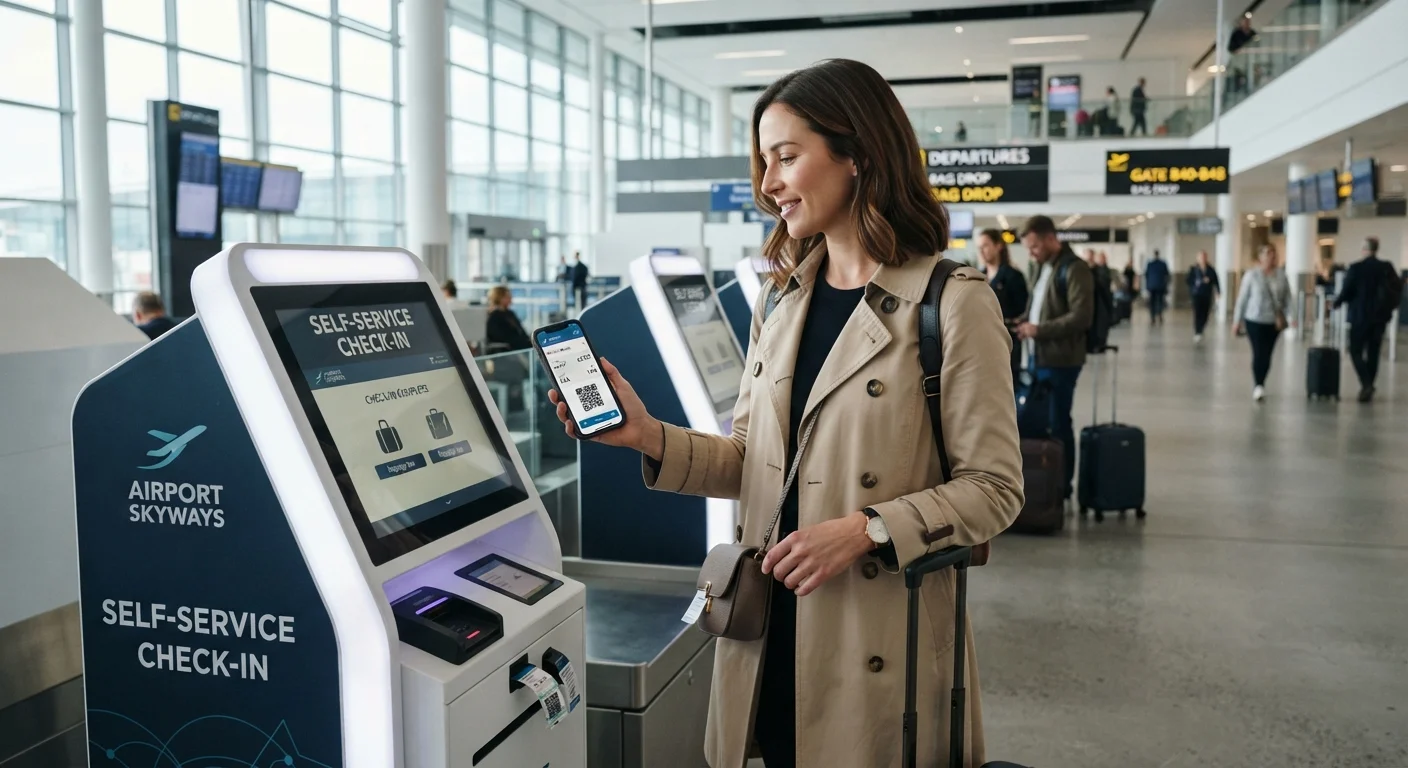
Self-service kiosks sit between the two options: they're at the airport (so agents are nearby if needed), but they're faster than a staffed counter for straightforward check-ins. Most kiosks print boarding passes and bag tags on the spot.
24 hrs
Typical online check-in window opening
Most major U.S. carriers open online check-in approximately 24 hours before scheduled departure, though some airlines extend this window for certain fare classes.
~90%
U.S. domestic passengers with carry-on only
Industry surveys consistently show a large majority of short-haul domestic travelers fly with carry-on luggage only, making online check-in a fully sufficient option for most.
How to Decide Which Method to Use
Run through these questions before your travel day:
- Are you checking a bag? If yes, you'll be going to the airport counter or bag drop regardless - online check-in still makes sense to secure your seat and speed up the bag-drop interaction.
- Is this a domestic or international flight? For international routes, check the airline's specific requirements. Document checks at the counter are common even for passengers who checked in online.
- Does your booking show a seat assignment? If not, checking in online as soon as the window opens (typically 24 hours out) gives you the widest seat selection before other passengers claim theirs.
- Do you have any special service needs? Contact the airline directly or go to the counter - these are not reliably handled through digital check-in flows.
For a comprehensive look at everything else you need to prepare before heading to the airport, the pre-flight checklist for first-time flyers covers documents, packing, and timing in one place. And if you want to understand the small missteps that cost travelers the most time on the day itself, this breakdown of common airport delays is worth a read.