How Entertainment Is Organized on a Cruise Ship
Cruise ships operate essentially as floating resorts, and their entertainment is structured the same way: a core of included programming layered with optional premium add-ons. The primary guide to all of this is the daily program - a printed or digital schedule listing every activity, show, class, and event happening over the next 24 hours. It arrives in your cabin each evening or updates in real time through the cruise line's app.
Activities are generally divided into two categories. Passive entertainment - theater shows, live music, deck parties - is something you watch or experience. Active programming - trivia, dance lessons, fitness classes, cooking demonstrations - invites you to join in. Both types run throughout the day and into the night, which means there is almost always something happening regardless of when you feel like wandering out of your cabin.
See our overview of a typical day aboard a cruise ship to understand how entertainment slots fit into the broader rhythm of a voyage.
Evening Shows and Theater Productions
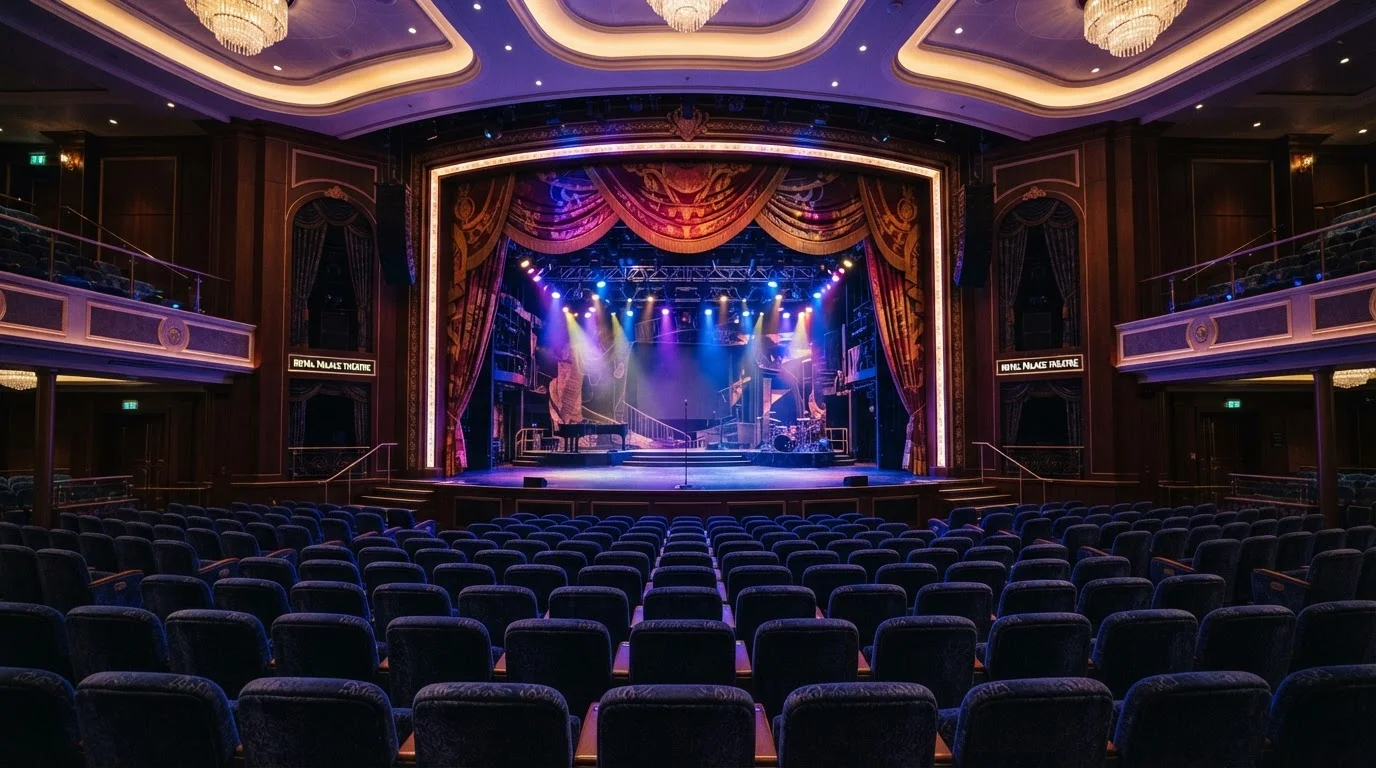
The centerpiece of nighttime entertainment on most large ships is the main theater, which hosts productions that can rival what you might see at a performing arts venue on land. Expect Broadway-style musical revues, comedy acts, acrobatic performances, magic shows, and occasionally well-known touring performers. These productions are almost always included in your fare.
On newer or larger ships, seating capacity in the main theater often cannot accommodate every passenger at once, so showtimes are typically staggered - for example, early and late performances on the same evening. Many lines now require reservations through their app to hold a seat, which you can usually do before you even board. If reservations aren't required, arriving 15 to 20 minutes early is generally enough to secure a good seat.
Reserve Theater Seats Early
If your ship's app allows show reservations before embarkation, book your preferred performances as soon as you board - or even during the pre-cruise period if the line permits it. Popular productions fill quickly, especially on sea days when all passengers are aboard. Securing a spot early means one less thing to think about once you're sailing.
Beyond the main theater, smaller lounges host live bands, jazz ensembles, piano bars, and stand-up comedy on a rolling nightly schedule. These venues are almost always walk-in, with no reservation needed.
Daytime Activities: More Than Deck Chairs
Daytime programming - particularly on sea days when the ship isn't docked at a port - is where cruise entertainment really expands. A typical sea day might offer morning yoga on the upper deck, a cooking demonstration in a culinary venue, a trivia contest in a main lounge, a behind-the-scenes galley tour, a crafts workshop, and a poolside game hosted by the cruise director's team, all within the same day.
20+
Activities on a typical large-ship sea day
Industry observers consistently note that major cruise ships can schedule more than 20 distinct activities on a single sea day, spanning fitness, entertainment, enrichment, and social events.
~80%
Onboard entertainment included in fare
The majority of scheduled programming on most mainstream cruise lines is covered by the base cruise fare, with only select premium experiences carrying an extra charge.
Most of these activities require no sign-up whatsoever. You simply show up. A smaller number - cooking classes, wine tastings, certain enrichment lectures - may have limited capacity and either require advance registration or carry a modest fee. The daily program will note this clearly.
For families, daytime entertainment often runs in parallel tracks: adult programming in one area, supervised kids' activities in dedicated club spaces. Our article on how onboard life works for families covers that structure in detail.
What's Included and What Costs Extra
Understanding the cost structure in advance prevents surprises. The vast majority of entertainment - theater shows, live music, trivia, deck parties, fitness classes, and most enrichment talks - is covered by your cruise fare. You've already paid for these when you booked.
Premium experiences that typically carry an additional charge include specialty cooking classes, wine or spirits tasting events, casino gaming, certain fitness or spa programs, and some headliner concert nights. Prices for these vary and are listed in the daily program or the ship's app.
Spending on any extras is charged to your onboard account, the cashless system most ships use. If you're new to how that works, our guide to the cruise card system explains exactly how charges are tracked and settled at the end of your voyage.
Pricing Can Vary by Ship and Itinerary
What's included in the fare versus charged separately can differ between ships within the same cruise line, and sometimes between different itineraries on the same ship. Always check the entertainment details specific to your sailing rather than relying on general line-wide policies. The ship's daily program and guest services desk are the most reliable sources once you're on board.
How to Actually Join In Without Feeling Awkward
First-timers sometimes worry that group activities will feel forced or that they'll walk into something mid-stream. In practice, most drop-in activities are designed for exactly this - people wandering in, getting involved at their own pace, and leaving when they want. The cruise director's team is trained to welcome newcomers and keep the energy inclusive rather than cliquey.
If you're unsure where to start, trivia contests and cooking demonstrations are particularly accessible for beginners. Trivia needs no preparation, works in teams so you're never solo, and tends to draw a friendly, relaxed crowd. Cooking demos are spectator-friendly - you watch, ask questions, and often get to taste the results.
For a fuller picture of how entertainment fits into your evenings and nights at sea, what happens on a cruise ship after midnight gives an honest look at how the ship keeps running - and what's still available - while most passengers sleep.