What Your Base Cruise Fare Covers
When you pay for a cruise, your base fare bundles together a significant set of travel expenses that you'd pay separately on a land trip. Understanding exactly what's included helps you build a realistic budget before you board.
| Accommodation | Included in base fare |
| Main dining room meals | Included in base fare |
| Onboard entertainment | Included in base fare |
| Port taxes and fees | Usually included - confirm at booking |
| Alcoholic beverages | Extra cost (packages available) |
| Specialty restaurant dining | Extra cost - cover charge or à la carte |
| Wi-Fi / internet | Extra cost on most lines |
| Gratuities / service charge | Typically auto-added (~$16-$20+ per person/day) (Rates vary by line and may change; confirm with your cruise line) |
| Shore excursions | Extra cost (ship or independent booking) |
| Spa and salon services | Extra cost |
Accommodation: Your cabin - whether an inside room, ocean-view, balcony, or suite - is fully covered. Housekeeping, turndown service, and linens are included at no extra charge.
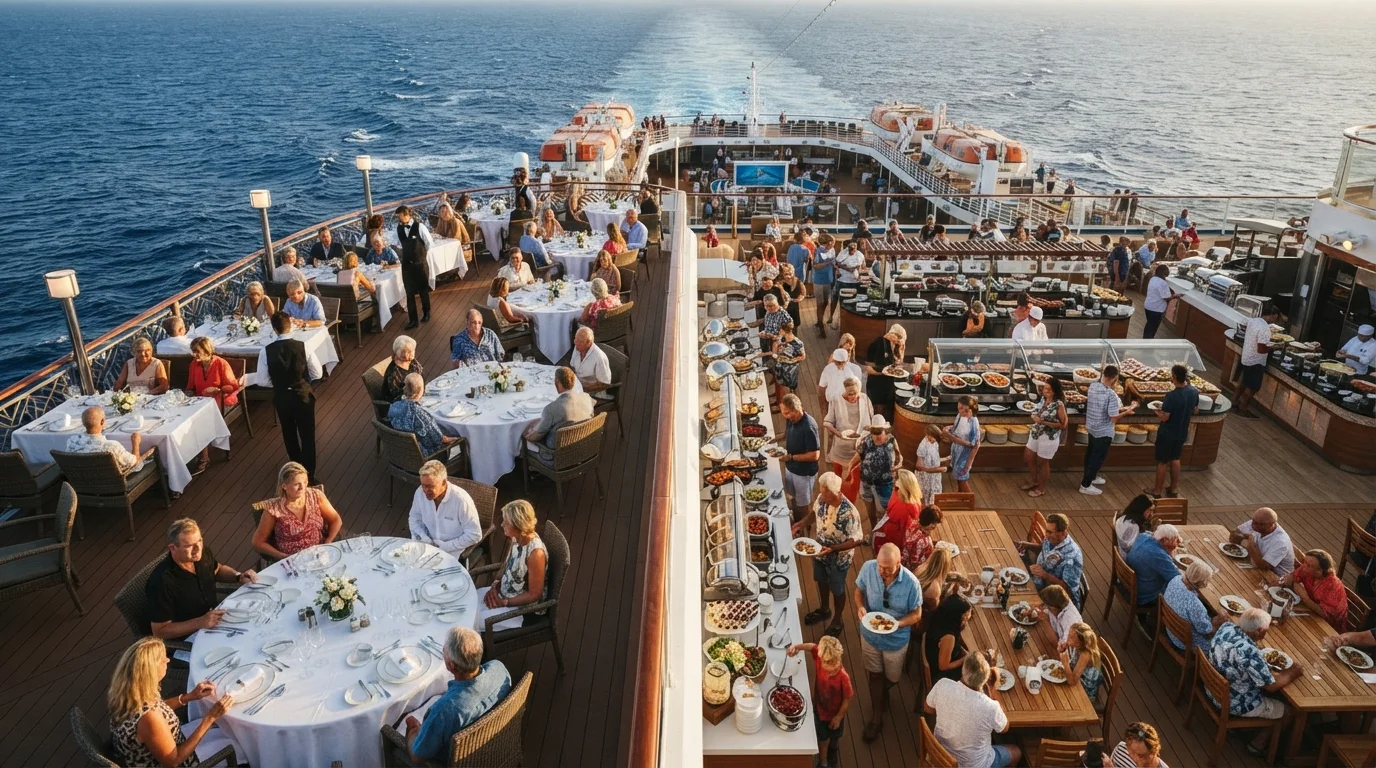
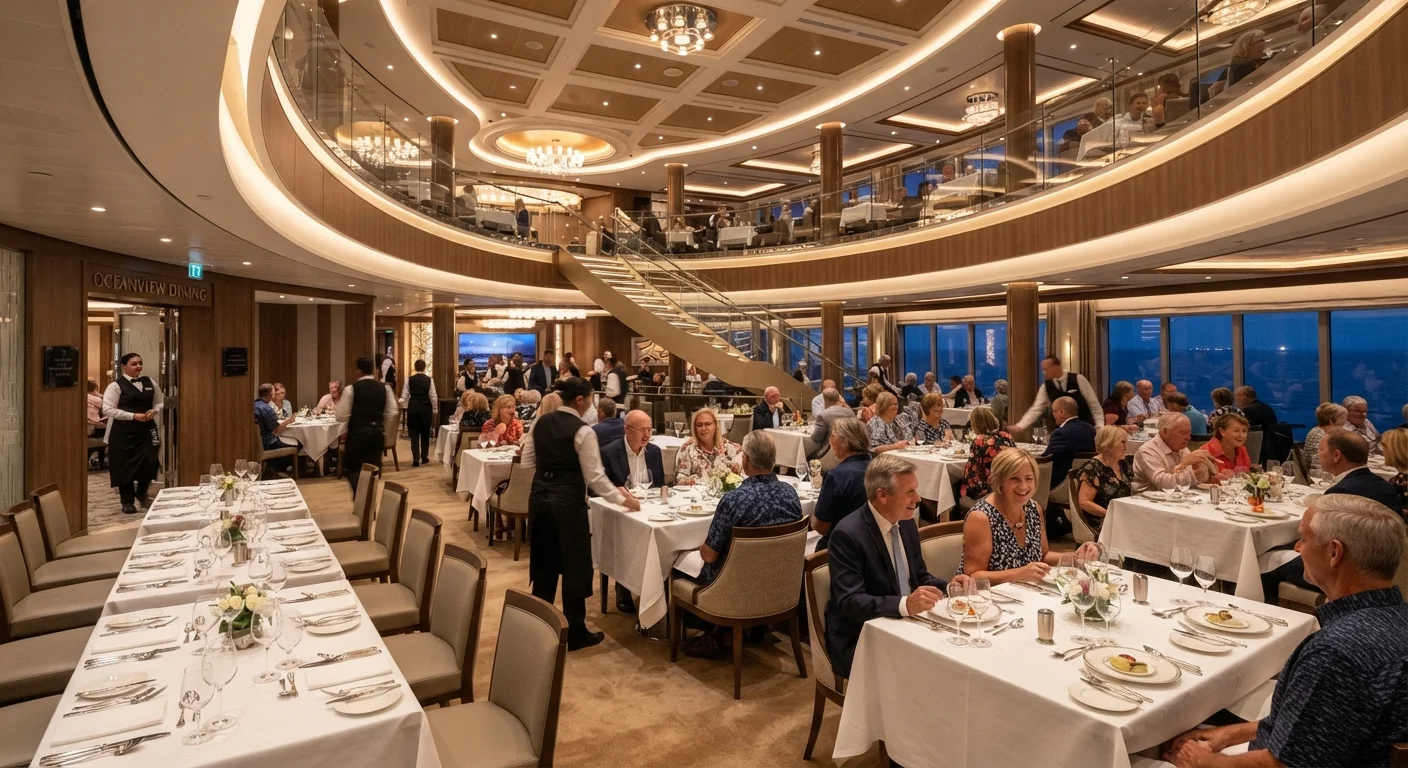
Main dining: The main dining room and most buffet-style venues serve breakfast, lunch, and dinner as part of your fare. These are sit-down, waiter-served meals with rotating menus - not a cafeteria experience.
Entertainment and activities: Broadway-style shows, live music, comedy, trivia nights, pools, fitness centers, and most daytime activities on the ship are covered. Cruise lines invest heavily in onboard programming precisely because it's part of what you've already paid for.
Port taxes and fees: Government-imposed port fees and taxes are almost always bundled into your quoted fare at booking, though it's worth confirming this when you review your invoice.
For a broader look at how fare structures work, see what a cruise actually includes.
What You'll Pay Extra For
The extras category is where first-time cruisers are most often caught off guard. These charges accumulate on a running onboard account linked to your cabin - learn more about how that system works in our guide to how the cruise card system works.
Base fare
The published price of a cruise that covers accommodation, main dining, and standard onboard activities. It does not include most beverages, gratuities, or optional extras.
Onboard credit (OBC)
A dollar amount loaded onto your onboard account that can be spent against eligible onboard purchases. It may be offered as a booking incentive and typically cannot be refunded as cash if unused.
Service charge / gratuity
A daily fee automatically added to most passengers' onboard accounts to compensate dining room and cabin staff. The amount varies by cruise line and ship category.
Specialty dining
Restaurants aboard a cruise ship that operate outside the included main dining room, usually charging a per-person cover fee or à la carte menu prices.
Drink package
A pre-purchased bundle that covers a set number or unlimited alcoholic and non-alcoholic beverages per day, usually bought before departure at a per-day rate.
Beverages: Alcoholic drinks, specialty coffees, bottled water, and sodas are almost never included in a standard fare. Many lines sell drink packages in advance, but whether those packages save money depends on your actual consumption habits.
Specialty dining: Beyond the main dining room, most ships offer Italian trattorias, steakhouses, sushi bars, and chef's table experiences. These carry a per-person cover charge or à la carte pricing.
Wi-Fi: Internet access is sold separately on virtually all ships. Speeds and pricing vary widely. If staying connected matters to you, check the cost before sailing - it can add meaningfully to your total spend.
Shore excursions: Tours booked through the ship at each port carry a separate fee. You can also book independently on shore, which is often less expensive, though the ship won't wait for you if a third-party tour runs late.
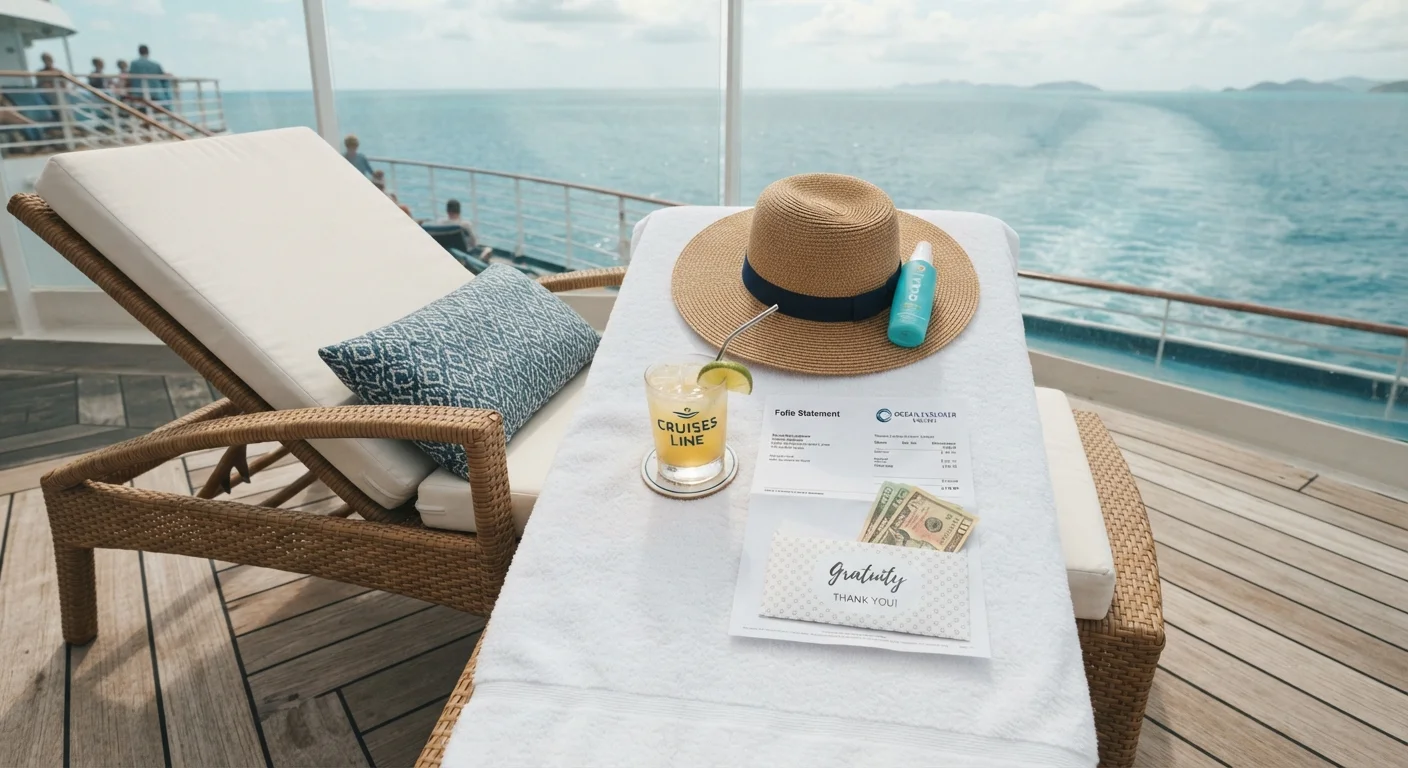
Gratuities: Most lines add a daily automatic service charge to your onboard account - typically ranging from around $16 to $20+ per person per day, though figures vary and can change. These go to dining and cabin staff. For a full explanation of how this works, see our guide to cruise gratuities.
Spa, salon, and medical services: The spa, hair salon, and onboard medical center are all pay-as-you-go. Medical care in particular can be expensive - travel insurance that covers shipboard medical costs is worth considering before you sail.
Prepaying Extras Can Reduce Onboard Surprise
Many cruise lines allow you to prepay gratuities and purchase drink or Wi-Fi packages before sailing. Doing so locks in the cost and means your onboard account balance at the end of the voyage will be lower. This can be a useful budgeting tool, but it's worth calculating whether a package actually reflects how you'll use it - prepaid bundles aren't always cost-effective for every traveler.
All-Inclusive vs. Standard Fares: A Key Distinction
Not every cruise line uses the same pricing model. Some lines - particularly luxury and expedition operators - bundle drinks, gratuities, Wi-Fi, and excursions into a higher upfront fare. Others sell a lower base fare and price nearly everything separately.
~$16-$20+
Typical daily gratuity per person
Automatic service charges vary by cruise line and cabin category; always verify the current rate with your specific line before budgeting.
3-5 extras
Common unanticipated cost categories
Beverages, gratuities, Wi-Fi, specialty dining, and excursions are the five most frequently overlooked budget items for first-time cruisers.
Neither model is inherently better. A higher all-inclusive fare can simplify budgeting and eliminate bill anxiety at the end of the voyage. A lower à la carte fare gives you more control if you plan to drink moderately, skip specialty dining, and explore ports independently.
The important thing is to compare fares on a like-for-like basis - a fare that looks cheap may cost more once you add drinks and gratuities. Our article on all-inclusive vs. à la carte cruise pricing walks through how to evaluate both models side by side.
For a deeper dive into hidden costs that tend to surprise new passengers, why first-time cruisers are caught off guard by extra costs is a useful companion read.