Why the Type of Cruise Matters More Than You Might Think
When most people picture a cruise, they imagine a massive ship, a tropical port, and a poolside deck. That image reflects one type of cruising - but only one. Choosing the wrong cruise style is one of the most common planning mistakes beginners make, often because they didn't realize the options were so different from each other.
This guide breaks down the three main cruise categories - ocean, river, and expedition - so you can match the experience to what you actually want from your trip. For a broader look at planning decisions, see the Plan a Cruise hub.
Ocean Cruises: Big Ships, Broad Reach
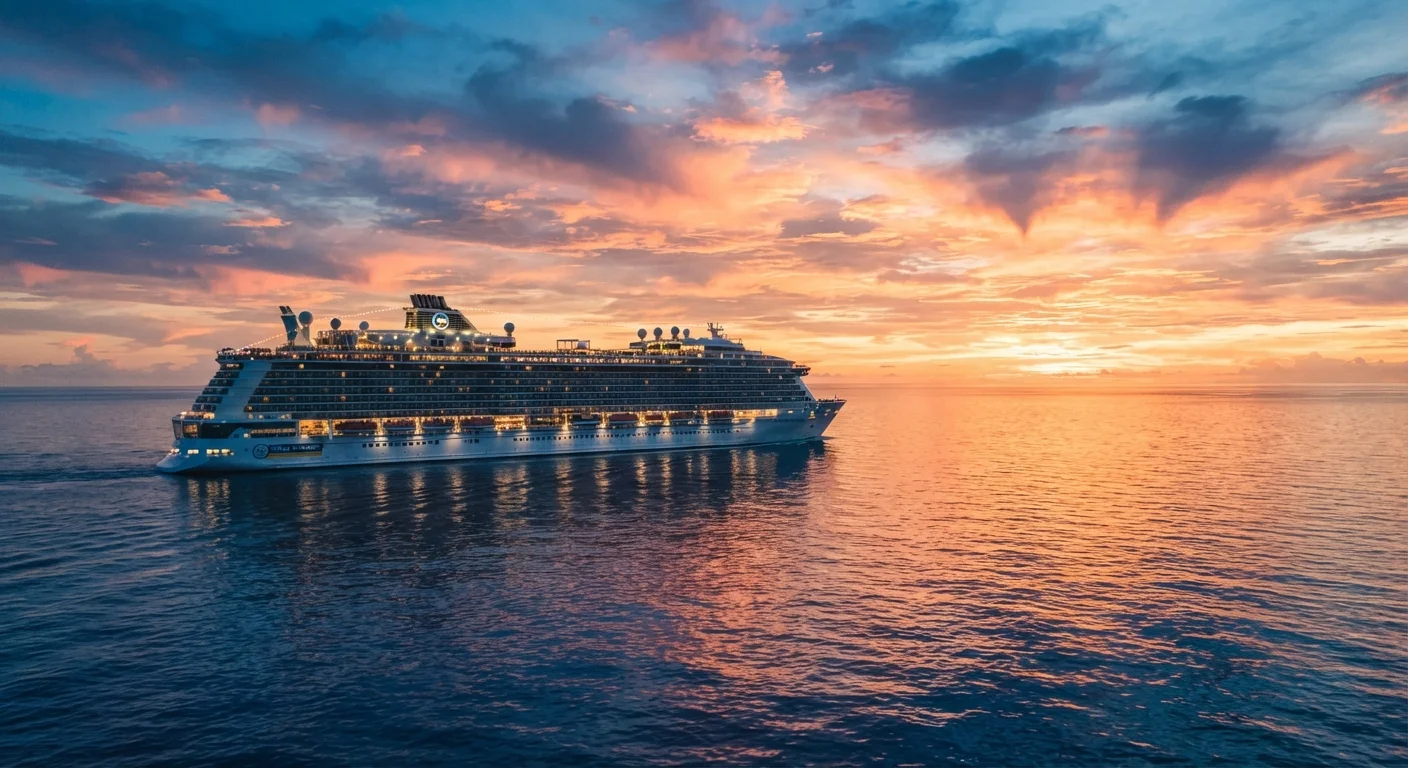
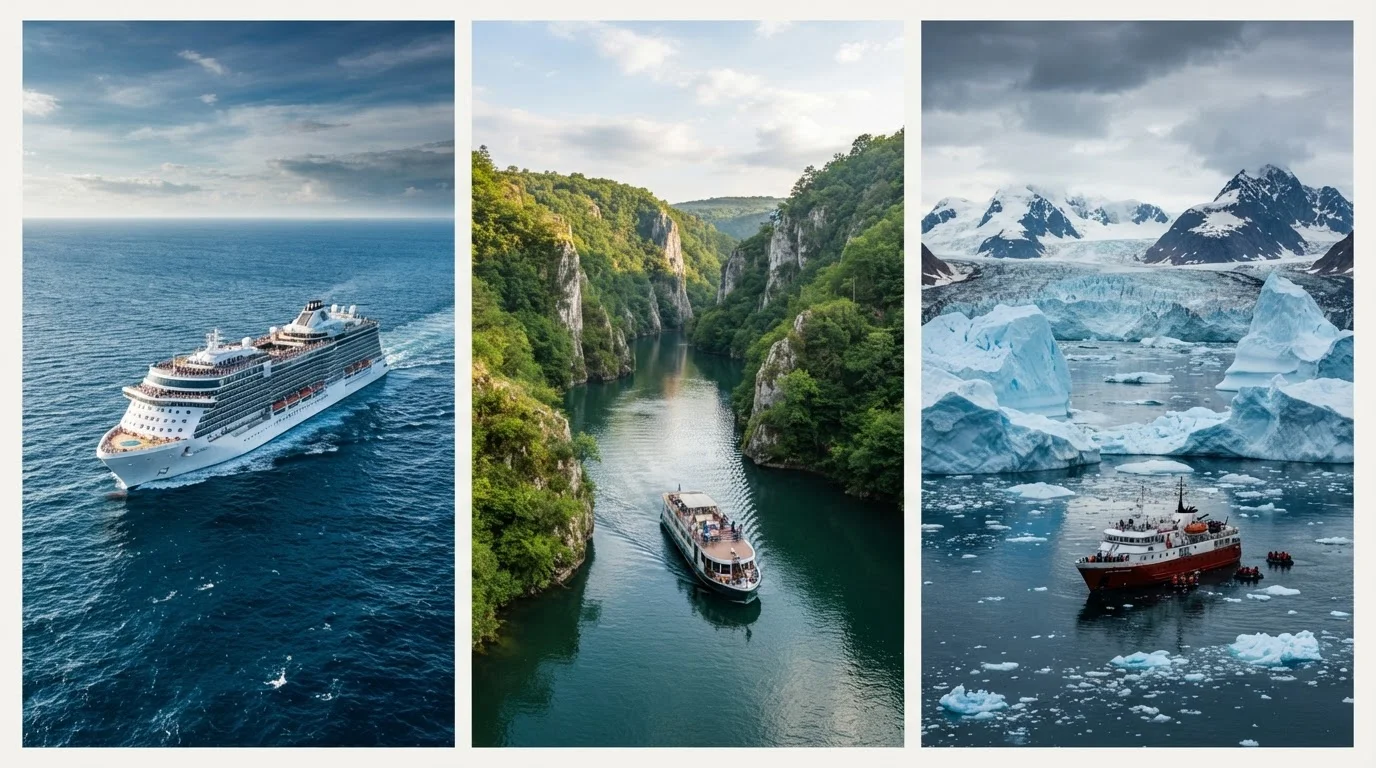
Ocean cruises are what the cruise industry is most widely known for. Ships range from a few hundred passengers to over 5,000, sailing open seas to destinations across the Caribbean, Mediterranean, Alaska, and beyond. Ship size shapes the entire experience - larger vessels offer more entertainment, dining options, and onboard activities, while smaller ocean ships feel more personal.
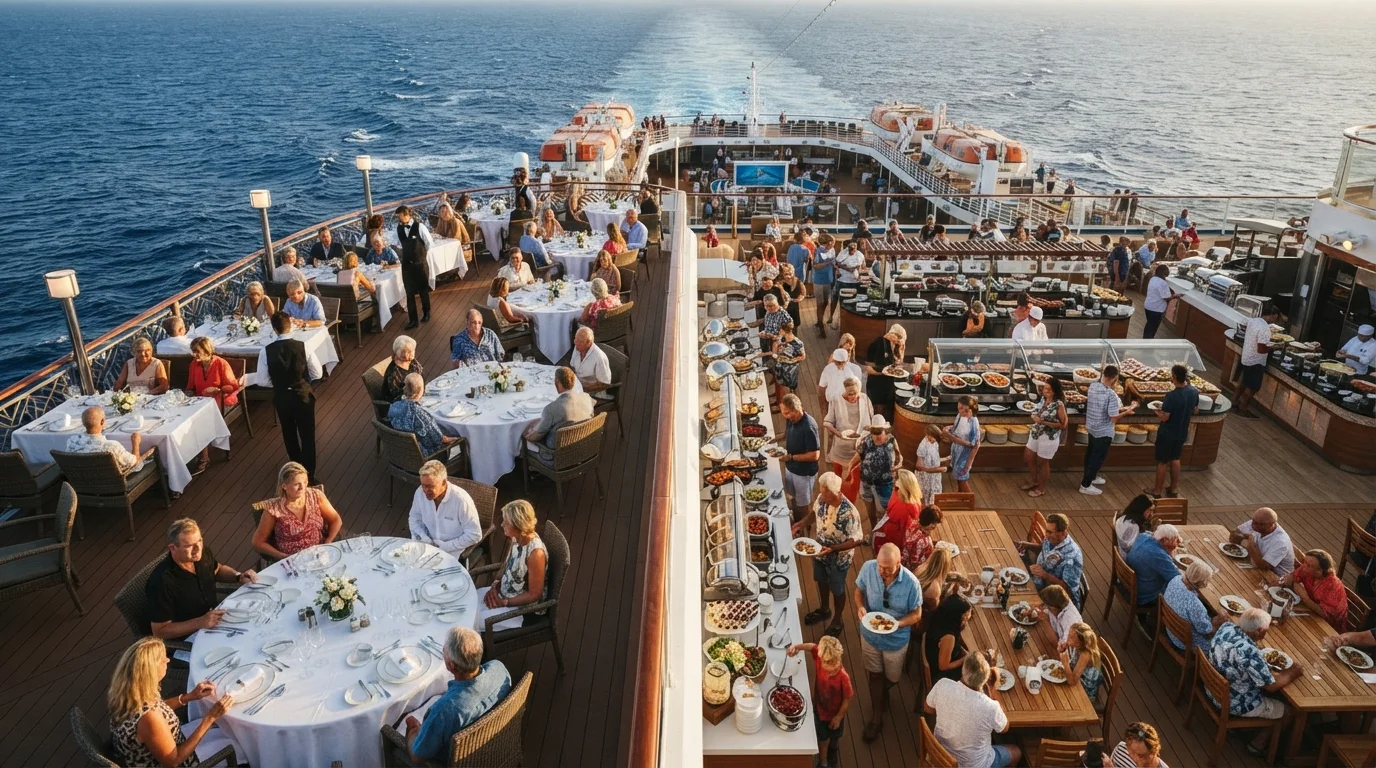
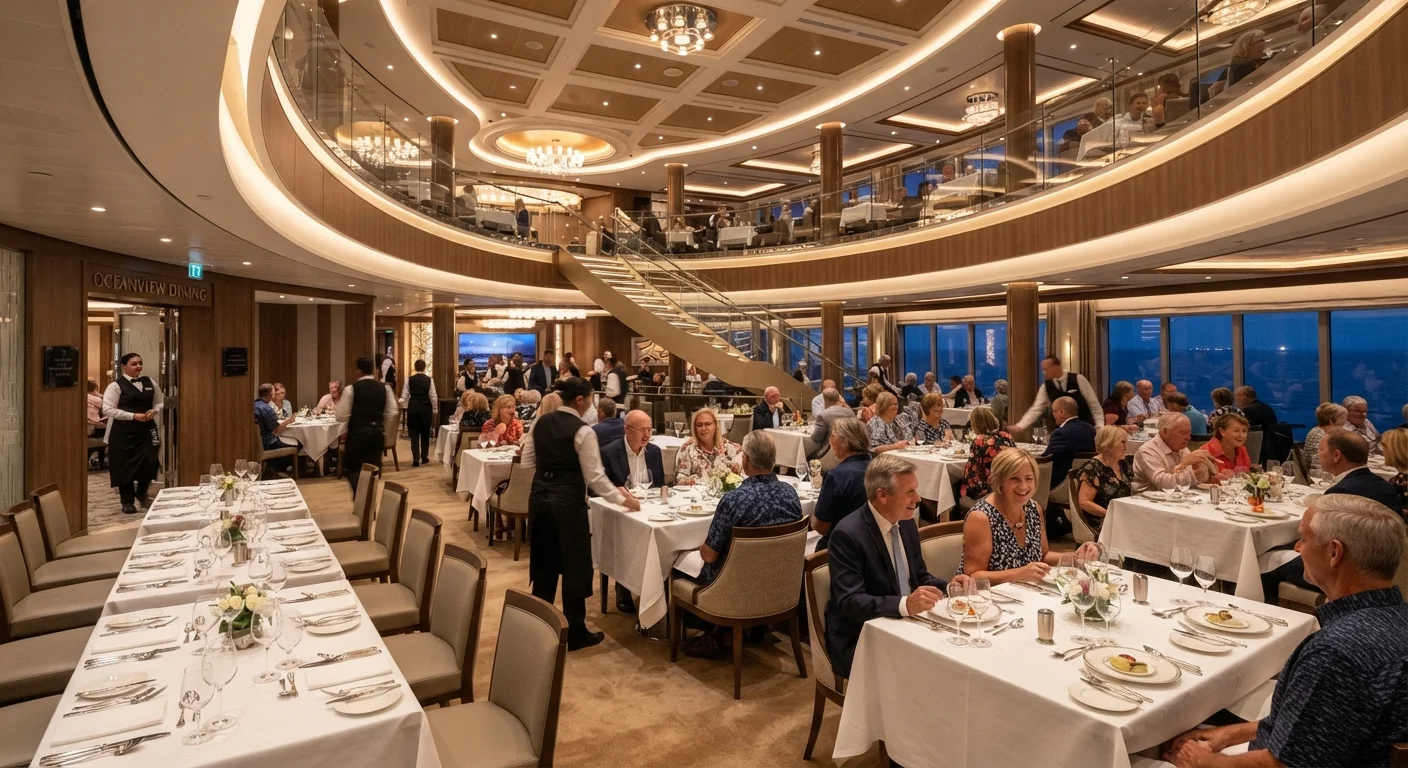
Ports of call are typically visited for a single day, with the ship anchoring or docking while passengers explore independently or join organized excursions. Evenings are usually spent at sea, and the ship itself becomes a central part of the experience. Dining ranges from included main dining rooms to specialty restaurants, which vary by pricing model - a distinction explained in the all-inclusive vs. à la carte pricing guide.
Ocean cruises generally suit travelers who want variety, structured entertainment, and the convenience of unpacking once while visiting multiple destinations. For a closer look at how specific regions compare, explore popular cruising regions.
| Ocean Cruise | River Cruise | Expedition Cruise | |
|---|---|---|---|
| Typical ship size | 500-5,000+ passengers | 100-200 passengers | Under 200 passengers |
| Destinations | Popular ports worldwide | Inland waterways, town centers | Remote wilderness, polar regions |
| Pace of travel | Multiple ports, frequent movement | Slower, overnight stops common | Varies with nature conditions |
| Onboard entertainment | Extensive - shows, pools, casinos | Minimal - lectures, cultural focus | Educational - naturalist-led programs |
| Typical price range | Wide range, budget to luxury | Generally premium-priced | Typically highest cost tier |
| Best suited for | Variety seekers, families, first-timers | Culture-focused, older travelers | Adventure travelers, wildlife enthusiasts |
River Cruises: Slow Travel Through Cultural Heartlands
River cruises operate on inland waterways - Europe's Rhine, Danube, and Seine are among the most well-traveled, alongside routes in Southeast Asia, Egypt, and the American South. Ships carry far fewer passengers (typically 100-200), are long and narrow to fit locks and narrow channels, and dock directly in town centers rather than at distant port facilities.
The pace is deliberately slower. Rather than day-long port stops, river itineraries often include overnight stays in a single location, guided excursions to historic sites, and onboard lectures on regional history or culture. The result is a deeper engagement with each destination. River itineraries work differently from ocean routes and are worth understanding before you book.
River cruises tend to attract travelers who find mega-ships overwhelming or who prioritize meaningful cultural experiences over onboard entertainment. They are often, though not always, priced at a premium relative to entry-level ocean cruises.
Check Lock and Bridge Restrictions Before Booking
River ships are built to specific dimensional limits set by the waterways they navigate. Some routes may be affected by seasonal water levels - low water can cause itinerary adjustments or cancellations. Ask your cruise provider about their policy for water-level disruptions before committing to a booking.
Expedition Cruises: Remote Access Over Onboard Comfort
Expedition cruises are purpose-built for reaching places that standard ships cannot go - Antarctica, the Arctic, the Galápagos, remote fjords, and uninhabited islands. Ships are small (sometimes fewer than 100 passengers), ice-strengthened where needed, and equipped with Zodiac inflatable crafts for shore landings where no dock exists.
The onboard experience is secondary to the destination. Lectures by naturalists, marine biologists, and geographers replace Broadway-style shows. Days are structured around wildlife sightings and landings rather than pool decks and casinos. Passengers should expect variable weather, physical activity, and genuine remoteness - this is not a relaxation-focused trip.
Pricing is typically higher than ocean or river cruises due to the specialized vessels, small passenger counts, and expert staff required. Those drawn to adventure travel, wildlife, or polar regions may find the investment worthwhile. For a direct side-by-side comparison of ocean and river styles specifically, see ocean cruise vs. river cruise.
Expedition Cruises Require Physical Preparedness
Many expedition landings involve stepping into Zodiac boats, walking on uneven terrain, and standing for extended periods in cold or wet conditions. Travelers with limited mobility should review accessibility details carefully with any expedition operator before booking. Always verify entry requirements, health prerequisites, and travel advisories with official government sources before departure.
Matching the Cruise Type to Your Travel Goals
No single cruise type is objectively better - they serve different travelers with different priorities. Ask yourself what you want most from your trip: entertainment and socializing, cultural depth and history, or wilderness access and adventure. Budget, physical mobility, and destination preferences also play a significant role.
Onboard life differs substantially too. Ocean ships offer a wide range of dining venues - understand how cruise dining is organised before you assume all ships work the same way. River and expedition vessels tend to offer a single dining room with a communal, set-menu structure that encourages conversation among guests.
Taking time to understand these fundamentals now will help you avoid booking a trip that doesn't match what you hoped for - one of the most preventable and costly travel mistakes a first-time cruiser can make.