Why Travel Money Myths Are Especially Costly for First-Timers
First-time travelers make most of their financial decisions before they fully understand how international money actually works — and misinformation fills that gap quickly. Well-meaning advice from friends, outdated forum posts, and the assumption that domestic habits transfer seamlessly abroad all contribute to a predictable set of costly mistakes.
These aren't exotic edge cases. They're the everyday money myths that quietly drain travel budgets through avoidable fees, poor exchange rates, and misplaced confidence in financial tools. Getting them straight before you go is one of the highest-return preparations you can make.
For a broader look at how destination choices are shaped by misinformation, see travel destination myths that steer first-timers wrong. And if you want a solid foundation before diving into the myths below, Travel Money Explained is a plain-language primer worth reading first.
The Myths — and What's Actually True
The following misconceptions consistently cost first-time travelers real money. Each one is common enough that you've probably already heard at least one of them presented as solid advice.
Myth
Airport currency exchange booths are fine for a quick conversion — the convenience is worth it.
Fact
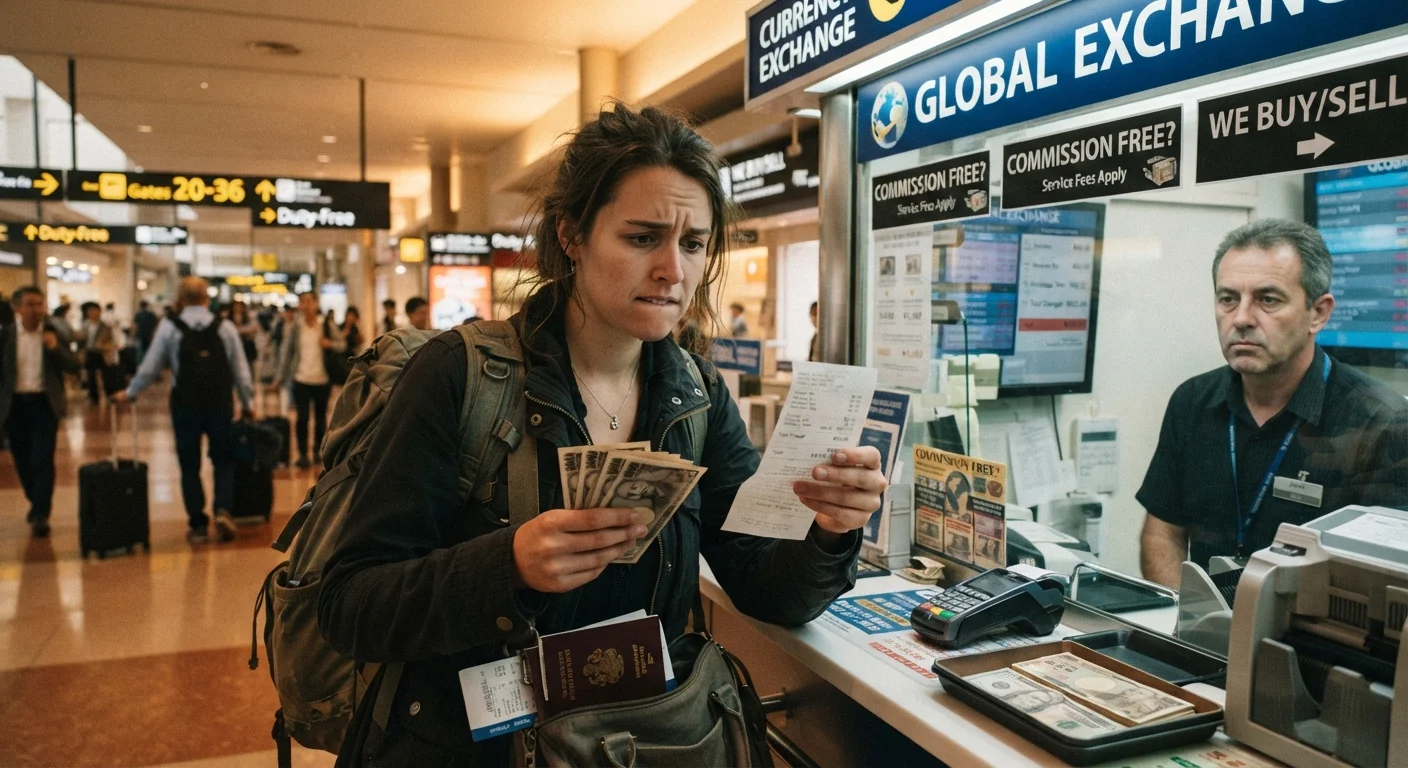
Airport exchange kiosks typically charge some of the highest fees and worst rates available. The convenience premium is real and significant.
Airport currency exchange operators rely on captive audiences with no comparison options. Their margins — built into the rate spread, explicit commissions, or both — can effectively cost travelers 10–15% compared to withdrawing local currency from a destination-country ATM using a low-fee debit card. Unless you need a small amount of cash for an immediate taxi, skipping the airport kiosk is almost always the financially smarter move.
Myth
My credit card protects me from fraud, so I don't need to worry about how I use it abroad.
Fact
Credit cards do offer strong fraud protection under US law, but they can still charge foreign transaction fees of 1–3% on every purchase — and protection requires prompt action on your part.
Many standard US credit cards add a foreign transaction fee to every international purchase. Over a two-week trip, those charges add up. Separate from fees, fraud protection requires you to monitor statements and dispute unauthorized charges promptly — it doesn't happen automatically. Check whether your card charges foreign transaction fees before you travel, and keep an eye on your account throughout the trip.
Myth
When a merchant offers to charge you in US dollars, that's helpful — you know exactly what you're paying.
Fact
This practice is called dynamic currency conversion (DCC), and it almost always uses a worse exchange rate than your own bank would apply.
When a card terminal or ATM asks whether you want to pay in your home currency or the local currency, choosing your home currency sounds reassuring — but the rate applied is set by the merchant's processor, not your bank, and it's typically unfavorable. Always select local currency at the point of sale. Your bank's conversion rate, even with a foreign transaction fee, is generally better than DCC.
Myth
Carrying mostly cash is safer — you can't overspend, and cards can be hacked.
Fact
Carrying large amounts of cash creates its own serious risks: lost or stolen cash is almost never recoverable, while fraudulent card charges can typically be disputed.
Cash has a role in any travel money strategy — some destinations are cash-heavy, and small vendors may not accept cards — but carrying more than you need for a day or two at a time exposes you to unrecoverable loss. Cards with zero-liability fraud protection give you a dispute pathway that cash never can. A balanced approach — limited daily cash plus a secure backup card — manages both risk types better than either extreme.
Myth
All ATMs abroad are basically the same — just find any machine and withdraw what you need.
Fact
ATM fees vary enormously depending on the machine operator, your card's network, and whether the ATM is affiliated with your bank's partner network.
Standalone ATMs in tourist areas, hotels, and currency exchange offices frequently charge higher flat fees per transaction than bank-branch ATMs. Some US debit cards reimburse ATM fees up to a monthly limit; others do not. Before traveling, check whether your bank has fee-free ATM partnerships at your destination, and plan withdrawals in larger amounts to minimize per-transaction costs rather than withdrawing small amounts repeatedly.
1–3%
Typical foreign transaction fee per card purchase
Many standard US credit and debit cards charge this fee on every international transaction; fee-free cards exist but require advance research.
~10–15%
Potential cost premium at airport exchange kiosks
The gap between airport kiosk effective rates and rates available through destination ATMs is commonly estimated in this range by consumer finance sources.
For related budget misconceptions beyond the money-handling side, travel budget myths covers cost estimation errors that catch many beginners off guard. Understanding both sets of myths together gives you a much more complete picture before you depart.
Building a Safer Travel Money Strategy
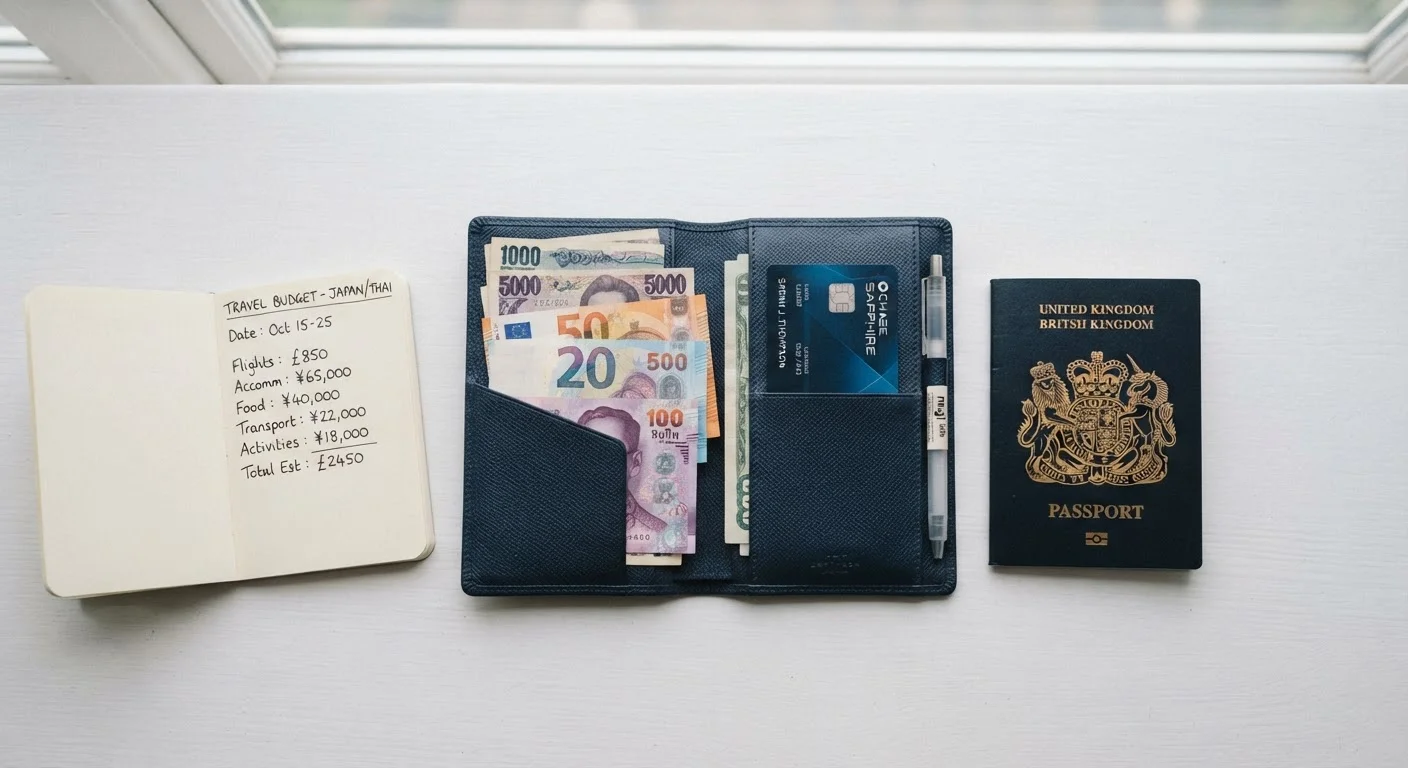
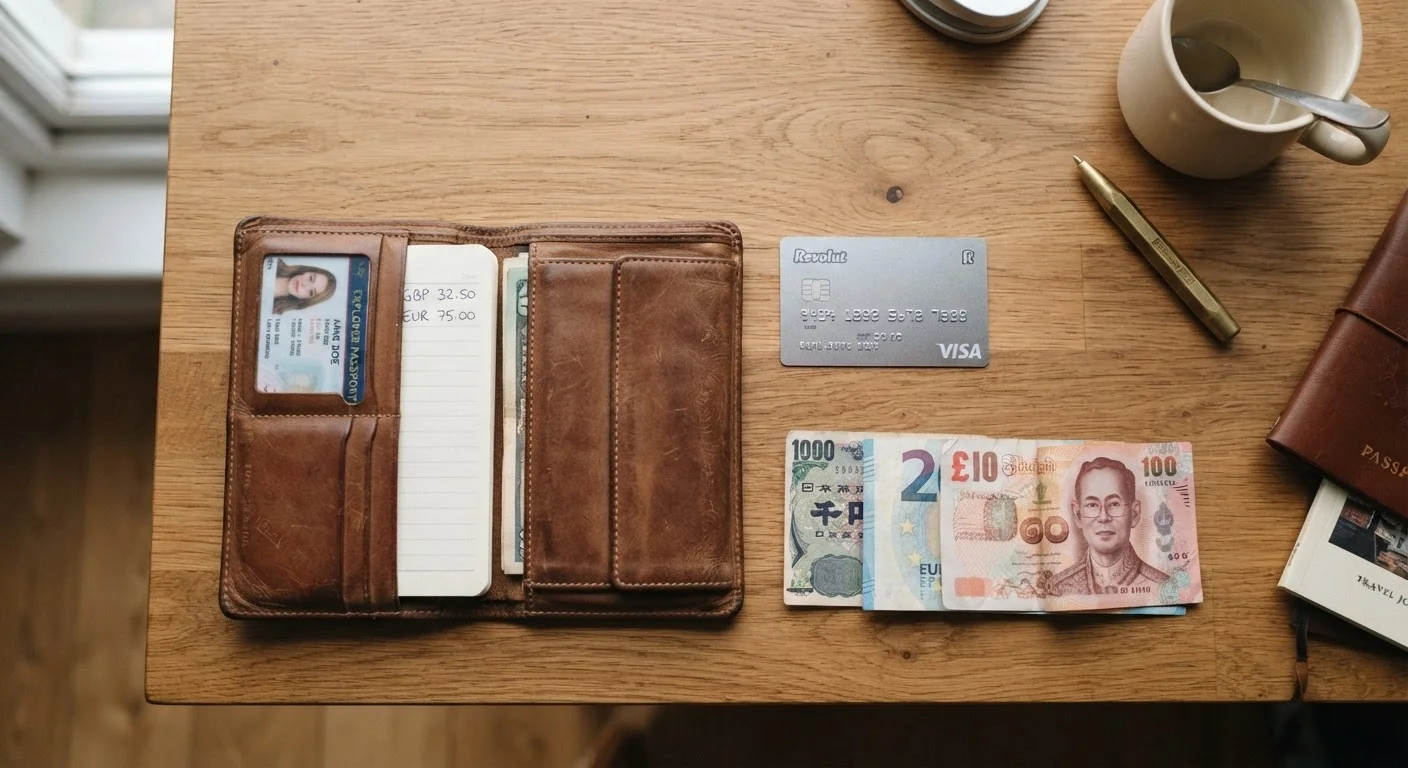
No single financial tool covers every situation abroad. A practical approach combines two payment methods — typically a no-foreign-transaction-fee debit card for ATM withdrawals and a no-fee credit card for larger purchases — with a modest amount of local currency obtained before or immediately after arrival at a bank or in-network ATM, not an airport kiosk.
Always Notify Your Bank Before Traveling
Failing to alert your bank or credit card issuer of international travel is one of the most common — and most avoidable — reasons cards get frozen abroad. Fraud detection systems may flag unusual foreign activity and block your card at the moment you need it most. A quick call or in-app travel notice before departure takes minutes and can prevent a genuinely stressful situation far from home.
Before every international trip, contact your bank and card issuers to confirm your cards will work at your destination, verify daily withdrawal limits, and check whether your debit card network (Visa, Mastercard, etc.) has fee-free ATM partnerships there. This call takes five minutes and can prevent a frozen card at the worst possible moment.
Travel money decisions overlap with broader safety habits. Our Staying Safe hub covers what else to prepare before you go, and travel safety myths addresses the equally common non-financial misconceptions that trip up beginners.
This article provides general financial information for educational purposes only. It is not personalized financial advice. Fees, exchange rates, and card terms vary by provider and change over time — verify current terms directly with your bank or card issuer before traveling.