Why Multi-Country Money Management Is Different
A single-destination trip lets you convert money once, learn one currency, and adjust. A multi-country trip compounds every decision: each border crossing introduces a new exchange rate, potentially different ATM fee structures, and different norms around card acceptance versus cash. Mistakes that cost $10 in one country cost $10 per country across five stops.
The good news is that the complexity is mostly organizational, not financial. With a clear per-country cash plan and the right cards in your wallet, you can move through multiple currencies without paying meaningfully more than a traveler on a single-destination trip. The full context — including how markups and fees interact — is covered in the complete travel money planning guide.
Low- or no-foreign-transaction-fee debit card
Withdraw local currency from ATMs in each country without paying 3% foreign transaction fees on every withdrawal.
Backup credit card with no foreign transaction fees
Provides a secondary payment method and emergency purchasing power if your primary card is lost or blocked.
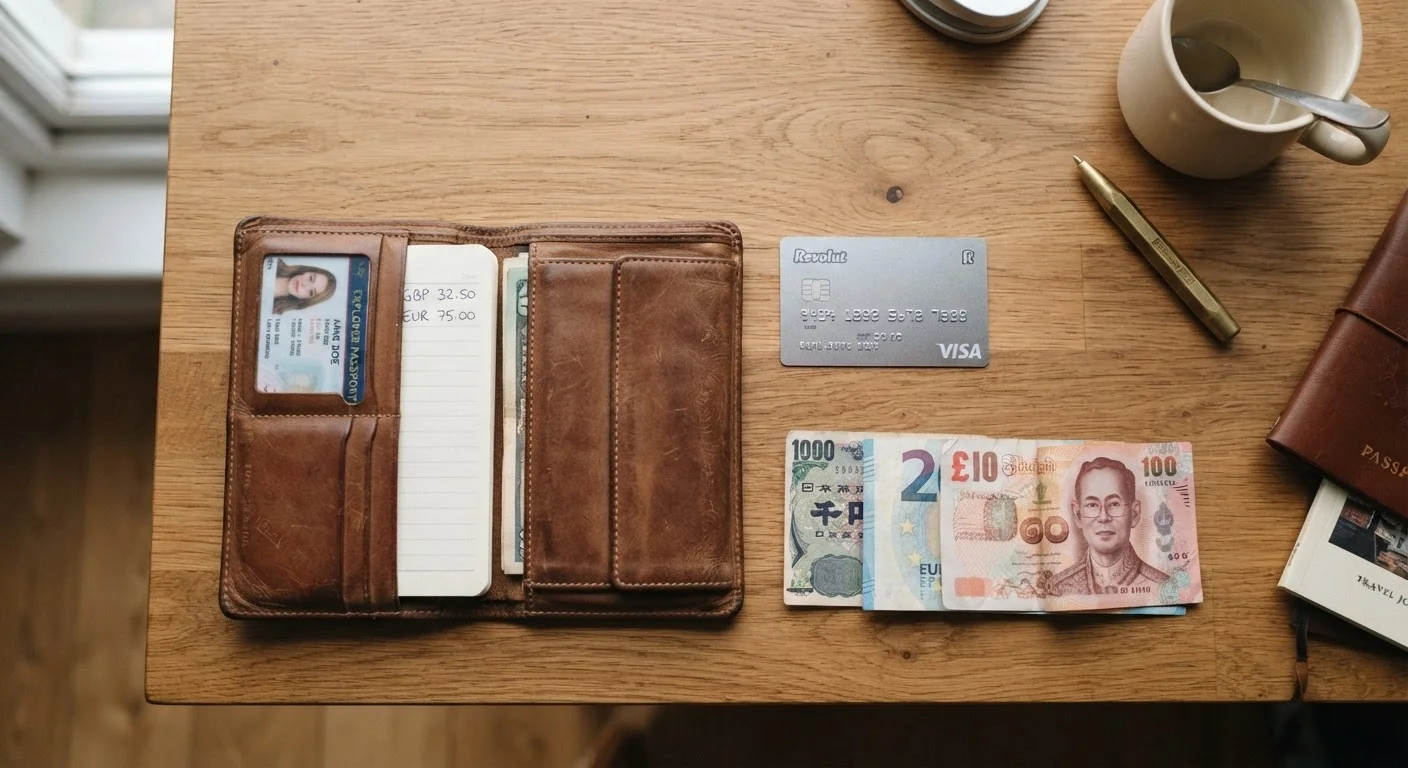
Per-country cash envelope or wallet section
Physically separates each country's cash so you know at a glance how much local currency you have left.
Offline currency converter app
Lets you quickly check approximate exchange rates and spot-check receipts even without mobile data.
What you will need
Step-by-Step: Building Your Multi-Country Currency Plan
The steps below walk through the process in sequence — from pre-departure mapping through daily tracking. Work through them before you leave, not at the first airport.
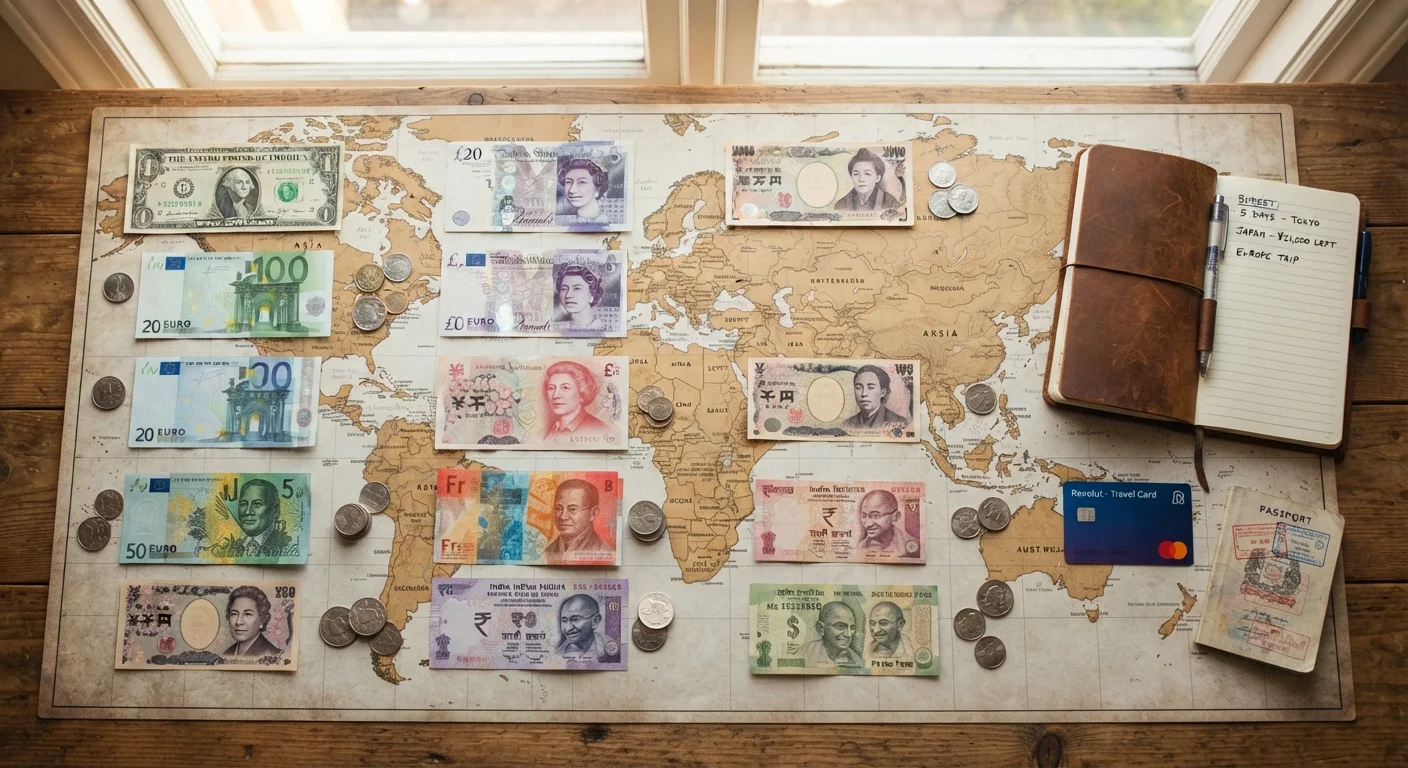
Map every currency you will need
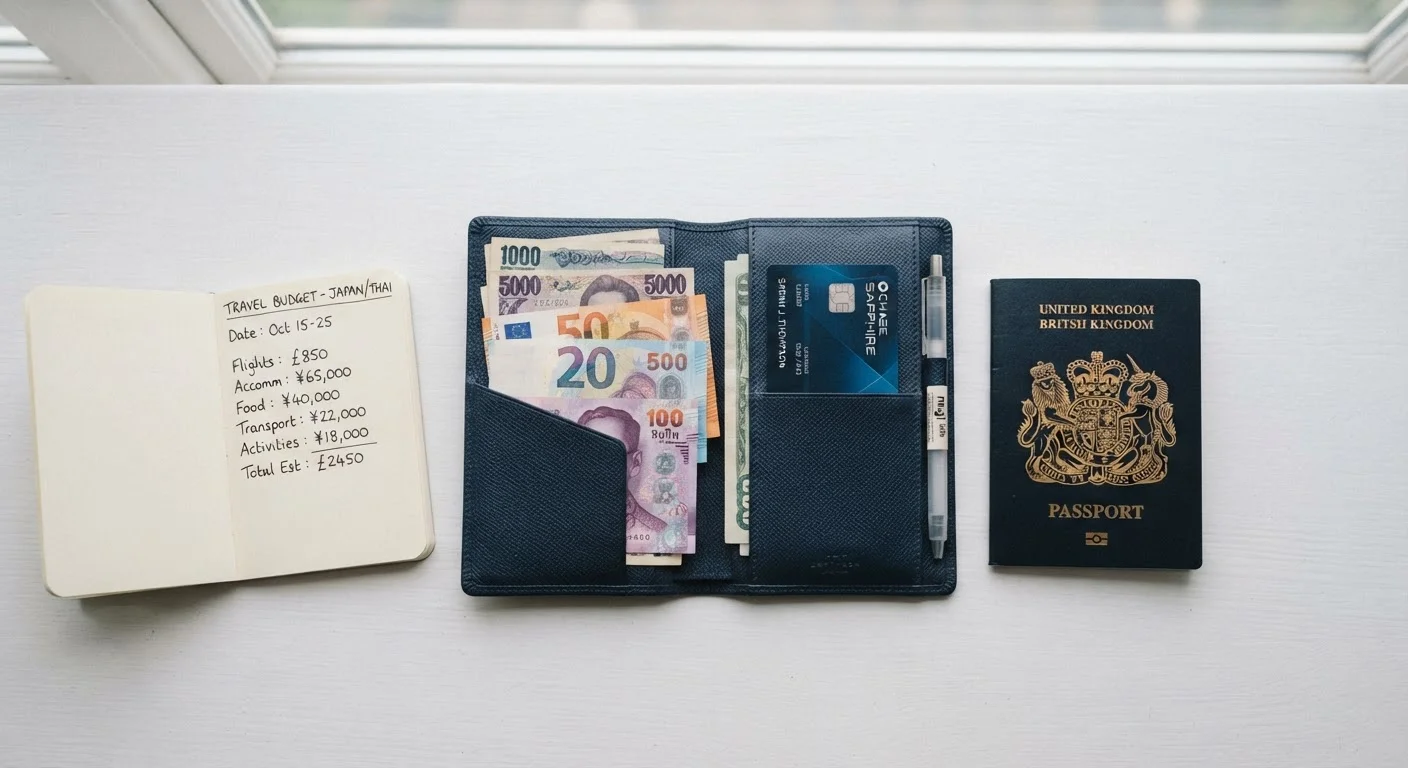
List each country on your itinerary and its official currency. Note whether the destination is card-friendly or predominantly cash-based — rural areas, local markets, and smaller restaurants in many countries still require physical currency. This map becomes the backbone of your cash planning.
Estimate a cash target for each leg
For each destination, multiply your estimated daily cash spend by the number of days, then add a 15% buffer. Keep these figures separate — treat each country as its own mini-budget rather than managing one combined cash pool. Blending funds across currencies makes it easy to overspend in an early country and arrive short in a later one.
Confirm your cards work in each country
Check that your debit and credit cards carry no foreign transaction fees and are accepted on the relevant networks (Visa and Mastercard have the widest global ATM coverage). Notify all card issuers of your full itinerary — not just the first country — to avoid fraud blocks mid-trip. Confirm your card's daily ATM withdrawal limit and whether it applies per calendar day or per 24-hour period.
Plan your ATM withdrawal strategy per country
Rather than exchanging currency at home for every destination, plan to withdraw local currency from a reputable bank ATM shortly after arriving in each country. Withdraw only what you need for that leg. Using in-network or bank-branded ATMs reduces the risk of skimming and often means lower surcharges than independent machines at tourist sites.
Always pay in local currency
When a card terminal or merchant offers to charge you in US dollars instead of local currency, decline. This is called dynamic currency conversion (DCC), and it almost always applies a worse exchange rate than your card's standard conversion. The dynamic currency conversion explainer details exactly what you lose. The rule is simple: always choose the local currency option at every terminal, in every country.
Spend down or transfer cash before crossing each border
As you approach the end of each country leg, consciously spend down remaining local cash on meals, transit, or small purchases rather than carrying it forward. Small-denomination coins are especially hard to reconvert. If you have notes remaining, some airports have currency exchange machines — but factor in the spread as a real cost, not a neutral swap.
Track actual spending against your per-country budget
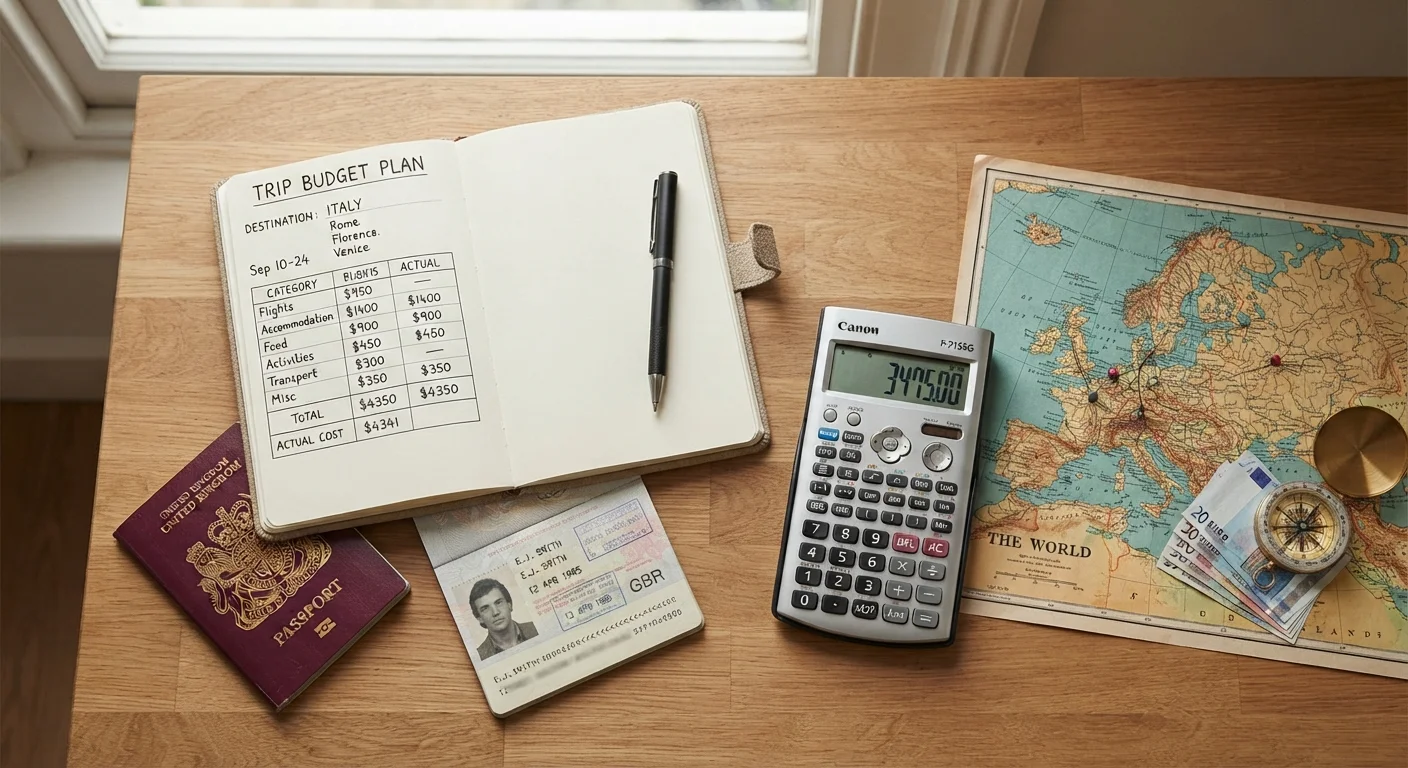
At the end of each day, log what you spent and in which currency. A notes app is sufficient. This takes under two minutes and tells you whether you are on track before you hit a deficit. It also builds useful data for future multi-country trips. For a broader framework on building and tracking travel budgets, the trip budget hub has additional planning tools.
Leftover Foreign Currency Is a Hidden Cost
Converting unused foreign currency back to US dollars typically triggers another exchange spread and sometimes a flat fee. Across three or four countries, these reconversion losses can add up meaningfully. Plan withdrawal amounts conservatively for each leg rather than converting a large sum upfront.
Keep a Simple Per-Country Cash Log
Before departure, write down each destination, its currency, your planned daily cash spend, and the number of days. Multiply to get a target withdrawal amount per country, then add a 15% buffer for surprises. This takes ten minutes and prevents the common mistake of either running out of cash or carrying an excess you cannot easily reconvert.
This article provides general financial information for educational purposes and does not constitute personalized financial or legal advice. Currency fees, ATM policies, and card terms vary by institution and can change — verify current terms directly with your bank or card issuer before traveling. For destination entry requirements, border rules, or safety advisories, consult official government sources.