Why the Car Question Matters for New Zealand First-Timers
New Zealand has built a global reputation as road-trip territory, and for good reason. The country's most celebrated landscapes — Fiordland, the Coromandel Peninsula, the Marlborough Sounds — are spread across two main islands with limited rail coverage and rural roads that don't always have bus services. For first-time visitors, the question of whether to hire a vehicle can feel like one of the most consequential decisions of the trip.
The honest answer is that your experience without a car depends almost entirely on where you plan to go. New Zealand's public transport system is functional in urban corridors but thin in rural areas. Understanding this gap upfront prevents expensive surprises — a concern that trips up many first-timers who assume transport options will mirror those of European or East Asian destinations.
If you're already thinking about how to handle transfers on arrival, the ground transfer options guide covers airport-to-hotel logistics worth reviewing before you book anything.
The Case for Going Car-Free: Real Advantages
There are genuine reasons why some travelers choose to skip the rental car entirely — and not all of them are about saving money.
No driving stress on unfamiliar roads
New Zealand drives on the left, and rural roads can be narrow and winding. Avoiding a rental car removes a genuine source of anxiety for first-time visitors unfamiliar with local road conditions.
Guided tours handle logistics for you
Organized day tours to Milford Sound, Hobbiton, and Tongariro National Park include transport, commentary, and entry — reducing the research burden significantly for overwhelmed travelers.
Lower upfront costs in some scenarios
Rental cars in New Zealand carry fuel costs, one-way drop fees, and mandatory insurance. For short trips focused on cities, buses and shuttles can cost considerably less overall.
City transport is genuinely usable
Auckland's AT HOP card and Wellington's Snapper card make urban transit straightforward. Most major attractions within these cities are reachable by bus or train without difficulty.
2 islands
Main islands requiring a ferry crossing between
New Zealand's North and South Islands are connected by a Cook Strait ferry crossing of roughly three hours, a key consideration for any multi-island itinerary without a car.
~3 hrs
Cook Strait ferry crossing duration
The Wellington–Picton ferry is one of the few practical ways for car-free travelers to move between the North and South Islands and includes scenic fiord-adjacent scenery.
For solo travelers in particular, guided group tours offer social benefits that self-driving simply doesn't. If you've considered how organized travel can reduce the isolation of exploring alone, the same dynamic applies here as it does with solo cruising — structured itineraries often make it easier to meet fellow travelers.
The Real Limitations: What You'll Likely Miss
Car-free travel in New Zealand carries genuine trade-offs that first-timers should weigh honestly before committing to the approach.
Rural highlights are difficult to reach independently
Much of New Zealand's most celebrated scenery — including Fiordland and the Coromandel — requires a car or pre-booked shuttle. Relying on public transport alone means many iconic spots are effectively inaccessible.
Schedules limit flexibility significantly
Bus and shuttle services run on fixed timetables, often once or twice daily on less-traveled routes. Missing a connection in a small town can derail an entire day's plan with few alternatives.
South Island coverage is especially sparse
The South Island has almost no passenger rail outside the scenic TranzAlpine and Coastal Pacific routes. Travelers hoping to explore the interior independently will find bus options limited and infrequent.
Tour costs add up quickly
Compensating for a lack of personal transport by booking guided day tours to multiple destinations can become expensive, sometimes exceeding the cost of a rental car for longer trips.
Shuttles Fill Some Gaps — But Not All
Dedicated tourist shuttle services operate between popular hubs like Queenstown, Te Anau, and Milford Sound, offering car-free access to destinations that regular buses don't serve. These shuttles typically require advance booking, especially during peak summer months (December–February in New Zealand). Always confirm schedules and availability directly with operators before finalizing your itinerary, as services vary by season.
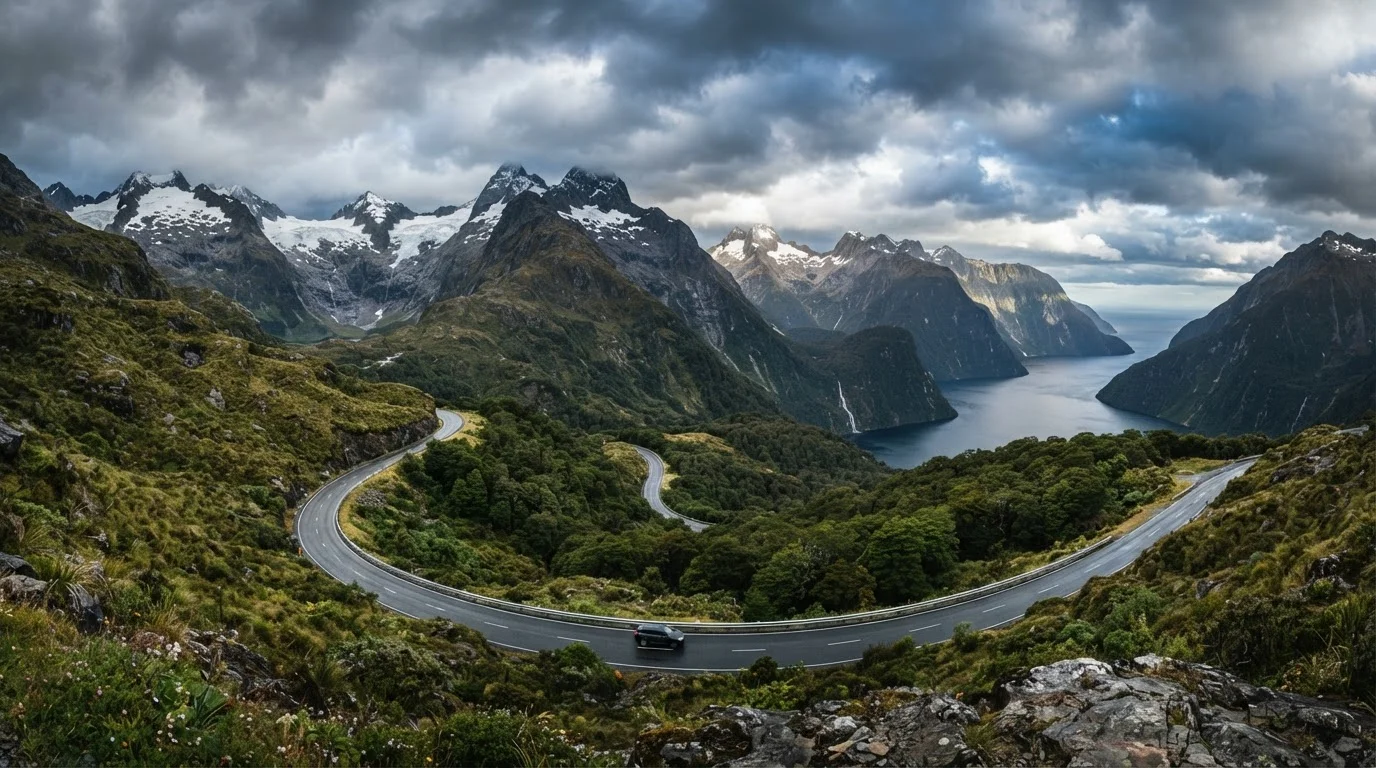
Many of the country's most iconic viewpoints — Milford Sound, the road to Mount Cook, the volcanic plateau around Tongariro — sit at the end of routes that require either a rental vehicle, a dedicated shuttle, or a booked tour departure. Spontaneous detours, early-morning starts at empty trailheads, and multi-day exploration of the South Island's interior are significantly harder without a car.
Building a Practical Car-Free Itinerary
A car-free trip to New Zealand works best when the itinerary is built around the transport network rather than retrofitted onto a driving route. Focus your time on connected hubs: Auckland, Rotorua, Wellington on the North Island, and Queenstown or Christchurch on the South Island all have reliable bus links, ferry access, or scheduled shuttle services to nearby attractions.
The InterIslander and Bluebridge ferry services connect Wellington to Picton across the Cook Strait — a scenic crossing that functions as legitimate transport, not just a novelty. From Picton, the TranzAlpine scenic train crosses to Greymouth via Arthur's Pass, giving car-free travelers access to genuinely dramatic landscape. Intercity bus passes cover many of the main tourist corridors and are worth investigating for multi-stop itineraries.
For navigating city transit once you've arrived, using public transport in an unfamiliar city walks through the practical steps from route planning to exiting the right stop — useful for Auckland and Wellington in particular.
Always verify current schedules, fares, and route availability directly with operators before you travel, as services can change seasonally.