Why Hotel Room Names Don't Mean What You Think
If you've ever tried to book a hotel room and found yourself puzzling over the difference between a "Superior King" and a "Deluxe Queen," you're not alone. Unlike airline cabin classes — where the hierarchy is fairly standardized (see our guide on decoding fare classes) — hotel room categories are self-defined by each property. There is no industry-wide authority requiring a "Deluxe" room to include any specific feature.
This matters because you can pay significantly more for a room tier without receiving a meaningful upgrade. Understanding what these labels typically signal — and where they can mislead — helps you make a smarter booking decision.
| Industry standardization of room names | None — hotels define categories themselves |
| Typical tiers (low to high) | Standard → Superior → Deluxe → Junior Suite → Suite |
| Main upgrade factors | Room size, floor level, view, and furnishing quality |
| Suite definition | Generally includes a separate bedroom and living area |
| Most commonly booked tier | Deluxe, at many mid-range to upscale properties |
| Best value check | Compare actual square footage and floor plan, not just the category name |
Breaking Down the Common Room Tiers
Standard
A Standard room is the baseline category at most hotels. Expect a bed (or two), a private bathroom, basic furniture, a television, and climate control. The room may be smaller, face an interior courtyard or parking lot, or sit on a lower floor. "Standard" simply means the property's entry-level offering — not that anything is lacking for a comfortable stay.
Superior
"Superior" is a step up from Standard, but only marginally so. You might get a slightly larger room, a better floor, or a marginally improved view. Some hotels skip this tier entirely; others use it as their primary mid-level option. Treat it as a minor refinement rather than a significant upgrade.
Deluxe
A Deluxe room typically offers more square footage, a preferred view (city, ocean, garden), or enhanced furnishings. At many mid-range and upscale hotels, Deluxe is actually the most commonly booked category — not a premium tier. The price premium over Standard is usually modest, and the improvement can be genuine. That said, at some properties, "Deluxe" is essentially a marketing label with little practical difference.
Junior Suite
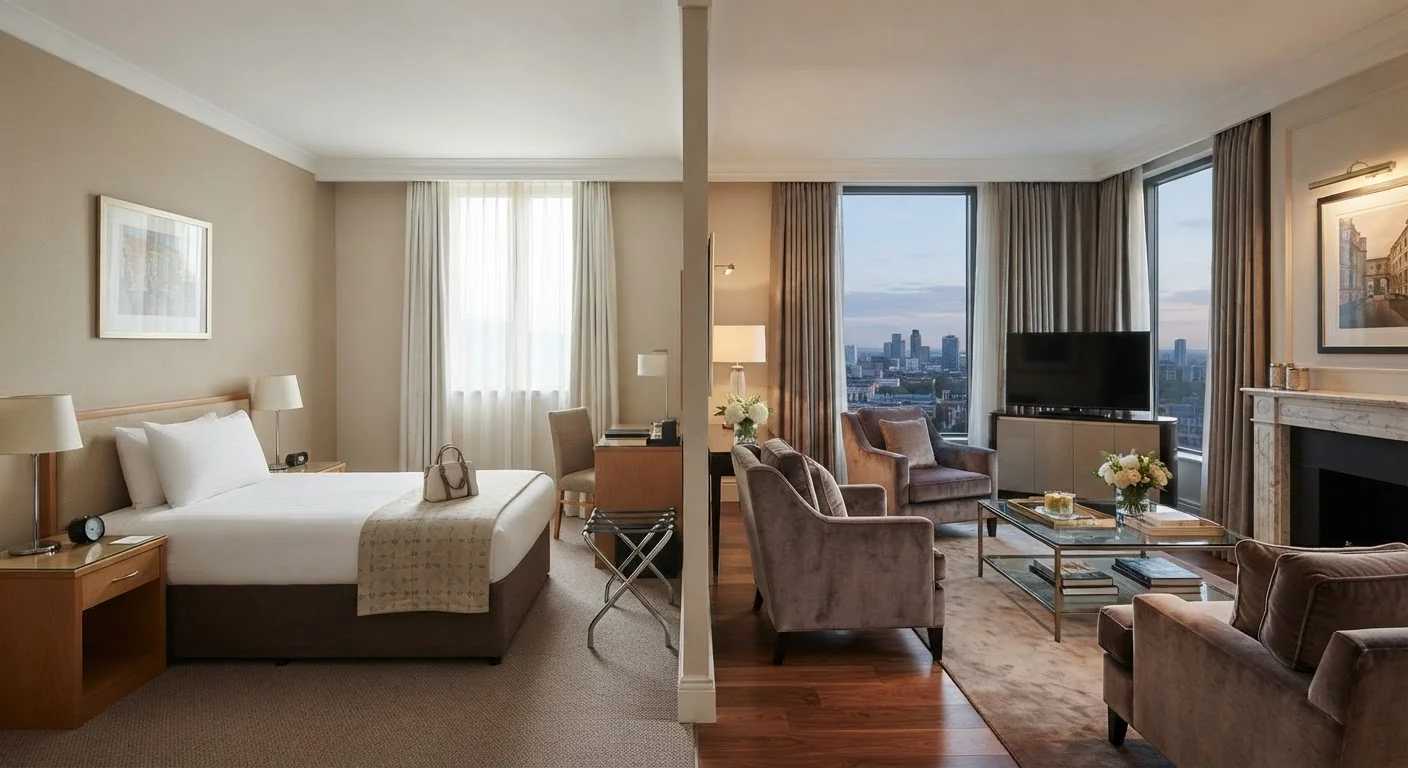
A Junior Suite generally features a single open-plan room where the sleeping area and a small sitting area are separated — either by furnishing arrangement or a half-partition. There is no separate bedroom. The trade-off for the extra space is a noticeably higher rate.
Suite
A Suite typically includes at least one separate bedroom and a distinct living room. Some suites add dining areas, kitchenettes, or multiple bathrooms. At luxury properties, suites can span multiple rooms across hundreds of square feet. Suite pricing varies enormously — a modest suite at a mid-range hotel and a flagship suite at a five-star property both use the same word. Always check the room's actual square footage and floor plan in the property listing.
Standard Room
The entry-level room category at a hotel, offering essential amenities including a bed, private bathroom, and basic furnishings. It does not imply a poor experience — just the baseline offering.
Deluxe Room
A mid-tier hotel room category that typically offers more square footage, a better view, or upgraded furnishings compared to a Standard room. The actual difference varies widely by property.
Junior Suite
A single open-plan room with a defined sleeping area and a sitting area in the same space. Unlike a full suite, it has no separate bedroom.
Suite
A multi-room accommodation with at least one separate bedroom and a distinct living area. Suites range from modestly sized to expansive, depending on the hotel's tier.
Room Category
A label hotels use to group rooms by size, view, location, or feature set. Categories are self-defined — there is no universal standard governing what each name must include.
View Category
A modifier applied to a room rate that indicates what the window faces — such as ocean view, city view, or garden view. View upgrades are priced separately from room-size upgrades at many hotels.
Is Upgrading Actually Worth the Extra Cost?
The honest answer depends on what you're using the room for and how much time you'll spend in it. Consider these practical questions before paying more:
- How many hours will you actually be in the room? If your trip is activity-heavy, a larger room may go largely unused.
- Is the view meaningful to you? A premium view matters most if you'll be in the room during daylight hours or the view is a specific destination feature (e.g., ocean or mountain).
- Are you traveling with others? Extra seating or a separate living space becomes genuinely useful for families, couples traveling together, or anyone who wants to work or wind down without sharing a single space.
- What's the price difference, not just the percentage? A $30 difference between Standard and Deluxe is a different decision than a $200 jump from Deluxe to Suite.
Note that star rating is a separate variable — a Deluxe room at a four-star hotel may outperform a Suite at a two-star property. Our article on hotel star ratings explains what those classifications actually signal.
Ask the Hotel Before You Book
If a room's category description is vague, contact the property directly and ask for the specific square footage, floor range, and what the windows face. Hotels are generally forthcoming with this information, and it takes less than a minute to confirm whether an upgrade is meaningful for your situation. Relying only on the category name can lead to paying more for a nearly identical room.
Once you've chosen a room category, knowing what to expect at arrival is equally important. Our guide to hotel check-in covers exactly what happens at the front desk and what to ask before heading to your room.