Why Hotel Amenities Confuse First-Time Guests
Walking into a hotel room for the first time, it's easy to assume that everything placed there for your convenience is included in what you paid. That assumption is one of the most common — and costly — mistakes new travelers make. Hotels deliberately design rooms to feel welcoming, but that minibar, those bottled waters, and even the in-room safe may all carry separate charges billed quietly to your folio.
The rules aren't universal. A budget property might include free parking but charge for Wi-Fi. A luxury resort might offer complimentary gym access but bill $6 for a bottle of water on the nightstand. Understanding the general patterns helps you ask the right questions before you touch anything. For a broader look at how charges accumulate, see our guide on hidden hotel fees.
Below, we break down the most common hotel amenities — what tends to be free, what typically isn't, and what you should always verify.
Wi-Fi: Usually Free, but Not Always Fast or Universal
Basic Wi-Fi is now complimentary at the vast majority of U.S. hotels, but there are two important catches. First, some properties — particularly upscale or business-class hotels — offer tiered Wi-Fi, where standard speeds are free but faster "premium" bandwidth carries a daily fee. Second, the quality varies enormously; a free connection that barely loads email is technically included but practically useless.
Always check whether the free tier covers your actual needs before assuming the upgrade is necessary. The password is almost always available at the front desk or printed on a card in the room.
Many hotels offer tiered Wi-Fi — basic access is free, but faster speeds may cost extra per day.
Gym and Pool Access: Typically Included, With Exceptions
Most full-service hotels include fitness center and pool access as part of your stay. However, some properties — especially those attached to spas — charge a day-pass fee for pool or spa facilities, even for in-house guests. Boutique hotels with small pools may restrict access to certain room categories.
If fitness or pool access matters to your trip, confirm it at booking or check-in rather than assuming it's covered. Loyalty program members occasionally receive complimentary spa access as a status perk, so it's worth mentioning your membership if you have one.
Gym and pool access are usually free, but spa facilities and premium pools often require a separate fee.
In-Room Water: One of the Most Commonly Misunderstood Charges
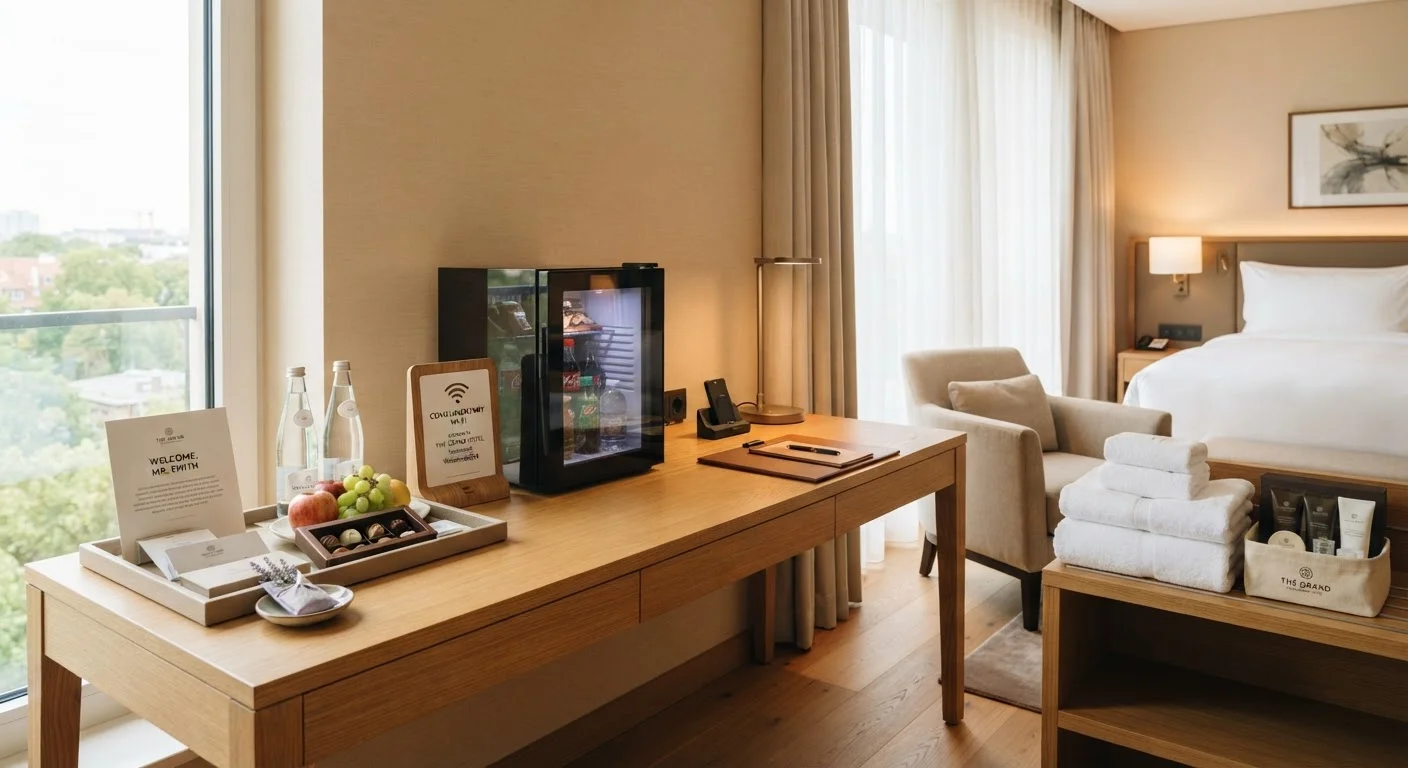
Bottled water placed on the nightstand, desk, or near the minibar is almost never free unless the hotel explicitly says so. Prices range from $3 to $8 or more per bottle at urban and resort properties. This catches many first-time guests off guard because the presentation — chilled, labeled, positioned to look like a welcome gesture — suggests complimentary service.
If the property provides tap water that's safe to drink (as is standard throughout the U.S.), that costs nothing. Many hotels also provide a filtered-water station near the gym or lobby. Check whether any water is actually marked as complimentary before opening anything from the minibar area.
Bottled water in your room is almost never free — always check before opening it.
The Minibar: Assume Nothing Is Complimentary
In-room minibars are one of the most reliably fee-generating features in hotels. Snacks, sodas, spirits, and specialty items are priced at a significant markup — sometimes three to five times retail cost. Some rooms use sensor-activated minibars that automatically charge your folio when an item is lifted and not returned within a set time, even if you didn't consume it.
If you want snacks or drinks without the markup, most hotels are located near a pharmacy or convenience store. It's also worth knowing that some hotels have eliminated minibars entirely; if the minibar is stocked at yours, a small price card or menu should be inside — read it before touching anything. For more on common misconceptions like this one, see things first-time guests assume.
Sensor-activated minibars can charge you automatically just for picking up an item — read the price card first.
Parking: Highly Variable and Often Expensive
On-site or valet parking at hotels — especially in urban areas — is one of the least predictable charges a traveler encounters. Daily rates can range from $15 at a modest suburban property to $60 or more at a downtown hotel. Self-parking is usually less expensive than valet, but both are almost always charged separately from your room rate.
When booking, look specifically for parking fees listed under "fees" or "policies" on the hotel's website. Third-party parking garages nearby are often significantly cheaper. If parking is essential to your trip, factor that cost into your total lodging budget from the start rather than treating it as an afterthought.
Hotel parking is rarely included in your rate and can add significant daily costs, especially in cities.
Toiletries and Housekeeping: What's Standard vs. What Costs Extra
Standard toiletries — shampoo, conditioner, body wash, soap, and basic items like a hair dryer — are universally provided at no charge. However, requesting additional items beyond what's initially stocked (extra towels, pillows, toiletries) is generally free on request, though some properties now charge for daily housekeeping as an opt-in service rather than a default.
Some hotels have shifted toward every-other-day housekeeping as a standard practice. If daily service is important to you, confirm that at check-in. Requesting a rollaway bed, crib, or specialty items like a foam pillow often triggers a small fee, which should be disclosed when you request it.
Standard toiletries are always free, but daily housekeeping and extra bedding may now carry optional charges.
How to Protect Yourself Before and During Your Stay
The single most effective habit is reading the property's amenity information before arrival — usually available on the hotel's website under "hotel policies" or "room features." At check-in, ask the front desk agent to confirm which amenities are included in your rate. This conversation takes under two minutes and can prevent genuine surprises on your final bill.
Ask One Question at Check-In
When you arrive, simply ask the front desk: "Are there any charges for amenities I should know about before settling in?" Most agents will walk you through the minibar policy, parking situation, and anything else relevant to your room type. This 60-second conversation is the most reliable way to avoid checkout surprises. Keep the answer in mind — or jot it down — so you can refer back to it during your stay.
If your rate includes a resort fee, request an itemized list of what that fee actually covers. Some fees bundle items like pool access, gym use, or local calls that you might otherwise assume are free. Our article on reading a hotel room rate explains how these charges layer onto your nightly price.
Also review your folio — the running record of charges — at checkout, and request an itemized receipt. Mistakes and accidental minibar charges do happen. Catching them at the desk is far easier than disputing them later. For a full walkthrough of the check-in process and what to ask, see Hotel Check-In Explained.