Why the Gate Says No
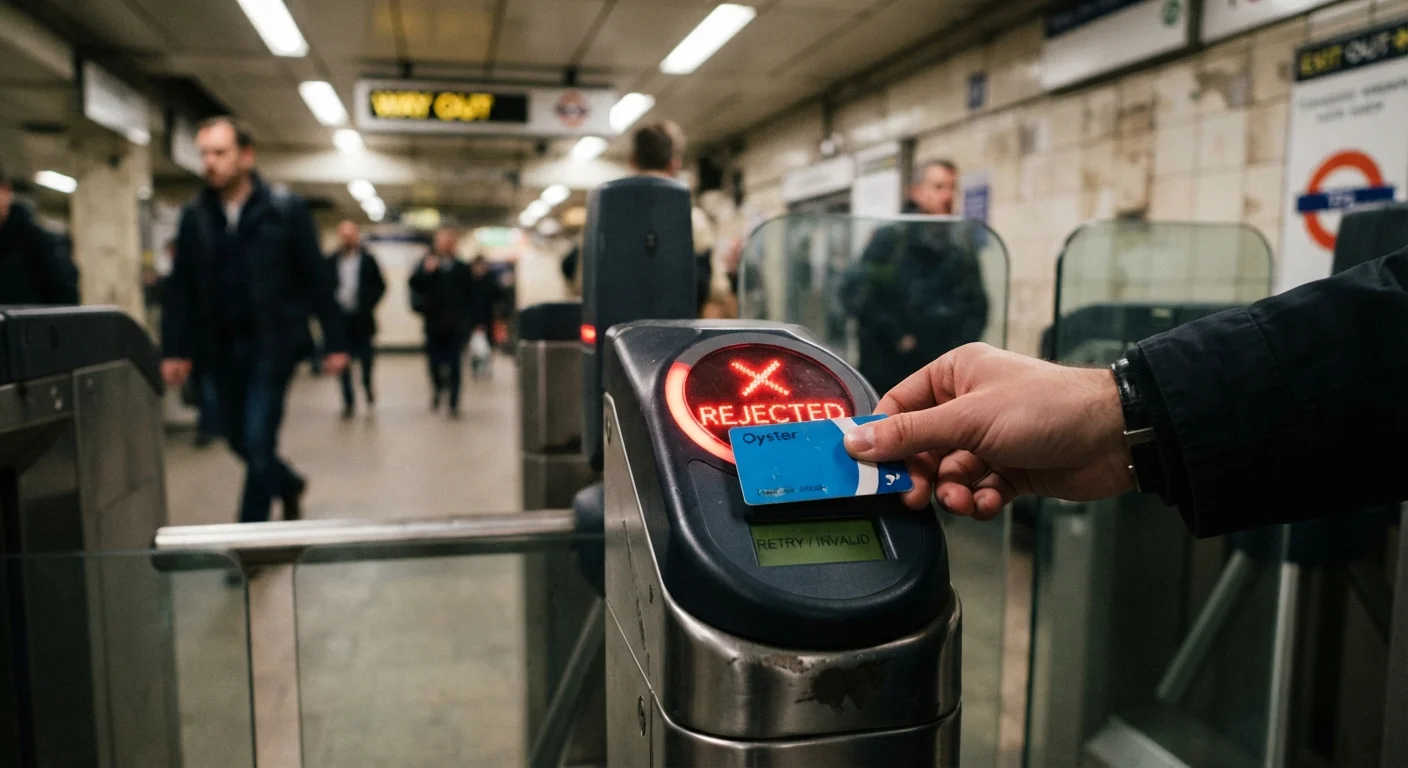
Standing at a subway barrier with a line of commuters building behind you is one of travel's more stressful micro-moments. The good news: fare rejections at transit gates almost always have a straightforward explanation, and most can be resolved within minutes once you know what to look for.
Understanding how different fare payment systems work before you arrive at a new city's transit network is the single most effective way to avoid gate trouble. But when rejection does happen, the mistakes below cover the most common causes — and exactly what to do about each one.
Tapping a card with insufficient balance to cover the base fare.
Why it happens: Travelers often load a round-number amount without accounting for fare variations by time of day, distance, or zone. A card that worked fine yesterday may fall short when the fare is slightly higher.
Keeping the transit card inside a wallet alongside other contactless cards, causing read conflicts.
Why it happens: Modern wallets often hold multiple NFC-enabled cards — bank cards, hotel key cards, loyalty cards — which can interfere with each other at a reader, producing a rejection or the wrong card being charged.
Using a card or ticket that is valid in one zone but attempting travel into a higher or different zone.
Why it happens: Zone-based fare systems are genuinely confusing for newcomers. A single-journey ticket or a card loaded for inner-zone travel will be rejected at entry points for zones it doesn't cover. See our guide to transit zones for a fuller explanation.
Tapping a single-use paper ticket that has already been used or has expired.
Why it happens: Paper tickets are easy to misplace in a bag or pocket, and travelers sometimes accidentally re-tap a spent ticket thinking it still has value. Some time-limited tickets also expire even if unused after a certain window.
Tapping too quickly, briefly, or at an angle that the reader cannot register.
Why it happens: First-time riders often tap nervously and pull away before the reader has finished processing, especially when there's a queue behind them.
Attempting to use a tourist day pass or travel card that hasn't been activated yet.
Why it happens: Some multi-day passes require activation at a machine or ticket window before first use, or they activate on a specific calendar date. Travelers sometimes go straight to the gate after purchasing.
What to Do the Moment Your Fare Is Rejected
Step aside from the gate immediately so other passengers can pass. This keeps the station moving and gives you space to troubleshoot without pressure.
Never Force or Tailgate Through a Barrier
If your fare is rejected, do not push through the gate behind another passenger or force the turnstile. Tailgating is considered fare evasion in virtually every transit system worldwide and can result in on-the-spot fines, removal from the station, or a permanent mark on a registered transit account. Always resolve the issue at a top-up machine, ticket window, or with station staff before entering the paid zone.
Next, locate the top-up machines or customer service window — both are typically within sight of the gate line in most metro stations. Check your card balance on the machine's display before assuming the issue is a tap technique problem. If balance is fine, try tapping the card alone (out of your wallet) on a different reader or gate; occasionally a single reader malfunctions.
Bank Contactless Doesn't Always Work Abroad
Many travelers assume their contactless debit or credit card works on any tap-enabled reader. In practice, some networks only accept locally issued bank cards or their own proprietary transit cards. Before relying on your home bank card, check the transit authority's official website to confirm which card types are accepted on that specific network.
If you're still stuck, station staff can read your card's chip, check its status, and in many networks issue a temporary pass or direct you to a working entry point. Don't hesitate to ask — this is a routine part of their job. For a broader look at what can go wrong when navigating urban transit for the first time, see our roundup of first-time transit rider mistakes.
~30%
Tap failures linked to card interference
Transport for London has noted that a significant share of contactless payment issues at Tube barriers result from multiple NFC cards being presented simultaneously — commonly called 'card clash'.
1 sec
Recommended card contact time at readers
Most transit authorities advise holding a contactless card or device against the reader for approximately one second to ensure a reliable read before withdrawing.
Travelers who rely on airport transfers to reach city centers should also be aware that fare confusion doesn't only happen underground — airport transfer slip-ups follow a similar pattern of avoidable, fixable mistakes.