
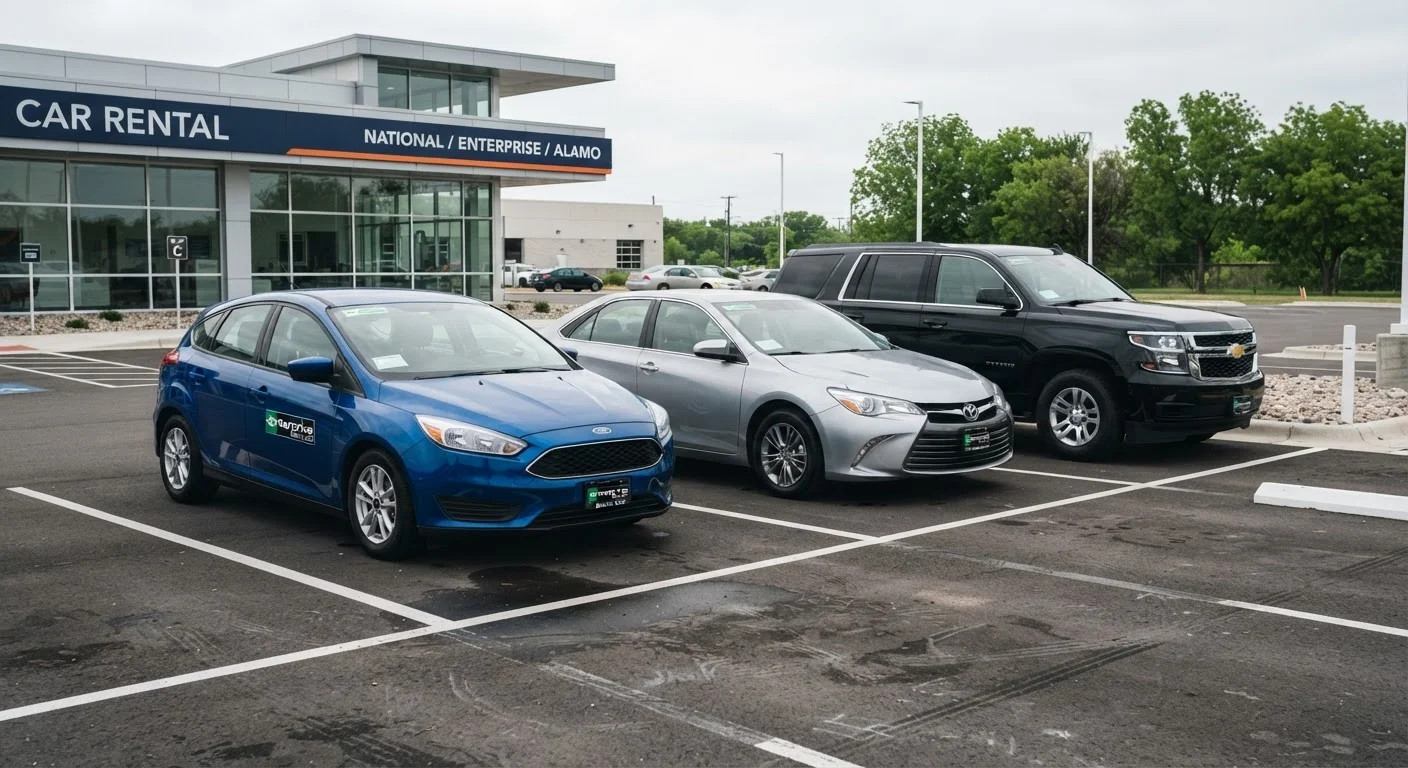
Why Category Labels Mislead More Than They Help
When you search for a rental car, the booking interface presents a tidy ladder: Economy, Compact, Intermediate, Standard, Full-Size, Premium, Luxury. It looks like a clear progression. In practice, the boundaries are fuzzy and the labels are marketing conventions, not regulated definitions.
Two rental companies can place the same model in different categories depending on their internal classification system. A vehicle one company calls "Intermediate" might appear as "Standard" at a competitor's counter two desks away. The only reliable anchor is the ACRISS code — a four-character identifier that specifies body type, transmission, fuel type, and air conditioning — but most booking platforms hide this from view.
The practical upshot: treat the category name as a rough size guide, then look at the specific example vehicle shown in the listing to calibrate your expectations. That example car is usually representative of the category, even if it isn't what you'll always receive.
Category Names Vary by Company
There is no industry-wide enforcement requiring rental companies to use identical category names. "Standard" at one company may roughly correspond to "Intermediate" at another. When comparing prices across booking platforms, check the example vehicle shown rather than relying solely on the category label. A midsize sedan listed as "Standard" and the same model listed as "Intermediate" may have identical trim levels at different price points.
What Each Major Category Actually Means for Your Trip
Economy: The smallest and most fuel-efficient tier. Typically a subcompact or small hatchback seating four adults. Trunk space is limited — usually one checked bag and one carry-on, maximum. Fine for city driving and solo or couple travel with light luggage.
Compact: A step up in cargo room, often a small sedan or slightly larger hatchback. Rear legroom improves marginally. Suitable for two travelers with standard checked bags, but tight for three adults on a longer drive.
Intermediate / Midsize: This is often the sweet spot for small families or pairs traveling with checked luggage. Expect a midsize sedan with a proper trunk — typically enough for two full-size suitcases. Road trip comfort improves noticeably compared to Economy.
Standard / Full-Size: A full-size sedan with generous trunk space and rear legroom. Comfortable for four adults on multi-day drives. Highway cruising is smoother due to the larger engine. Fuel economy does drop compared to smaller categories.
SUV Categories (Standard through Full-Size): These are separate from the sedan ladder. If you have bulky gear, are traveling with more than four people, or need all-wheel drive for varied terrain, an SUV tier is worth considering — but costs and fuel consumption rise accordingly.
~30%
Fuel efficiency gap: Economy vs. Standard SUV
EPA fuel economy data consistently shows compact and economy vehicles achieving roughly 30% better highway mileage than standard SUVs in comparable model years.
4-character
ACRISS code precision vs. plain-language category
The ACRISS vehicle classification standard uses a four-character code to specify body type, transmission, fuel, and A/C — far more precise than the broad category names most booking sites display.
The Substitution Rule and What It Means for You
Rental companies operate on a fleet availability model. When you book a Compact, you're reserving a slot in that category, not a specific car. If the location runs out of Compact cars by the time you arrive, the counter agent will typically offer you the next available category — often at no extra charge if it's higher.
This works in your favor when inventory is tight. It becomes a problem if you specifically need a smaller car — say, for navigating narrow European-style parking structures at a US airport hotel — and the counter only has larger vehicles left. In those cases, it's worth calling the location in advance to confirm what's in stock.
Confirm Your Category at Pickup — Not After
Before you leave the rental counter, confirm the category of the vehicle you're receiving and ensure it matches what you booked. If you've been given a smaller car than you reserved, you're entitled to the category you paid for or a comparable substitute. Raise the issue at the counter, not in the parking structure — once you've driven off the lot, adjustments become significantly harder to make.
One important implication: never book a Premium or Luxury category expecting a specific prestige brand. The listing might show a BMW-equivalent, but you may receive any vehicle that fits the size tier on the day. For first-time renters, the assumptions about rental cars that cause real problems covers this and other surprises worth knowing ahead of your pickup.
Matching Category to Your Actual Needs
The most common mistake first-time renters make is defaulting to the cheapest category without thinking through the full trip picture. A small saving on the daily rate can evaporate quickly when three people are crammed into an Economy car for a four-hour drive, or when luggage has to ride in the backseat because the trunk is full.
Run through these questions before you book:
- How many travelers and how much luggage? Two checked bags per person is the standard benchmark. If you're traveling with more, size up.
- How many miles will you drive? A longer itinerary makes fuel economy more important. Economy cars return significantly better mileage than Standard SUVs — the difference compounds over hundreds of miles.
- What road conditions will you encounter? City-only trips favor smaller, easier-to-park vehicles. Highway-heavy or mountain driving is more comfortable in a Standard or larger.
- Are there parking constraints? Oversized vehicles are harder to park in urban lots and tight airport garages.
Once you've settled on a category, take time to understand the full cost picture. The category rate is just one line item — see our guide to hidden fees inside a car rental agreement for what typically gets added on top. And before you accept or decline coverage at the counter, reviewing what rental car insurance actually covers will help you make an informed call rather than a pressured one.