
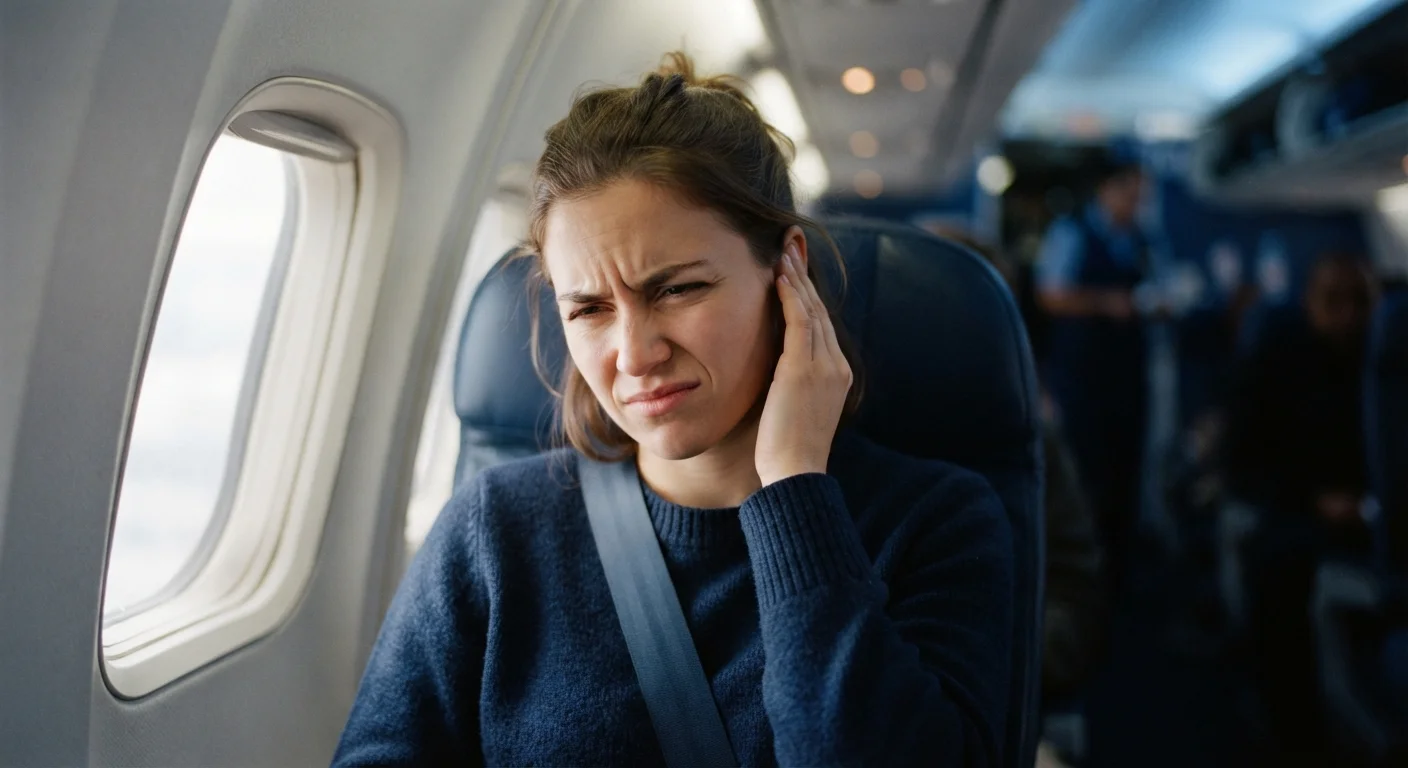
What's Actually Happening Inside Your Ears
The air pressure inside an airplane cabin changes continuously throughout a flight - most dramatically during takeoff and landing. Modern aircraft cabins are pressurized, but they are typically maintained at an equivalent altitude of around 6,000-8,000 feet above sea level rather than at ground-level pressure. That means cabin pressure is lower than what your body experienced at the departure gate.
Your middle ear - the small air-filled space behind your eardrum - needs to match that external pressure. The only way it can do so is through the Eustachian tube, a narrow passage running from your middle ear to the back of your throat. When cabin pressure shifts faster than the Eustachian tube can compensate, a pressure difference builds across the eardrum. That's the sensation of fullness, muffled sound, or sharp pain you feel.
The "pop" itself is the Eustachian tube briefly opening, allowing a small burst of air to equalise both sides of the eardrum. It's harmless - and you can trigger it on purpose.
Descent Is the Critical Window
Most ear discomfort occurs during the final 20-30 minutes of flight, when the plane descends and cabin pressure rises toward sea level. Ascent is gentler on the ears because lower-pressure air escapes the middle ear more easily than higher-pressure air enters it. Paying attention during descent - not just takeoff - makes the biggest difference.
Techniques That Actually Work
Several simple techniques prompt the Eustachian tube to open and restore pressure balance:
- Swallowing and yawning: Both actions contract the muscles that open the Eustachian tube. Sipping water, chewing gum, or sucking on hard candy during ascent and descent gives you a natural, continuous reason to swallow.
- The Valsalva maneuver: Pinch your nostrils closed, close your mouth, and gently blow - as if blowing your nose - until you feel or hear a pop. Use gentle pressure only; blowing too hard can cause discomfort. Repeat every few minutes as needed during descent.
- The Toynbee maneuver: Pinch your nose closed and swallow at the same time. Some people find this more comfortable than the Valsalva technique.
Start these techniques before you feel pain - ideally as soon as the cabin crew announces descent. Once significant pressure builds, it is harder to relieve.
Start Equalizing Before Descent Is Announced
Watch for the plane to level off after its initial climb - that's often when a long cruise phase begins and you can relax. Then, as soon as you notice the nose dipping downward or hear a change in engine pitch, begin swallowing or chewing. Acting early gives your Eustachian tube time to keep pace with pressure changes before discomfort builds.
For more strategies to keep your body feeling good throughout a flight, see our guide to staying comfortable on long-haul flights.
When Congestion or Illness Complicates Things
A cold, sinus infection, hay fever, or any condition that causes nasal inflammation can swell the tissue around the Eustachian tube opening, making equalization significantly harder. If you are congested and must fly, an over-the-counter nasal decongestant spray used about 30 minutes before descent may help keep the passage open. Oral decongestants are another option some travelers use, but they can have side effects - speak with a pharmacist or doctor before using either for the first time on a flight.
Staying well-hydrated also helps. Dry cabin air (a common feature of pressurized aircraft) thickens mucus, which can further narrow the Eustachian tube. Drinking water regularly through the flight - rather than waiting until you are thirsty - supports normal mucous membrane function. For related guidance on onboard hydration, see our article on eating and drinking on a plane.
6,000-8,000 ft
Typical equivalent cabin pressure altitude
Aircraft manufacturers and aviation regulators set cabin pressurization standards that keep pressure within this range during cruise, lower than sea level but safe for healthy adults.
~10%
Passengers affected by significant ear pain
Aviation medicine literature suggests roughly 10% of adult passengers experience more than mild discomfort from pressure changes, with higher rates among those who are congested.
If you already experience heightened anxiety about physical sensations during flight, understanding the mechanics behind ear pressure can be genuinely reassuring. Our companion piece on flying with anxiety covers additional evidence-informed tools for staying calm once you are onboard.
This article is for general informational purposes only and does not constitute medical advice. If you experience persistent ear pain, hearing loss, or symptoms that concern you, consult a qualified healthcare professional before your next flight.