What Is Actually Causing the Bumps?
When a plane shakes, it's responding to real, measurable changes in the air around it - not a structural problem or pilot error. Air is not a uniform medium. At cruising altitude, the atmosphere contains rivers of fast-moving air called jet streams, pockets of rising heat called thermals, and zones where wind speed or direction changes abruptly (known as wind shear). When a plane moves through these invisible boundaries, the wings experience changes in lift, and the fuselage moves accordingly.
The most common types of turbulence first-time flyers encounter include:
- Convective turbulence - caused by thunderstorms and strong updrafts. Pilots actively reroute around storm cells using onboard radar.
- Clear-air turbulence (CAT) - occurs near jet streams in cloudless sky and is harder to predict. Flight crews rely on weather data and reports from other aircraft.
- Mountain wave turbulence - air flowing over mountain ranges creates wave-like disturbances that can extend well beyond the peaks themselves.
- Wake turbulence - the rotating air left behind by other aircraft. Air traffic control maintains separation distances to minimize this risk.
Understanding the source of turbulence can shift it from a terrifying unknown into something logical and manageable. For a broader look at what happens physically during a flight, see our step-by-step first-flight walkthrough.
Turbulence Severity Is Officially Classified
Aviation authorities and meteorologists categorize turbulence as light, moderate, severe, or extreme. The vast majority of what passengers experience in flight falls into the light or moderate categories. Extreme turbulence - capable of momentarily affecting aircraft control - is rare and is actively avoided when detected in forecasts or pilot reports.
Why Pilots Are Not Worried
Commercial pilots train for turbulence throughout their careers and encounter it on a near-daily basis. To them, it is a minor inconvenience to be managed - not a hazard. Before every flight, crews receive detailed meteorological briefings that include turbulence forecasts. During flight, pilots communicate with air traffic control and other aircraft to get real-time reports about rough patches ahead.
When moderate or severe turbulence is anticipated, pilots have several options: adjust altitude to find smoother air, alter the flight path, or reduce airspeed to minimize the sensation onboard. The seatbelt sign is the crew's primary tool for protecting passengers before turbulence arrives.
“Turbulence is uncomfortable, but it is not dangerous. The aircraft is doing exactly what it was designed to do - responding to the atmosphere and continuing to fly safely through it.”
— Patrick Smith, Airline pilot and author of 'Cockpit Confidential'
Aircraft themselves are built with enormous safety margins. Airframes are certified to withstand forces many times greater than what even severe turbulence generates. The wings you see flexing slightly during bumpy air are designed to do exactly that - flex rather than fracture. That movement is a feature of the engineering, not a warning sign.
The One Thing That Actually Keeps You Safer
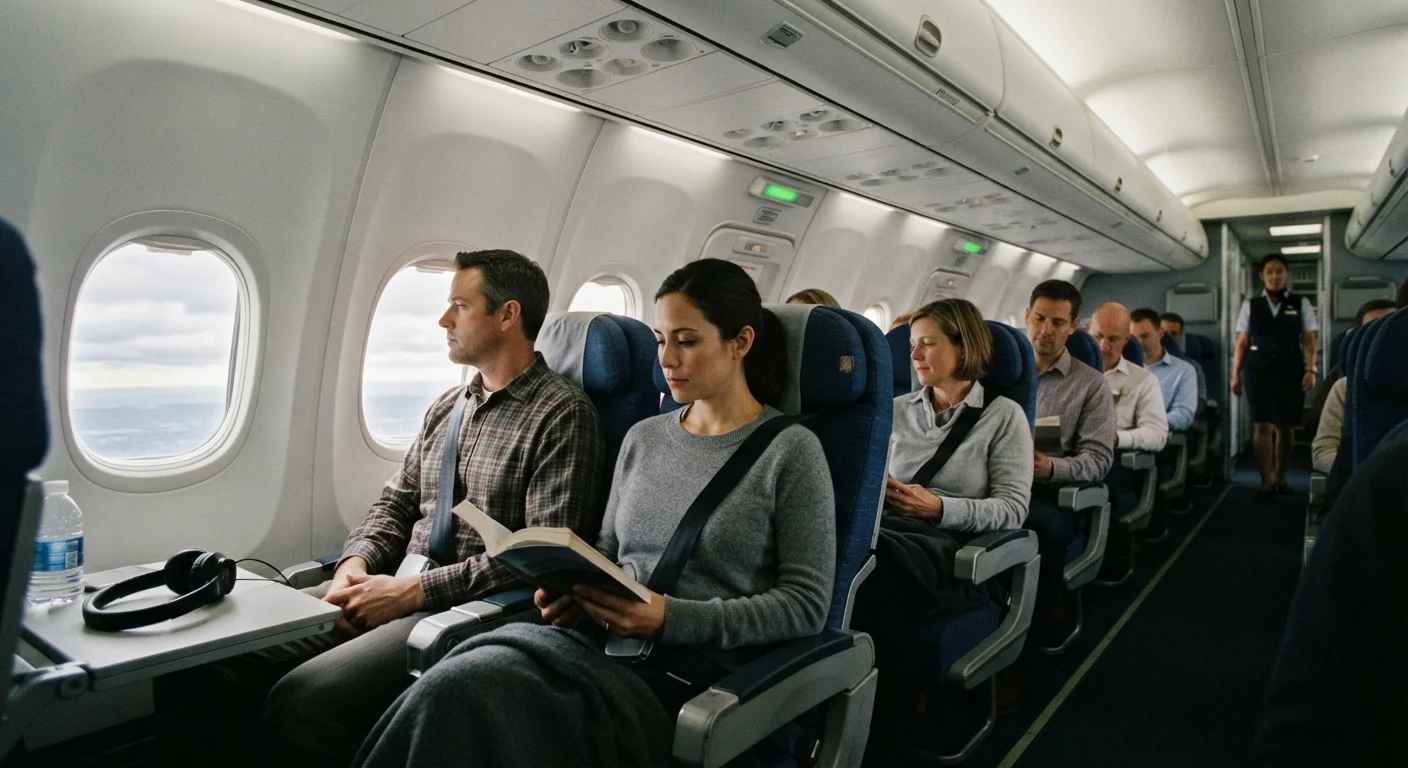
Of all the advice available to nervous flyers, one recommendation stands above the rest in practical safety terms: keep your seatbelt fastened whenever you are seated, even when the seatbelt sign is off. The majority of turbulence-related injuries each year involve passengers or crew who were not belted in when unexpected bumps occurred.
Keep Your Seatbelt Loosely Fastened Throughout Flight
You don't need to wear it tightly - just fastened and visible over your lap. Flight attendants conducting cabin checks can confirm you're buckled without needing to wake you. This single habit protects you from the most common turbulence-related injury scenario: being thrown upward by an unexpected jolt.
Turbulence injuries are almost entirely preventable. A loosely fastened seatbelt - worn low across the hips - allows you to move with the seat rather than being thrown upward. This one habit is far more effective than any level of turbulence prediction technology.
If anxiety around flying runs deeper than turbulence alone, practical techniques for staying calm onboard cover evidence-informed strategies that many nervous flyers find genuinely useful. And if you're curious about other common misconceptions that heighten in-flight worry, flying myths that make first-timers more anxious addresses the most widespread ones directly.
~65,000
Flights safely managed daily in U.S. airspace
The FAA handles tens of thousands of flights per day across the national airspace system, the vast majority of which encounter some form of turbulence without incident.
150%+
Structural safety margin above certification limits
Commercial aircraft are engineered and tested to tolerances well beyond regulatory certification minimums, providing substantial buffer above what any recorded turbulence event has produced.