What Actually Separates the Two Cabins
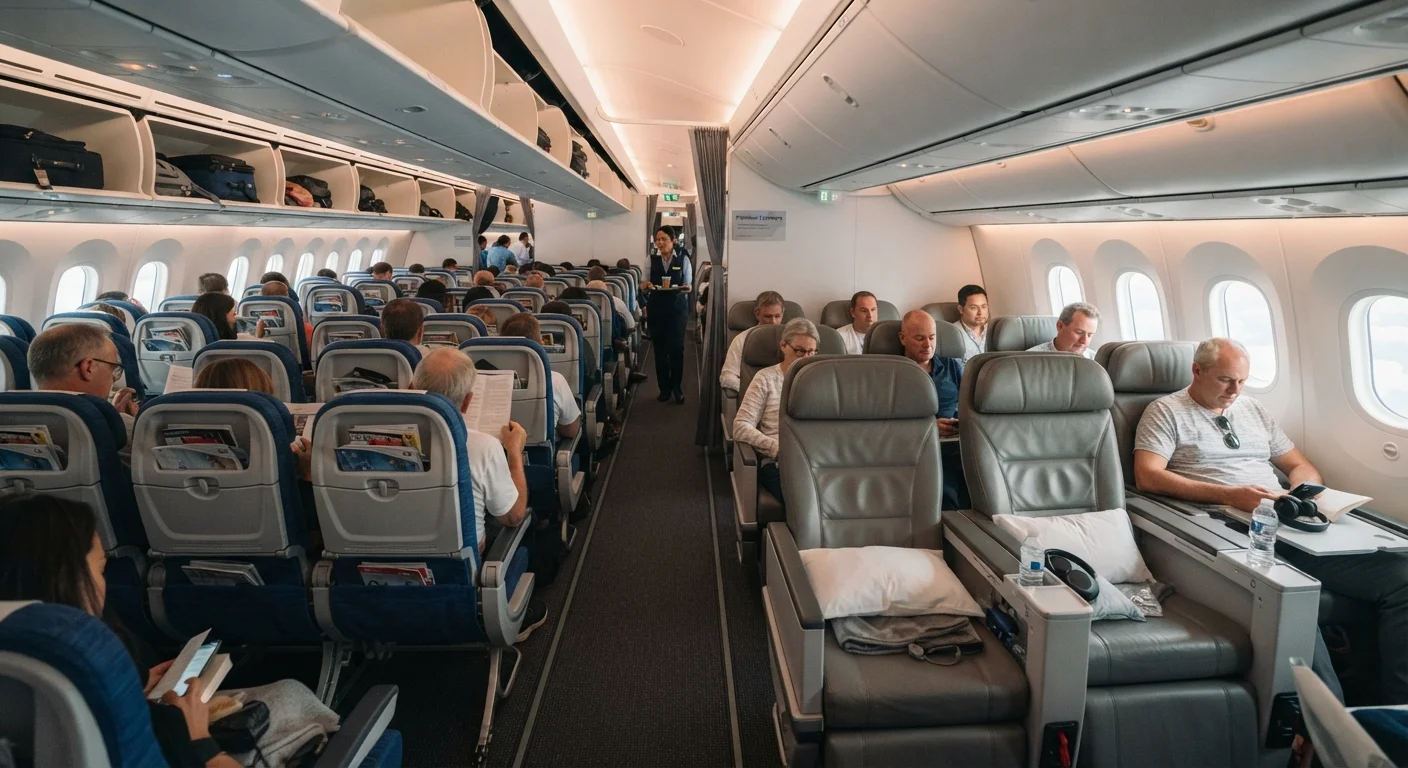
When airlines talk about premium economy, they mean a distinct, physically separate cabin - not just a seat with a little more room bolted into economy. The differences are tangible, though they vary by airline and aircraft.
Seat pitch and width are the most immediate changes. Standard economy typically offers around 30-31 inches of pitch (the distance from one point on your seat to the same point on the seat in front). Premium economy generally ranges from 35-38 inches. Seat width also increases - often by two to three inches - and the recline is usually deeper, sometimes accompanied by a calf rest or leg support.
The service layer shifts too, though not uniformly. Many airlines include a dedicated check-in queue, priority boarding, and an additional checked bag in the premium economy fare. Meals tend to be more substantial, served on proper dishware rather than a tray, and sometimes with a complimentary drink included.
For a fuller picture of how these cabins sit within the airline's broader fare structure, see our guide to fare classes.
| Criterion | Standard Economy | Premium Economy |
|---|---|---|
| Seat pitch | ~30-31 inches | ~35-38 inches |
| Seat width | ~17-18 inches | ~19-21 inches |
| Recline | 3-4 inches typical | 6-8 inches, often with leg rest |
| Checked baggage | Often sold separately | Frequently included |
| Meal service | Basic tray meal or buy-on-board | Enhanced meal, often with dishware |
| Priority boarding | Not included | Commonly included |
| Relative ticket price | Baseline fare | Typically 30-100% more |
Where the Price Difference Comes From
Premium economy typically costs 30-100% more than a comparable standard economy ticket on the same route. That's a significant range, and it reflects how inconsistently airlines price the cabin.
On long-haul international routes, premium economy can represent genuinely strong value relative to business class - which may cost three to five times more. On a domestic hop, the same premium can look difficult to justify when the flight is under two hours and economy seats are already tolerable.
~38"
Typical premium economy seat pitch
Compared to roughly 31 inches in standard economy, this difference becomes especially noticeable on flights over five hours.
3-5×
Business class cost vs. premium economy
On many long-haul routes, business class fares are three to five times higher than premium economy, making the mid-tier cabin an attractive middle ground.
It's also worth understanding that the headline ticket price is rarely the full story in standard economy. Checked baggage fees, paid seat selection, and other charges can quietly push the total upward - sometimes erasing part of the apparent savings. The hidden costs that inflate a cheap flight's price explains exactly what to watch for before booking.
Similarly, if you're considering whether strategic seat selection in standard economy could bridge some of the comfort gap, seat selection during booking walks through when paying for a specific seat is worth it and when it isn't.
When the Upgrade Genuinely Matters
The honest answer is: it depends on flight length and your personal sensitivity to physical discomfort. Here's a practical way to think about it.
- Under 3 hours: Most passengers adapt to economy seating without lasting discomfort. The upgrade is a comfort luxury, not a necessity.
- 3-6 hours: A middle ground. If you have back issues, long legs, or significant anxiety about confined spaces, premium economy starts to feel like a reasonable investment.
- 7+ hours: The case for premium economy strengthens considerably. Arriving less stiff, better rested, and with reduced physical stress is worth real money to many travelers.
For first-time flyers specifically, the extra personal space can reduce the sensory overwhelm of a crowded cabin. Knowing you have room to shift position, stow a bag under the seat comfortably, and recline meaningfully can make the flight feel less intimidating from the moment you board.
Cabin Configurations Vary Significantly
Not every airline's premium economy is the same. Some carriers offer a full dedicated cabin with lie-flat adjacent seating; others simply provide a few rows with slightly more legroom. Before booking, check the specific aircraft type assigned to your flight and review the airline's seat map. What one airline calls premium economy may be closer to another's standard offering.
This article is for general informational purposes only. Cabin configurations, inclusions, and pricing differ by airline, aircraft type, and route. Always verify what is included in your specific fare before booking.