What Seat Selection Actually Costs You
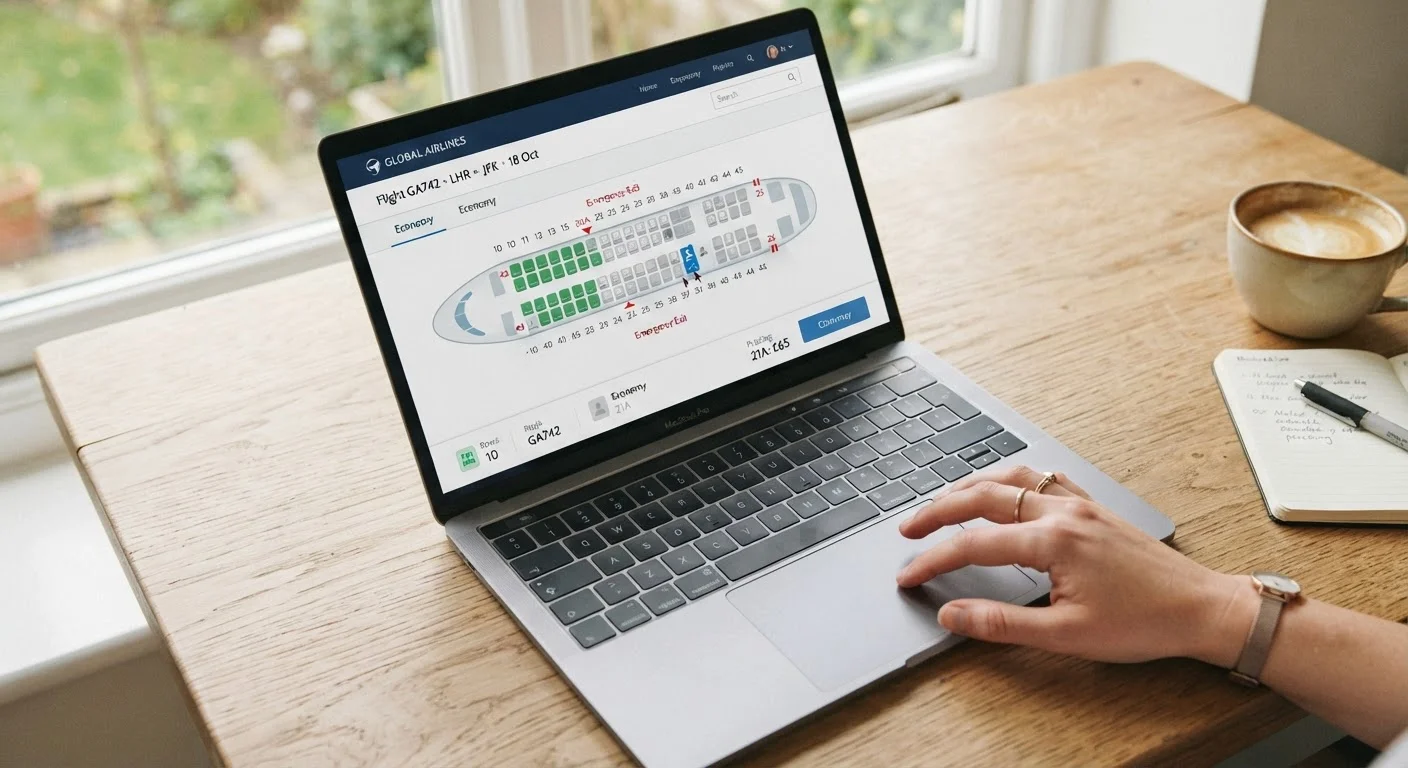
During the booking process, most airlines present you with a seat map and the option to choose your spot - often for an added fee. These charges vary widely: a basic aisle seat might cost a few dollars, while an exit-row or front-cabin economy seat can run $30-$50 or more on domestic routes, and higher on international flights.
What many first-time flyers don't realize is that not selecting a seat during booking doesn't mean you'll have no seat. Airlines assign remaining seats automatically - typically at check-in or at the gate - at no additional charge. The question isn't whether you'll have a seat; it's whether the specific seat matters enough to pay for it now.
For context on how the booking stage fits into the broader process, see our guide on booking directly with an airline vs. using a flight search tool.
When Paying to Choose Your Seat Is Worth It
There are clear situations where spending a little extra at booking pays off in comfort or peace of mind.
Guarantees sitting with travel companions
Advance selection is the only reliable way to ensure your group or family sits together, especially on flights with high load factors where free seats are scattered.
Significantly improves comfort on long flights
An exit row or forward aisle seat can mean extra legroom, easier bathroom access, and earlier deplaning - all meaningful on flights over four hours.
Reduces travel anxiety for nervous flyers
Knowing exactly where you'll sit removes one layer of uncertainty, which can make the boarding process feel calmer and more predictable.
Window seats offer better sleep conditions
A window seat lets you lean against the fuselage and control the shade, making it considerably easier to sleep on overnight or early-morning flights.
The strongest case for advance seat selection is traveling with children or a group. On a busy flight, free seat assignments can scatter your party across the cabin. If sitting together matters - especially with young kids - paying to lock in adjacent seats is money well spent.
Long-haul and overnight flights are another obvious case. Eight or more hours in a middle seat near the rear lavatory is a very different experience from an aisle seat over the wing. On flights where sleep matters, a preferred seat is a meaningful upgrade to your overall trip, not just a minor perk. This logic connects directly to the broader question of what you actually get when you pay for premium economy vs. standard economy.
When You Can Comfortably Skip the Fee
Seat selection fees aren't always worth paying - and on many trips, skipping them is the smarter move.
Adds cost that isn't always necessary
On many flights - particularly short domestic routes - free assigned seats at check-in are perfectly adequate, making the fee an avoidable expense.
Preferred seats often open up for free later
Exit rows and forward seats that were initially fee-based are frequently released at no charge 24 hours before departure or at the gate as the flight fills.
Aircraft changes can negate your selection
Airlines sometimes swap planes before departure; your carefully chosen seat may not exist on the replacement aircraft, resulting in reassignment anyway.
Fees accumulate quickly on multi-leg trips
If your journey involves a connection, you're paying a seat fee for each segment - what seemed like a modest cost can double or triple across a round trip.
On short domestic flights - think under two hours - seat comfort is rarely a deciding factor in how your trip goes. Even a middle seat in the last row is tolerable for 90 minutes. Paying $15-$25 for a preferred seat on a quick hop is rarely justified unless you have a specific need.
It's also worth knowing that airlines frequently release preferred and exit-row seats for free as the departure date approaches - especially seats that haven't sold. Checking in early online (usually 24 hours before departure) or arriving at the gate with time to spare can net you a better seat without any extra cost.
What Happens If You Don't Choose a Seat
If you skip seat selection during booking, the airline will assign you a seat automatically - usually at online check-in or at the gate. On less crowded flights, this can work in your favor. On heavily booked flights, you may end up with a middle seat at the rear. If you're traveling solo and flexible, the risk is generally low; if you're with a companion or have physical needs, it's worth selecting in advance.
A Practical Framework for Deciding
Rather than defaulting to paying or skipping every time, use these filters to guide your decision:
- Flight duration: Over 4 hours? Seat comfort matters more. Under 2 hours? Probably not worth it.
- Traveling with others? Paying to sit together is almost always justified.
- Do you have a physical need? Aisle seats matter for mobility issues; extra legroom matters for tall travelers.
- How full is the flight? On a nearly empty plane, free assignment will likely land you somewhere decent. On a nearly full flight, free seats are leftovers.
- What's the fee relative to the ticket price? A $30 seat fee on a $90 ticket is proportionally steep. On a $400 ticket, it's a smaller trade-off.
Timing your decisions carefully throughout the booking process can also influence your options - the article on flight timing and when to commit is worth reading before you finalize any purchase.
~$6-$50+
Typical domestic seat selection fee range
Seat fees vary by airline, route, and seat type; exit rows and front-of-cabin economy seats command the highest premiums.
24 hrs
When online check-in typically opens
Most U.S. airlines open online check-in 24 hours before departure - checking in early gives you first access to remaining free seat assignments.