
What the Base Fare Actually Covers
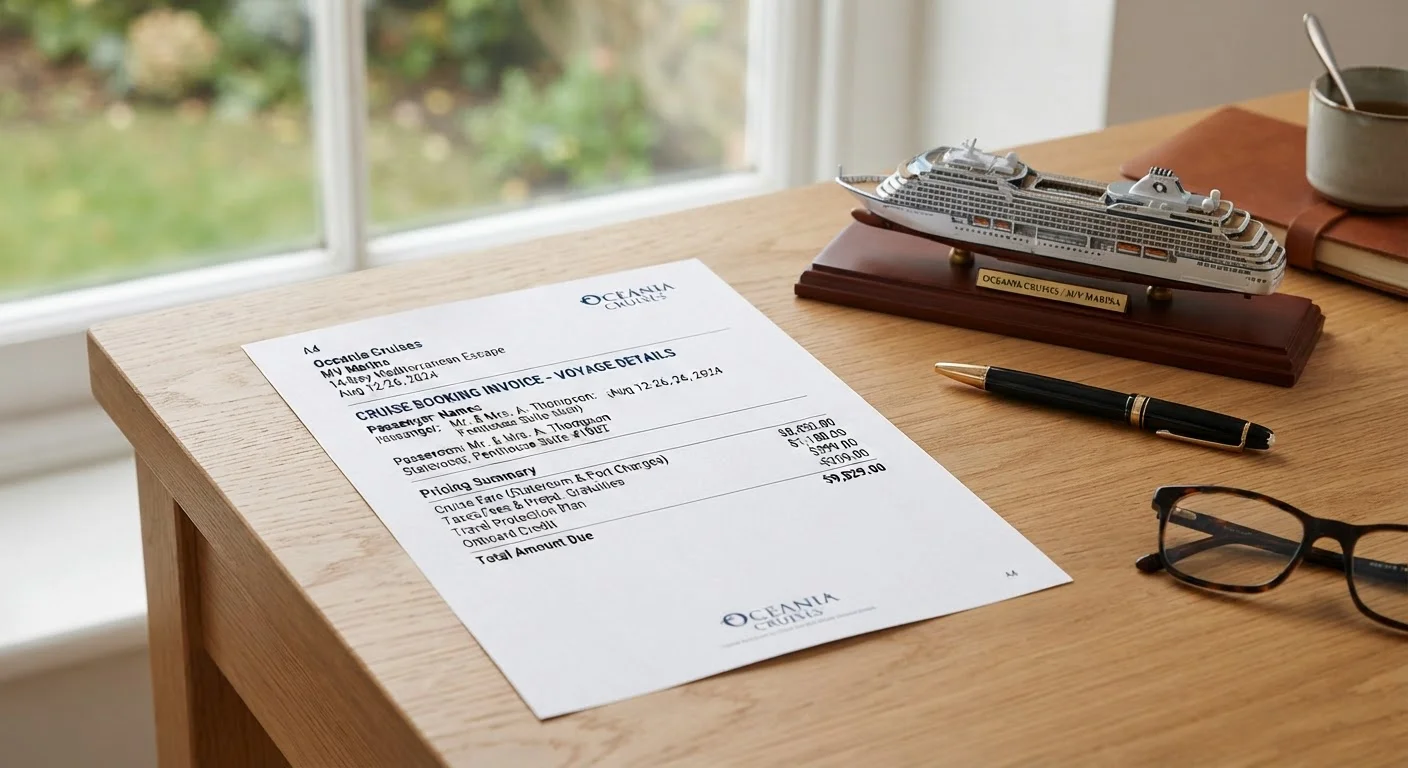
When a cruise line advertises a fare, that price is real - but it represents a floor, not a ceiling. The base fare on most mainstream cruise lines covers three core categories: your stateroom accommodation, meals at included venues (the main dining room and the buffet), and onboard entertainment such as live shows, pools, and fitness facilities.
These are genuine value items. On a 7-night sailing, you're receiving seven nights of accommodation plus all your included meals - a combination that would cost significantly more at a hotel and separate restaurants on land. That context matters when the advertised price seems surprisingly low.
What the base fare does not cover is just as important to understand. See the full breakdown of what a cruise actually includes for a detailed look at the line between covered and uncovered costs.
$16-$20
Typical daily gratuity per person
Most mainstream cruise lines charge automatic daily gratuities in this range, billed to the onboard account.
25-50%
Extra budget beyond base fare
A commonly cited planning guideline suggests budgeting an additional 25-50% of the base fare for onboard extras and excursions.
$150-$300+
Port fees and taxes per person
On a typical 7-night Caribbean sailing, mandatory port fees and government taxes can add this amount per person above the base fare.
Mandatory Add-Ons: Fees You Cannot Avoid
Before you ever step onboard, two line items will push your total above the advertised fare: port fees and government taxes. These are non-negotiable charges collected on behalf of port authorities and local governments at each destination. They appear during the booking process and should always be visible in the final checkout price - if you're only seeing the base fare, scroll down.
On a typical 7-night Caribbean sailing, port fees and taxes can add $150-$300 or more per person. This is not a hidden fee - it's disclosed - but many first-timers don't account for it when comparing sailings based on the headline price alone.
How Fares Are Quoted: Per Person vs. Per Cabin
Cruise fares are almost always quoted per person based on double occupancy - meaning two adults sharing a cabin. A fare displayed as '$699' means each of the two passengers pays $699, not the cabin total. Solo travelers are typically charged a single-supplement, which can range from 10% to 100% above the per-person rate depending on the cruise line and sailing.
Comparing Cruise and Hotel Pricing
Cruise fares bundle accommodation and meals in a way that hotel nightly rates do not, making direct price comparisons tricky. Hotel rates carry their own layers of fees and exclusions - understanding both pricing structures helps you evaluate the true cost of each type of trip.
Where the Extra Costs Accumulate Onboard
Once you're aboard, a separate onboard account tracks every purchase beyond what the fare covers. The most common categories where spending grows:
- Gratuities: Automatically charged per person, per day. Rates vary by cruise line but typically fall between $16 and $20 per person daily on mainstream lines.
- Beverages: Alcoholic drinks, specialty coffees, bottled water, and fresh-squeezed juices are almost always extra. Cruise lines sell prepaid drinks packages as an alternative.
- Specialty dining: Restaurants beyond the main dining room and buffet - steakhouses, sushi bars, tasting menus - charge either a fixed cover or à la carte prices.
- Wi-Fi: Internet access is sold separately, typically as a per-day package. Speeds and pricing vary by ship and sailing area.
- Shore excursions: Tours booked through the cruise line at each port carry a per-person price. Independent options exist at lower cost, though with different trade-offs.
- Spa and specialty services: Treatments, thermal suite access, and salon services are charged individually.
First-time cruisers are often caught off guard by these charges - not because they're hidden, but because they arrive as small, frequent purchases that accumulate invisibly over several days.
Review Your Onboard Account Mid-Cruise
Most ships allow you to check your onboard account balance through the TV in your cabin or a smartphone app. Checking midway through the sailing - rather than at disembarkation - gives you time to adjust spending before the final bill arrives. Surprises are much easier to manage when you catch them early.
Building a Realistic Cruise Budget
A useful starting framework: treat the base fare plus port fees as roughly half of your likely total spend. Add a daily per-person estimate for gratuities, factor in any drinks package or per-drink spending, and then set aside a shore excursion budget based on the number of ports.
Cruise lines offer prepaid packages - drinks, Wi-Fi, specialty dining, and sometimes gratuities bundled together - that can simplify budgeting and occasionally reduce total cost if you'd use all the components. Compare the bundle price against what you'd realistically spend individually before committing. Understanding all-inclusive vs. à la carte cruise pricing helps clarify when a bundle genuinely saves money.
For broader pre-trip financial planning, the trip budget hub covers how to estimate and manage total travel costs, not just the cruise fare itself.