What Each Cabin Type Actually Gives You
When you book a cruise stateroom, the cabin category determines far more than just your sleeping arrangement. It shapes your daily light levels, your connection to the outside world, your budget, and how much private space you have beyond the beds.
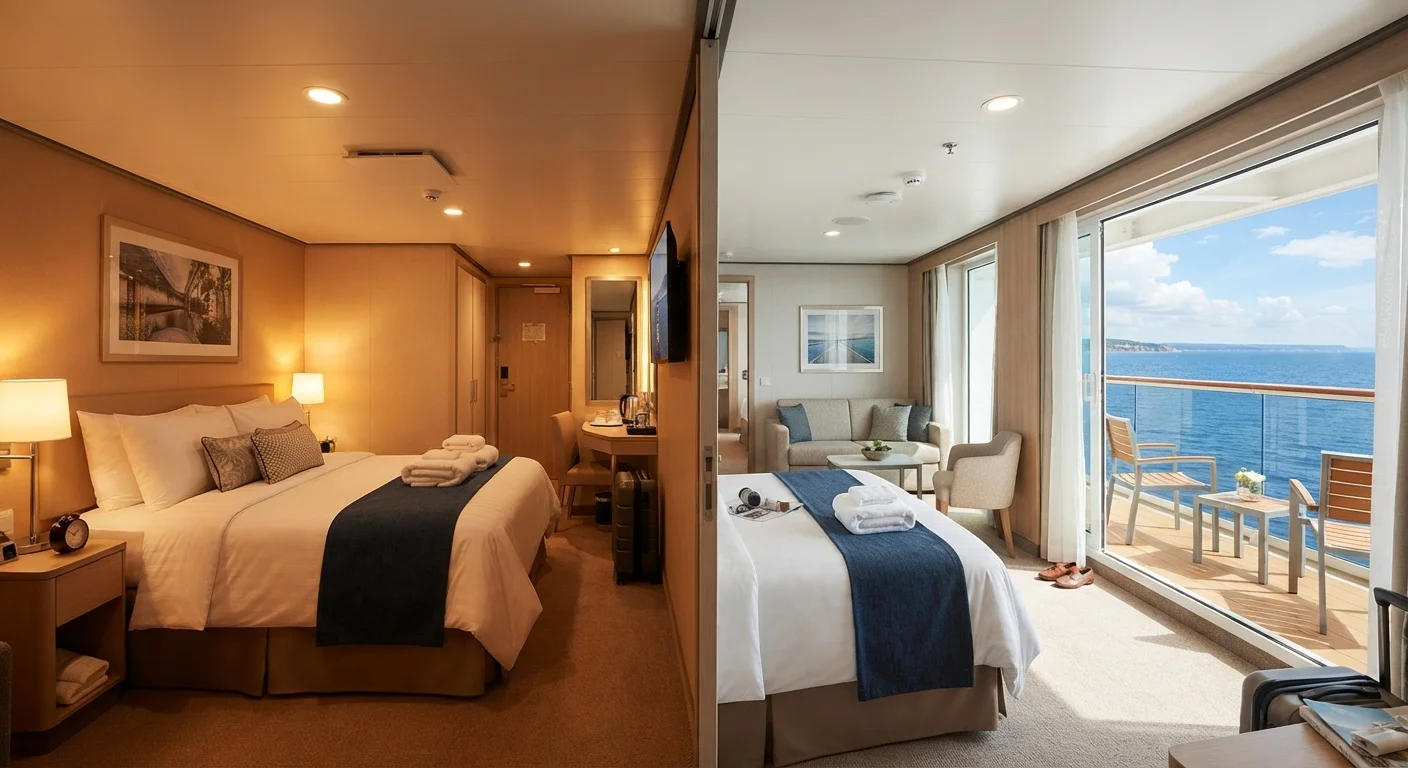
An inside cabin is an enclosed stateroom with no windows or exterior access. The trade-off for that darkness and lower price is straightforward: you have no natural light and no view. These cabins are typically compact - think a well-organized hotel room with smart storage - and modern ships design them to feel comfortable despite the limited footprint. If you're packing strategically, see our practical cabin packing guide for tips on making any stateroom feel manageable.
A balcony cabin (also called a veranda stateroom) includes a private outdoor deck - usually furnished with two chairs and a small table - accessed through a sliding glass door. This adds natural light, fresh sea air, and a private vantage point. Balcony cabins are physically larger than inside cabins and typically sit on mid-to-upper decks. The price difference between the two categories varies by cruise line, ship, and sailing length, but it is rarely trivial.
| Criterion | Inside Cabin | Balcony Cabin |
|---|---|---|
| Natural light | None - fully enclosed | Yes - via glass balcony door |
| Private outdoor space | No | Yes - private veranda |
| Typical cabin size | Smaller footprint | Larger, plus balcony area |
| Relative cost | Lower | Higher |
| Sleep darkness | Pitch-black at all times | Depends on blackout curtains |
| Ocean views | None | Unobstructed from balcony |
| Best itinerary fit | Port-heavy, activity-driven | Scenic cruising, relaxation-focused |
| Noise exposure | Depends on ship position | Wind and pool deck noise possible |
The Cost Gap - and What It Actually Buys
The price difference between an inside cabin and a balcony cabin on the same sailing is one of the most consequential decisions a first-time cruiser makes. On many mainstream cruise itineraries, a balcony cabin runs meaningfully more per person than an inside cabin - a gap that can translate into hundreds of dollars for a couple on a week-long voyage.
$300-$600+
Typical per-person price gap per sailing
The difference between inside and balcony cabins varies widely by cruise line, itinerary length, and booking timing - this range reflects common patterns on 7-night sailings.
~160 sq ft
Average inside cabin size on major ships
Most modern inside cabins on mainstream cruise lines range from roughly 150 to 175 square feet, comparable to a compact urban hotel room.
30-50 sq ft
Typical balcony square footage added
Balcony dimensions vary by ship and deck position; some premium ships offer substantially larger verandas on upper categories.
That said, price alone shouldn't drive your decision. A balcony cabin on a Caribbean sailing where you spend every day ashore and every evening at shows may deliver far less value than the same upgrade on a Norway fjord cruise where you're watching waterfalls drift past from your private deck at midnight.
Consider what that price difference would fund instead: a shore excursion or two, a specialty restaurant dinner, or a meaningful reduction in overall trip debt. For many first-timers, the practical question isn't "is a balcony nice?" - the answer is almost always yes - but rather "is it nice enough to justify skipping something else I'd value more?"
Comfort, Light, and the Day-to-Day Reality
One variable that surprises many first-time cruisers: inside cabins are extremely dark. Without any natural light source, your cabin operates on whatever schedule you set. That can be a genuine advantage - blackout sleeping conditions at any hour - or it can feel disorienting if you're accustomed to waking with daylight.
Balcony cabins bring natural light through the glass door, which changes how the space feels throughout the day. Even when the door is closed, the cabin reads brighter and more spacious. The balcony itself is typically usable year-round on warm-weather itineraries and during daylight hours in cooler climates, though ocean winds and noise from lower decks are real considerations on some ships.
Noise is worth noting on both sides. Inside cabins positioned near elevators, crew corridors, or entertainment venues can be louder than their enclosed design suggests. Balcony cabins face wind noise at sea and, depending on deck position, potential sound from pool decks or neighboring balconies. Neither category is inherently quieter - cabin location on the ship matters as much as cabin type.
For a broader sense of how the onboard environment shapes your trip, exploring the Onboard Life hub gives helpful context on what daily life at sea actually looks like.
When Itinerary Makes the Decision for You
Experienced cruisers often point to itinerary as the single biggest factor in the inside-vs-balcony decision - more than budget, more than personal preference.
Scenic Passages Change the Calculus
Many cruise itineraries include designated scenic cruising periods - stretches where the ship moves slowly through a visually dramatic environment, such as a glacier bay or a coastal fjord. These passages can last several hours and represent some of the most memorable moments of the trip. If your sailing includes one, a balcony becomes significantly more functional than on a port-to-port itinerary. Check your specific itinerary for scenic cruising segments before finalizing your cabin choice.
On port-intensive sailings in the Caribbean or Mediterranean, many passengers are off the ship most of the day and in bars, restaurants, or shows most of the evening. The cabin becomes a place to sleep and change. In that context, an inside cabin performs its function perfectly well.
On scenic cruising itineraries - Alaska's Inside Passage, Norway's fjords, Antarctica, or the Douro River - the ship itself becomes the viewing platform. Slow passages through glacier bays or narrow straits can last hours. A balcony transforms those moments from a shared deck experience into a private one. If your itinerary includes scenic cruising segments, a balcony cabin carries significantly more practical value. This distinction also surfaces in the broader ocean cruise vs. river cruise comparison, where itinerary pacing shapes the entire trip differently.
Your cabin is one variable in a much larger equation. Whatever you choose, understanding the trade-offs ahead of time means your first cruise starts with clear expectations - and that's exactly where confidence begins.