The Problem with Trying to See All of Italy at Once
Italy is one of the world's most densely rewarding travel destinations — and that density is exactly what trips up first-time visitors. The country holds more UNESCO World Heritage Sites than any other nation on Earth, and the three cities that dominate most first-timer itineraries — Rome, Florence, and Venice — each contain enough history, art, and food culture to justify an entire trip on their own.
The result is predictable: travelers arrive with ambitious plans, spend most of their time in transit or in ticket queues, and leave feeling they barely scratched the surface. This isn't a failure of effort. It's a structural planning problem that starts long before the flight departs.
Understanding why Italy trips go wrong — and how to correct for it — is the most valuable preparation any first-time visitor can do. The mistakes below follow a consistent pattern and are almost entirely avoidable. For broader destination-selection considerations, see factors first-time travelers forget to check before committing to an itinerary.
Scheduling Rome, Florence, and Venice in a single seven-day trip.
Why it happens: These three cities appear repeatedly in Italy coverage, making them feel like a natural package. First-timers assume they can be efficiently combined without accounting for travel days or recovery time.
Underestimating how long it takes to move between cities with luggage.
Why it happens: Train schedules look clean on a planning app, but first-timers overlook the time spent getting to the station, navigating with bags, checking into a new hotel, and reorienting to a new neighborhood.
Skipping timed-entry reservations for major attractions.
Why it happens: Many travelers assume they can buy tickets at the door or that lines move quickly in the off-season. Both assumptions regularly prove wrong.
Planning activities from morning to night with no buffer time.
Why it happens: Italy's sheer density of must-see sites creates pressure to fill every hour. Travelers fear wasting a day in a country they may not return to soon.
Ignoring regional Italy in favor of only the three famous cities.
Why it happens: Marketing and travel media disproportionately focus on Rome, Florence, and Venice, leaving first-timers unaware of how accessible and rewarding other areas can be.
How to Plan an Italy Trip That Actually Feels Like a Vacation
The most consistent feedback from experienced Italy travelers is simple: do less, go slower, and stay longer in fewer places. A week split between Rome and Florence — with one focused day trip — will produce a richer experience than a seven-city sweep ever could.
Pre-Booking Is Non-Negotiable in Italy
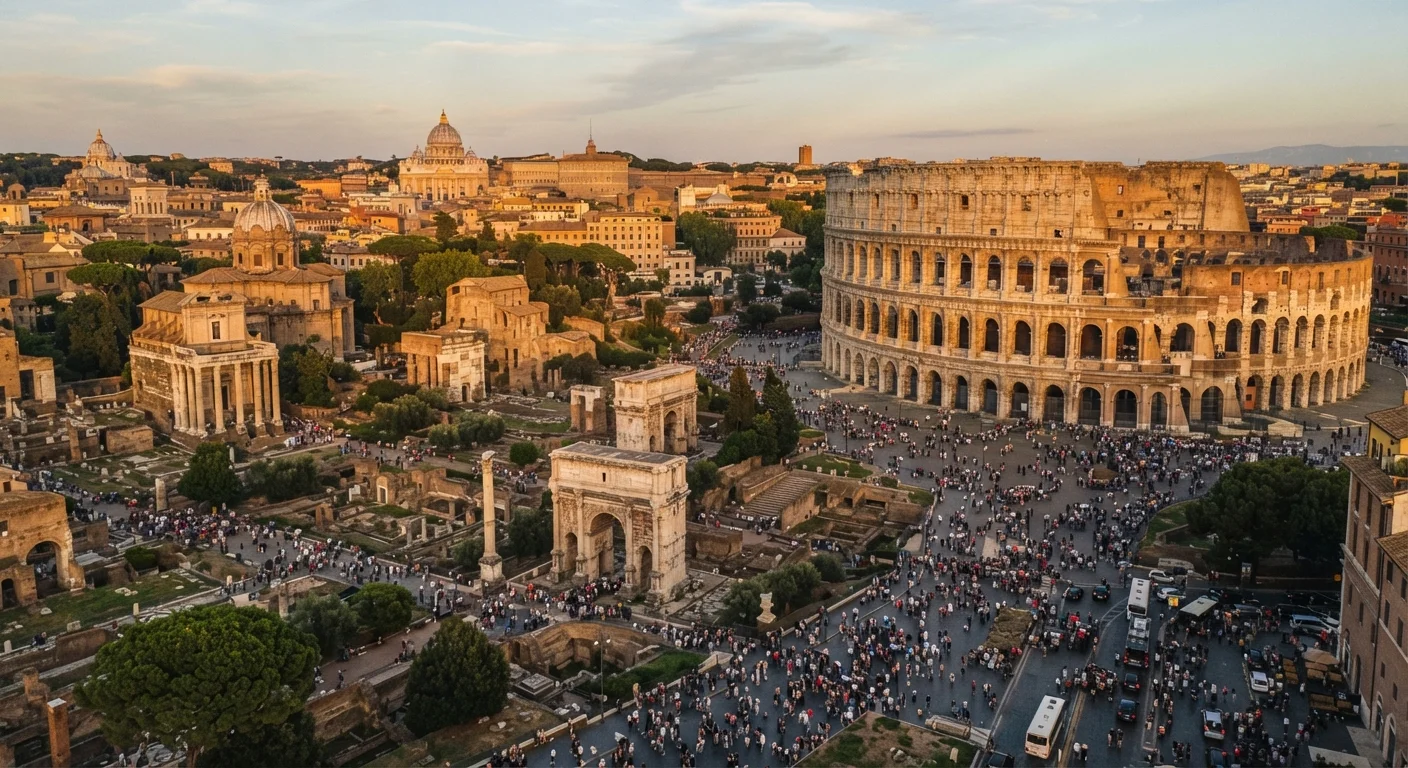
Entry to major sites like the Colosseum, the Vatican Museums, and the Uffizi Gallery routinely sells out days or weeks in advance during peak season. Walking up without a reservation often means waiting two or more hours in line — or being turned away entirely. Secure timed-entry tickets before you leave home, not as an afterthought on arrival.
Italy also punishes itineraries that ignore rest. Jet lag, unfamiliar food, heat (particularly in summer), and hours of walking compound quickly. Itineraries that fall apart on day two almost always share a common trait: zero buffer time in the first 48 hours. Build in a slow morning after arrival. Schedule no more than two anchor activities per day.
The same principle applies at the airport before you even land. Small logistical missteps — from wrong bag sizes to unprepared documentation — can cost hours. Reviewing what slows first-time travelers down at the airport before departure removes a layer of preventable stress.
Finally, resist the urge to fill every hour. Blank space in a travel schedule is not wasted time — in Italy especially, it's where the most memorable moments tend to happen. Wandering into a neighborhood trattoria with no reservation, stumbling onto a local market, or simply sitting in a piazza long enough to feel present: these are the experiences travelers describe years later. They don't appear in a packed hour-by-hour schedule.
Italy rewards the traveler who comes prepared, moves deliberately, and leaves room for the unexpected. First-timers who embrace that approach consistently leave wishing they had more time — not feeling like they ran out of it.