
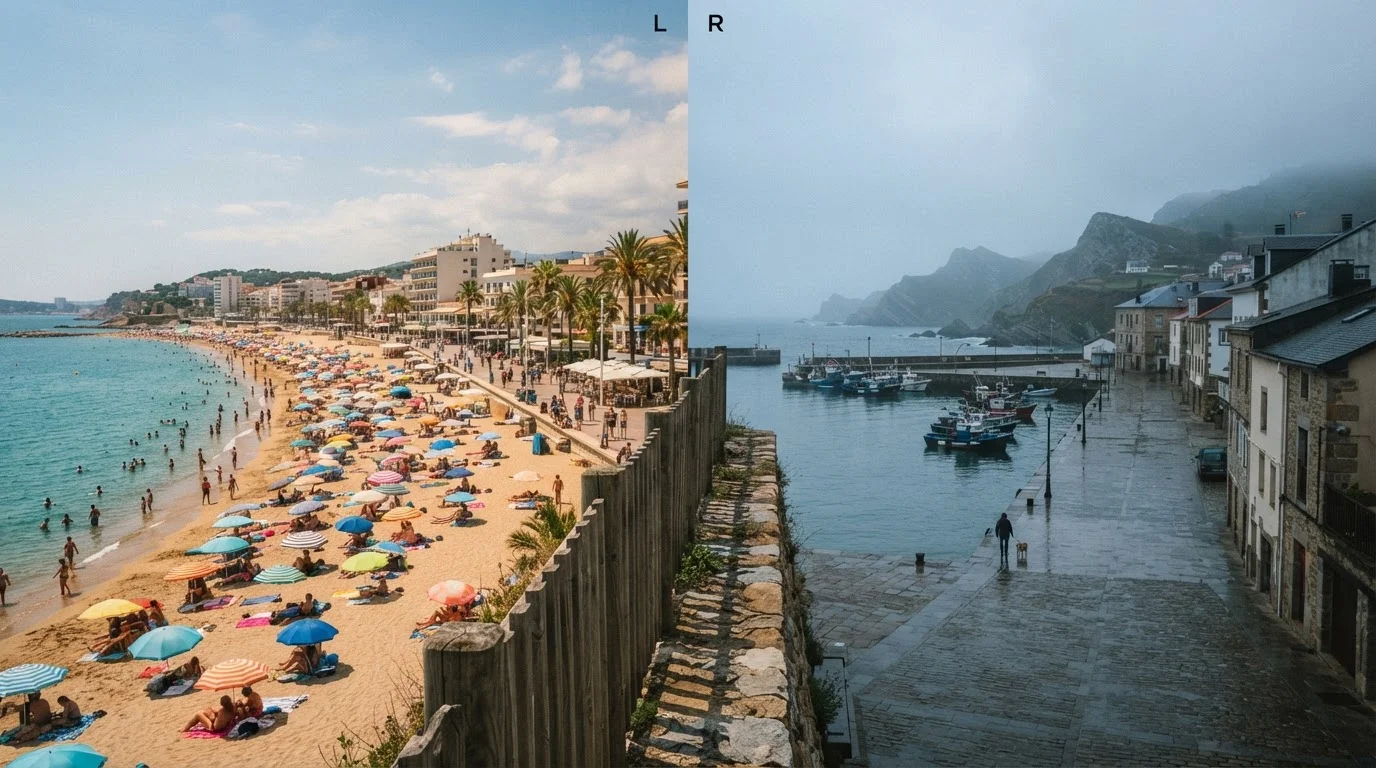
Why Travel Seasons Affect More Than Just Price
When you search for a hotel room, the date you pick matters as much as the destination itself. Travel seasons — peak, off-season, and shoulder — shape how much you'll pay, how far in advance you need to book, and what your experience on the ground will actually feel like.
For first-time travelers, understanding these patterns helps set realistic expectations and prevents the frustration of discovering that a beachside town is nearly deserted in November, or that rooms in a popular city are fully booked three months out in July. Seasons are driven by a mix of factors: school calendars, local weather cycles, public holidays, and regional events. No two destinations follow exactly the same pattern.
See our guide to budgeting by trip type for a deeper look at how destination category affects overall trip costs beyond just lodging.
30–50%
Typical hotel rate drop in low season
Industry analysts commonly cite rate differences of this range between peak and off-season at popular leisure destinations, though actual variation depends heavily on market and property type.
3–6 months
Advance booking lead time during peak season
Travel advisors generally recommend booking popular accommodations 3–6 months ahead for peak-season travel to avoid limited availability.
~40%
Of travelers cite crowds as a top trip dissatisfier
Surveys of leisure travelers consistently identify unexpected crowds as one of the most common sources of disappointment, underscoring the value of understanding seasonal demand.
Peak Season: High Demand, High Stakes
Peak season is when a destination draws its largest crowds. This usually aligns with the most favorable weather window, major public holidays, or school breaks — all of which funnel travelers into a short, busy period.
During peak season, hotels charge their highest rates and rooms at popular properties can sell out weeks or even months ahead of time. Cancellation policies also tend to be stricter. If you're planning a peak-season trip, the most important thing to know is: book early. Waiting for last-minute deals during high season is a common beginner mistake that often leads to limited choices and inflated prices.
Peak season also means busier attractions, longer wait times, and a more crowded overall experience. That's not necessarily a deal-breaker — popular destinations are popular for good reasons — but it's worth factoring into your expectations.
Book Peak Season Early — Without Exception
If your travel dates fall within a destination's peak season, treat early booking as non-negotiable. Popular mid-range hotels in high-demand areas can fill up months in advance. Set a reminder to check availability and lock in your accommodation as soon as your dates are confirmed — waiting rarely works in your favor during high season.
Off-Season: Real Savings, Real Trade-offs
Off-season (also called low season) is when visitor numbers drop significantly. Hotels respond by lowering rates to attract guests. For travelers with flexibility, this can translate into meaningful savings — and far fewer crowds at popular sites.
The trade-offs are real, though. Some businesses, tours, and attractions reduce hours or close entirely during off-season. Weather may be less cooperative. In some destinations, the off-season coincides with a rainy season or extreme temperatures. A beach resort with half its restaurants shuttered is a different experience from peak-season visit.
Off-season travel rewards travelers who research in advance. Before booking, confirm which services and attractions will actually be open during your travel dates. This is especially relevant for longer stays — our comparison of extended-stay lodging options can help if you're planning a multi-week trip and want to understand the full cost picture.
Shoulder Season: The Practical Middle Ground
Shoulder season sits between peak and off-season — after the main rush has passed but before conditions deteriorate. Many experienced travelers consider it the most practical window: hotel rates are lower than peak, crowds are thinner, and the destination is still largely open and functioning.
For many popular European cities, shoulder season falls in April–May and September–October. In tropical regions it often aligns with the transitional weeks at the edge of the dry season. The specific dates vary, so it's worth researching your destination individually rather than applying a one-size-fits-all rule.
Shoulder season does require some flexibility — you may encounter unpredictable weather or slightly limited hours at some venues. But for first-time travelers trying to balance cost, comfort, and experience, it's often a sweet spot worth targeting.
For destination-specific seasonal guidance, our article on climate and season walks through how to factor weather patterns into your destination decision. If you're heading to a US coastline specifically, this pre-booking checklist for US coastal trips covers seasonal patterns by region.
“The biggest mistake first-time travelers make is assuming that traveling in the off-season simply means lower prices for the same experience. Off-season is a different experience — sometimes better, sometimes worse. Know what you're signing up for.”
— Travel Industry Educator, Hospitality and tourism curriculum instructor, paraphrasing widely held industry guidance
Putting It Together: How to Use Seasons When Booking
Understanding travel seasons isn't about picking the cheapest possible dates — it's about matching your dates to your priorities. Ask yourself: Do you want the liveliest atmosphere and don't mind paying for it? Peak season. Are you comfortable with trade-offs in exchange for lower costs and quieter surroundings? Off-season might work. Do you want a balance of good conditions and manageable prices? Target shoulder season.
Once you've identified your preferred window, think about your hotel booking timing — when you actually make the reservation matters too. Peak season demands early booking; shoulder season gives you a bit more breathing room. For help thinking through your overall travel budget with seasonal pricing in mind, the Travel Money hub and the Trip Budget hub both offer practical frameworks for first-time travelers.
Peak Season Varies Widely by Destination
A ski resort's peak season is winter; a tropical island's may be a dry-season window in spring or fall. Never assume that general seasonal advice applies to your specific destination. Look up the destination's own tourism calendar, check climate data, and confirm local holiday schedules before finalizing your dates.