Why Hotel Rooms Aren't All Created Equal for Sleep
Two rooms in the same hotel at the same price can deliver very different sleep experiences. A room above a loading dock, next to an elevator, or facing a busy street can mean hours of disrupted rest — while a room two doors down might be perfectly quiet. First-time guests often assume all rooms are equivalent, but location within the building matters enormously.
The good news: hotels expect guests to have preferences, and front desk staff field room requests routinely. Knowing what to ask for — and how to ask — is one of the simplest ways to protect your sleep quality on any trip. Before diving into specific features, it helps to understand that hotels sort rooms by type (king, double, suite) but also by characteristics like floor level, view, and proximity to elevators or common areas. These characteristics affect noise and light far more than room type alone.
For a broader pre-booking approach, see our questions to ask before booking any accommodation — it covers the right time to raise sleep-related requests.
The Room Features That Matter Most
Focus your requests on these four areas, each of which has a measurable impact on sleep:
Request a higher floor, away from street-facing windows
Traffic, pedestrians, and urban noise are loudest at street level and diminish significantly as you move up. Rooms facing an interior courtyard or rear of the building further reduce exposure to external sound. This single adjustment addresses the most common hotel sleep complaint.
Confirm the room has functional blackout curtains before arrival
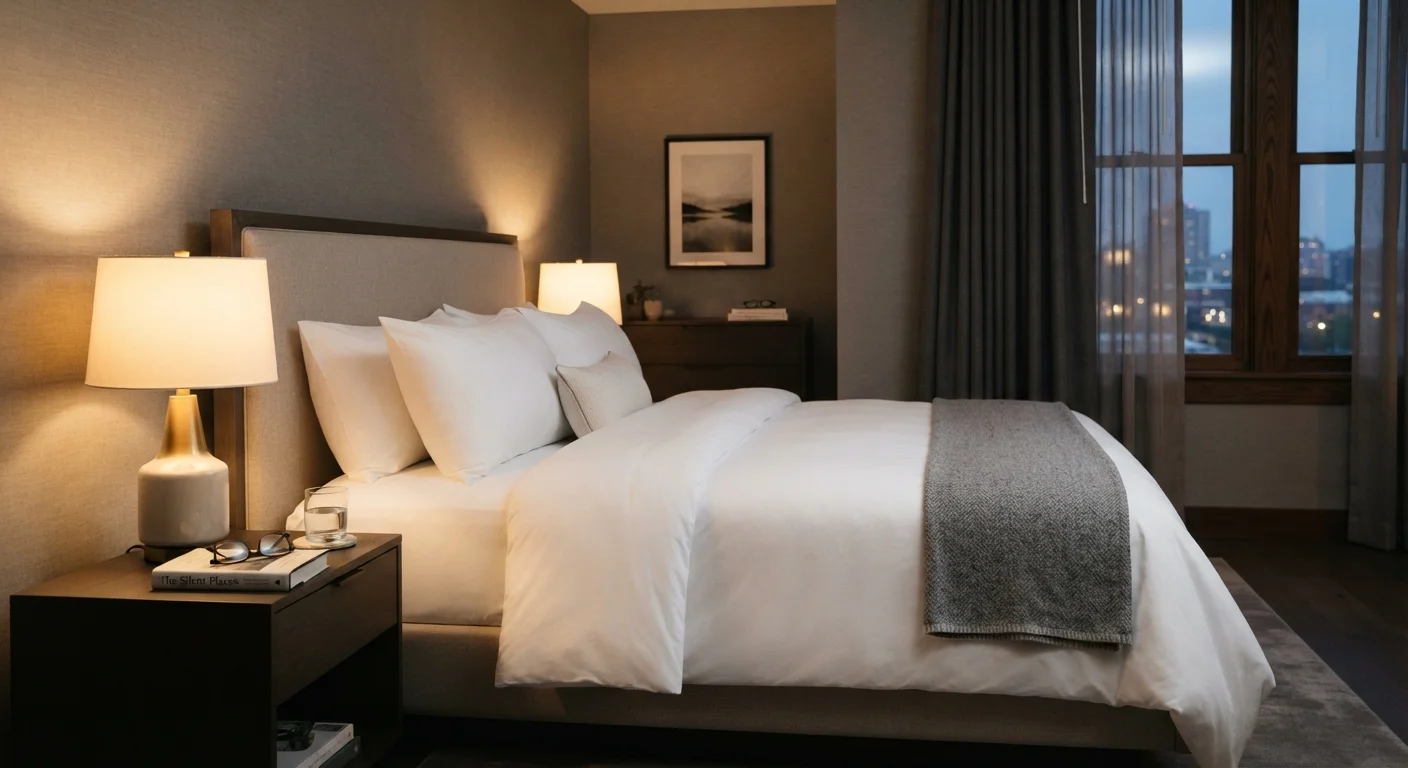
Many hotels advertise blackout curtains, but the quality varies — some still let in significant light around the edges. Early risers, shift workers, and light-sensitive sleepers are particularly affected. A quick call to the hotel to confirm curtain quality takes under two minutes.
Ask about pillow options when you check in
Many mid-range and upscale hotels offer a pillow menu or have alternate pillow firmness options stored in housekeeping. Using the wrong pillow type for your sleeping position can cause neck discomfort that disrupts sleep even in an otherwise quiet room.
Choose a room away from elevators, ice machines, and vending areas
Elevator mechanical noise and the sound of doors, ice machines cycling on, and vending machines humming can all penetrate room walls — especially during light sleep phases. Rooms at the end of a corridor typically offer the most separation from these sources.
Verify in-room temperature control before accepting the room
Some hotel rooms — particularly in older properties or all-inclusive resorts — use centrally controlled HVAC systems that guests cannot adjust individually. Finding this out after you've unpacked is frustrating. Knowing in advance lets you pack accordingly or choose a different property.
How to Make These Requests Effectively
The Best Time to Make Room Requests
Requests made at the time of booking — either online via the special requests field or by phone — give the hotel the most time to accommodate you. Calling 24–48 hours before arrival to confirm is also effective. Waiting until you're standing at check-in with a line behind you is the least effective approach, though staff will still try to help when possible.
The most effective time to make room preference requests is at booking — either by noting them in a special requests field or by calling the hotel directly. Requests made early give the hotel more flexibility to accommodate you before room assignments are finalized.
At check-in, you can revisit preferences calmly at the front desk. Keep requests specific and polite: "I'm a light sleeper — is there a room available away from the elevator and street side?" is far easier for staff to act on than a vague ask. Staff cannot guarantee every request, but they will often do their best when a room is available. If you arrive and find your room is unsatisfactory, raising the concern calmly at the front desk is both normal and appropriate.
Also check what the listing actually says — terminology like "city view" or "garden view" can signal noise levels. Our guide to reading accommodation listings without being misled explains how to decode this language before you commit.
Building a Consistent Sleep Habit on the Road
Even the best room won't fully compensate for jet lag or an irregular schedule. Combining smart room choices with consistent sleep habits makes a real difference. Try to keep a regular bedtime, limit screen time before bed, and use the room's thermostat to maintain a cool, comfortable temperature — most sleep researchers suggest somewhere between 65°F and 68°F (18°C–20°C) as a general comfortable range for sleep, though individual preferences vary.
Packing a few personal items can also help: a sleep mask covers gaps in blackout curtains, and foam earplugs handle noise that room selection alone can't eliminate. These small additions are especially useful when you've already struggled to sleep on the flight and arrive running low on rest.
Over time, building these preferences into your travel routine becomes second nature. For more habits that smooth out common lodging friction, see accommodation habits that make every trip smoother.
74%
Travelers who say sleep quality affects trip satisfaction
A survey by the American Hotel & Lodging Association found that sleep quality consistently ranks among the top factors guests cite when rating their overall stay.
65–68°F
Commonly cited optimal sleep temperature range
Sleep researchers generally cite a cool room environment as supportive of deeper sleep, though individual comfort varies; this range is widely referenced in sleep science literature.