The Gap Between the Map and Reality
You pull up a map, type in your hotel, and see a reassuring "22 minutes" to your destination. That number feels reliable - but it leaves out almost everything that happens between your seat on the plane and the moment you climb into a vehicle.
Airport transfers involve a chain of steps that maps simply don't measure: deplaning and walking through the terminal, clearing immigration if you've arrived internationally, waiting at baggage claim, navigating to the correct pickup zone, and then the actual drive - all subject to congestion your mapping app may not fully anticipate.
Understanding why this gap exists is the first step to planning a transfer that doesn't leave you rushing or stressed. See our comparison of common airport transfer options for a breakdown of how each method performs under these conditions.
20-45 min
Average baggage claim wait on international flights
Industry estimates from airport operations research suggest wide-body international arrivals regularly see baggage delivery times of 20-45 minutes after landing.
2×-3×
Rush-hour traffic multiplier at major urban airports
Road journey times at congested city airports during peak commuter hours can be two to three times longer than the same route at midday.
10-20 min
Extra walking time to remote pickup zones
Many large airports now route app-based rideshares and private transfers to dedicated zones requiring additional walking beyond the arrivals hall.
Inside the Terminal: Time You Can't Control
Once a plane lands, it typically takes 10-20 minutes to taxi, reach the gate, and open doors. From there, deplaning in a full aircraft is a process - not an instant. Walking through a large terminal to baggage claim can add another 10-15 minutes, especially in hub airports with long concourses or inter-terminal connections.
Baggage claim is often the single biggest hidden delay. Checked bags may take 20-45 minutes to appear on the carousel after a wide-body international flight. If your bag is misrouted or delayed, that window extends further.
Track Your Bag Before You Land
Many airlines offer real-time baggage tracking through their apps. Checking your bag's status as you taxi to the gate gives you a realistic sense of whether it'll be waiting quickly or delayed. If you see a flag, you can alert your driver or transfer service before they start charging waiting time.
For international arrivals, add passport control and customs to that total. Even at moderately busy airports, this can mean 30-60 additional minutes before you reach the arrivals hall - and that's before you've taken a single step toward your vehicle.
Traffic, Timing, and the Road Itself
Once you're in a vehicle, road conditions take over. Many major airports sit on arterial roads that feed directly into city rush-hour corridors. A 15-mile drive that takes 25 minutes at noon can stretch to 55 minutes during evening peak hours.
The day of the week matters too. Monday morning arrivals and Friday evening returns tend to coincide with the worst urban congestion. Weekend travel often has lighter road traffic but busier airports, which means longer walks and more crowded pickup zones.
Public transit can sometimes outpace road-based transfers during peak hours - a direct airport rail line bypasses surface traffic entirely. If your destination city has a dedicated airport rail link and your luggage is manageable, it's worth factoring into your planning.
Pickup Zones and Shared Services Add More Time
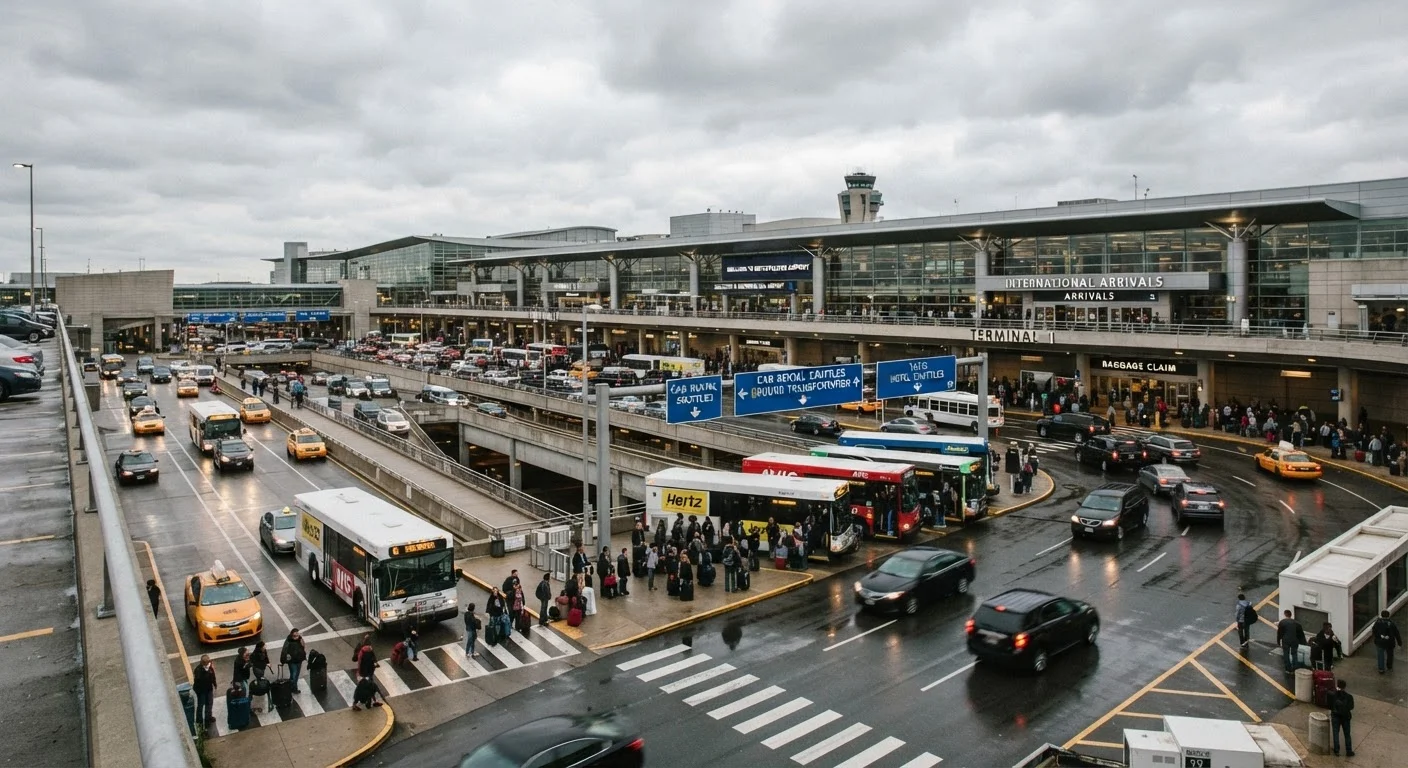
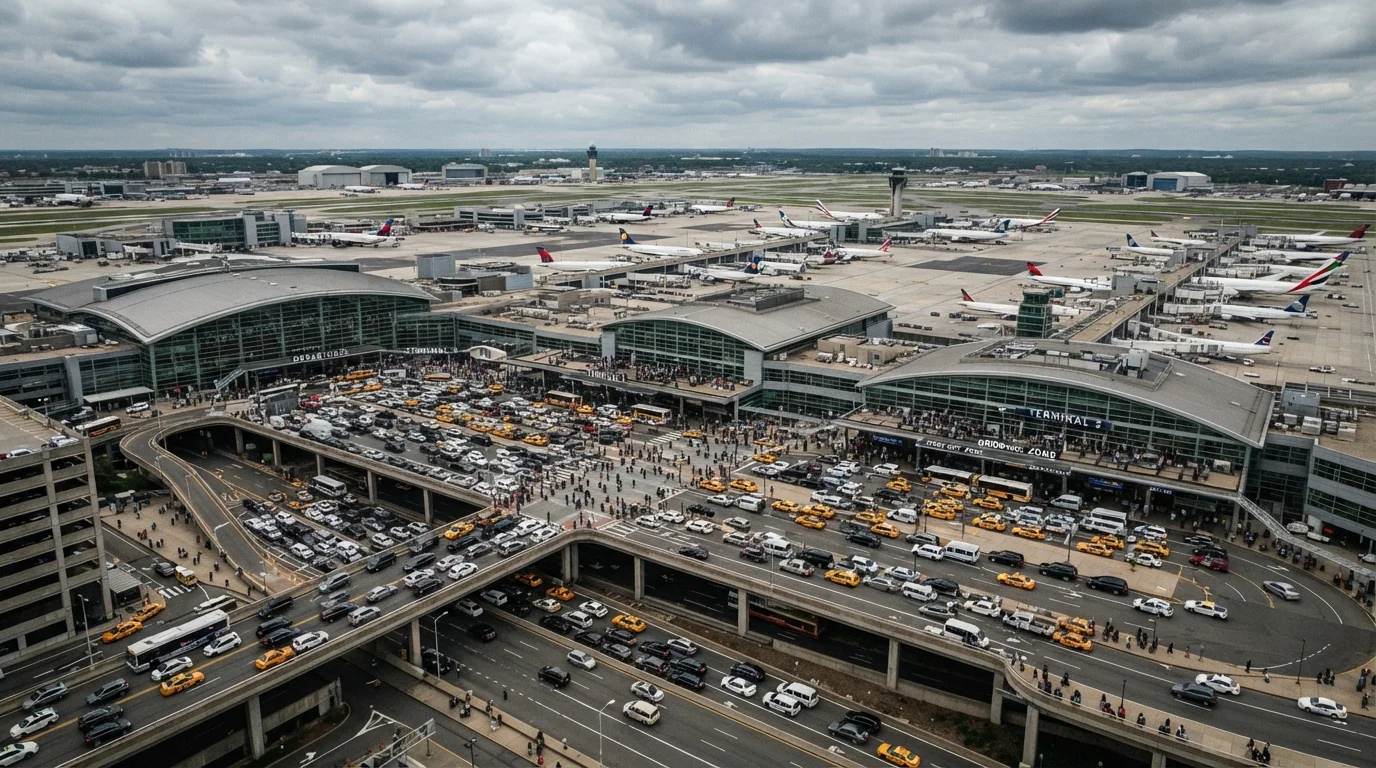
Even after you've cleared the terminal, the pickup location itself introduces delays. Modern airports have restructured ground transportation to reduce terminal-door congestion, which means rideshares, taxis, and pre-booked private transfers are often directed to designated pickup zones that require additional walking - sometimes up a level, across a sky bridge, or to a remote lot.
Shared shuttle services compound this further. They operate on a multi-stop model, collecting passengers from different terminals before beginning the outbound route. What looks like a short drive on paper becomes a longer loop through the airport before the vehicle ever leaves the property.
Knowing your specific pickup zone in advance is one of the most practical things you can do. Our airport transfer readiness checklist walks through how to confirm this before you land, so you're not searching for signs while carrying luggage.
How to Build a Realistic Transfer Buffer
A practical approach: take the map's driving estimate, then add your expected in-terminal time (roughly 45-60 minutes for a checked-bag international arrival, 20-30 minutes for a carry-on domestic arrival), then apply a traffic buffer of 25-50% depending on the time of day.
For critical onward connections - a train departure, a cruise embarkation, or a time-sensitive meeting - this buffer is not optional. Estimating realistic travel time is a habit that protects every part of your itinerary, not just the airport leg.
If you're weighing whether to pre-book your transfer or arrange one on arrival, the real trade-offs between pre-booked and on-arrival transfers are worth understanding before you decide - particularly when your schedule has little room for error.
Transfer Times Vary Widely by Airport
A regional airport with a single terminal and surface parking behaves very differently from a major international hub with multiple concourses and tiered pickup infrastructure. The time buffers in this article are general guidelines - always check your specific airport's layout and local traffic patterns before finalizing your schedule.