Why This Step Is Worth Your Time
Rental car damage disputes are one of the most common — and most avoidable — financial surprises first-time renters face. A scratch on a bumper that existed before you touched the car can turn into a charge of several hundred dollars if there's no evidence showing it was pre-existing. The good news: ten minutes of methodical documentation at pickup is all it takes to protect yourself.
If you're still getting familiar with how rental agreements, insurance, and fuel policies work, the plain-language rental car guide covers the full picture before you get to the lot. This article focuses specifically on the documentation routine you should run every single time — regardless of how short the rental or how new the car looks.
What you will need
How to Document Your Rental Car at Pickup
Follow these steps in order. Don't skip ahead because the car looks clean — surface damage is easy to miss in a busy lot, and the lighting inside rental garages is notoriously poor.
Review the Vehicle Condition Form
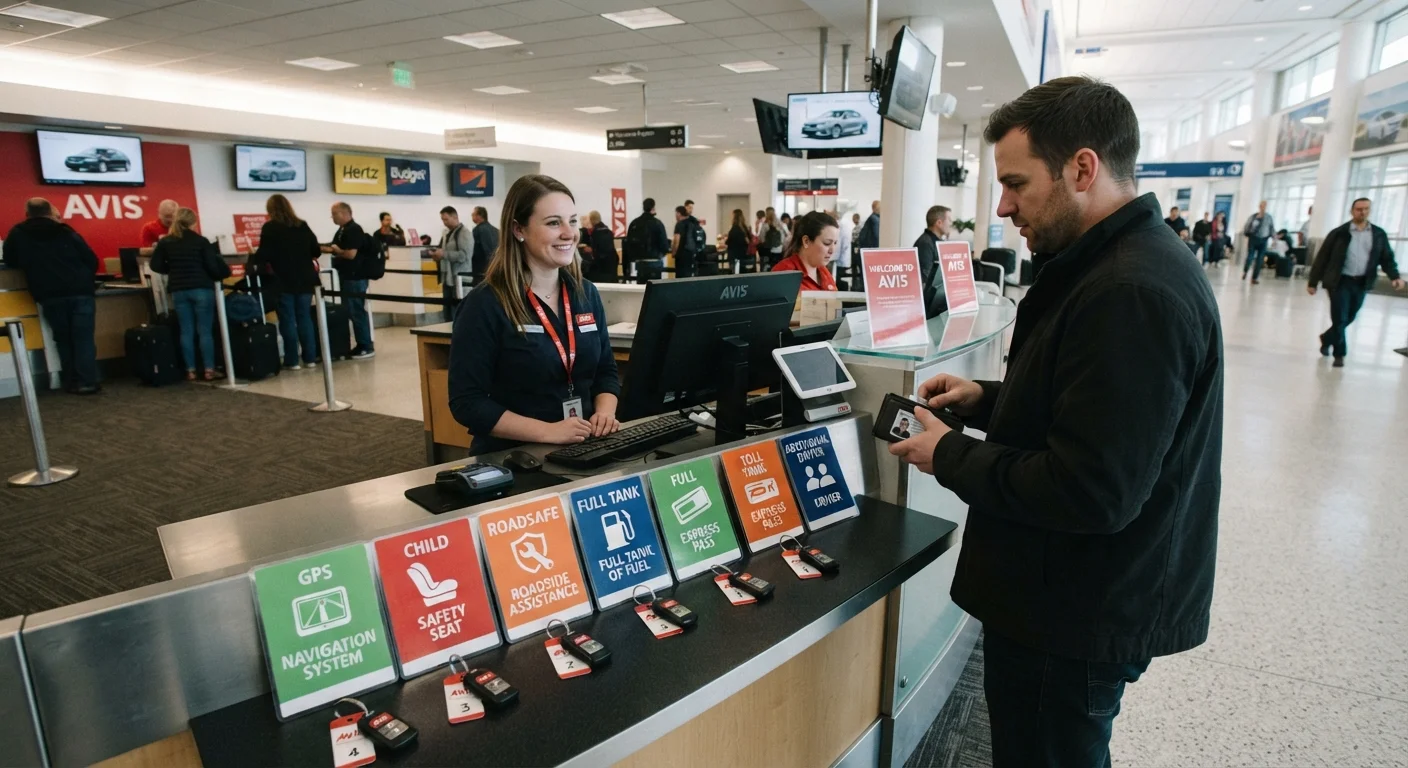
Before you leave the counter, ask for the vehicle condition form — the diagram or checklist that records existing damage. Review it carefully against the actual car once you're in the lot. Anything already marked is noted; anything missing is your responsibility to flag.
Walk Around the Entire Exterior
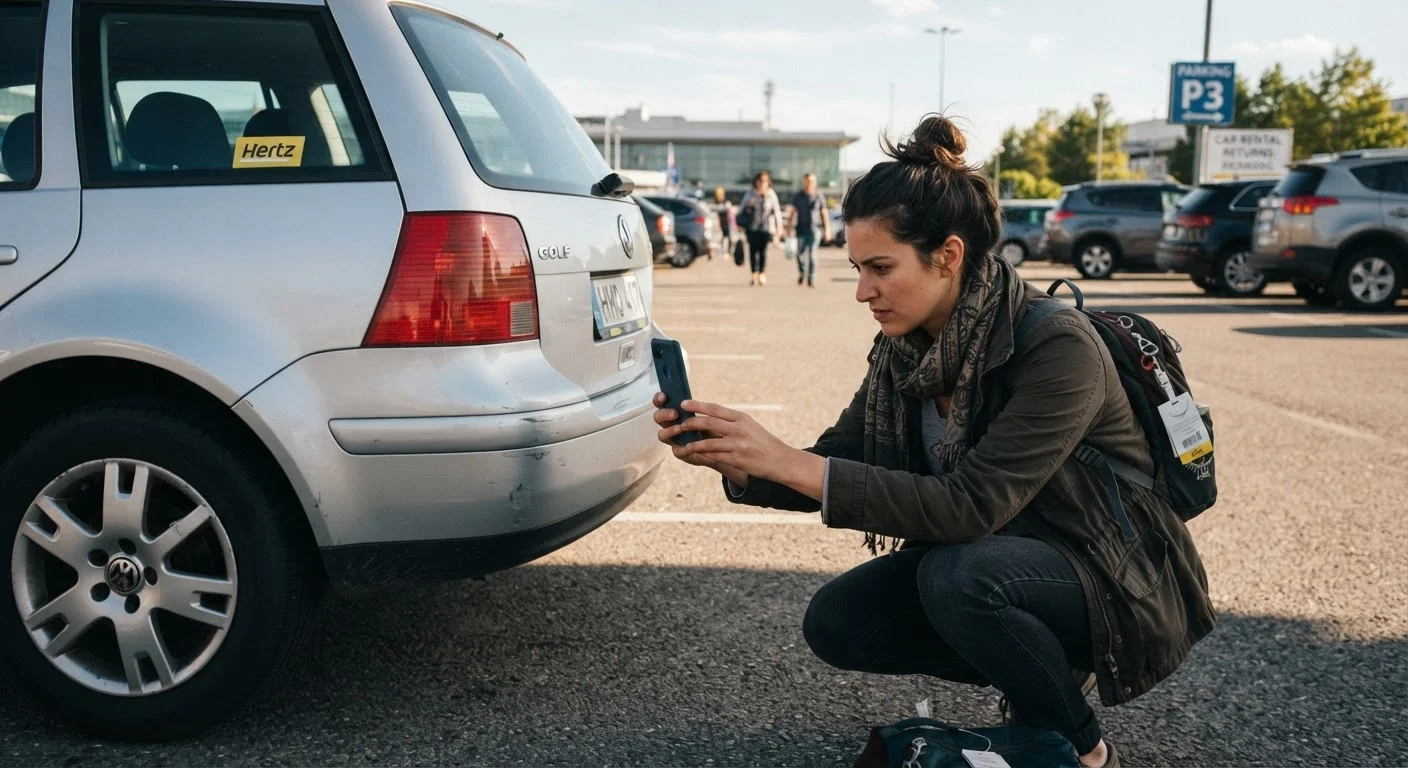
Start at the front bumper and work clockwise around the car. Look at every panel from a low angle — crouching down reveals scratches and dents that aren't visible when standing upright. Check all four corners, the roof edges, the door sills, and the wheel rims.
Photograph Every Panel and Bumper
Take overlapping photos of the front, rear, driver's side, and passenger's side. Capture each bumper corner individually. For any existing scratch or dent — even a small one — photograph it up close with something in frame for scale, such as your hand or a coin. Video is especially useful: a slow 360-degree walk-around creates a single continuous record.
Check the Interior, Glass, and Tires
Open all four doors and photograph the seats, door panels, and headliner for any stains, tears, or damage. Check the windshield and all windows for chips and cracks — glass damage is a common dispute. Photograph each tire for visible cuts or bulges, and note the tread condition.
Note the Fuel Level and Mileage
Before you pull out, photograph the fuel gauge and odometer. Your rental agreement will specify a fuel policy — most commonly a full-to-full requirement, meaning you return the car with the same amount of fuel it had when issued. A photo of the gauge at pickup eliminates any ambiguity at return.
Request an Agent Walkthrough
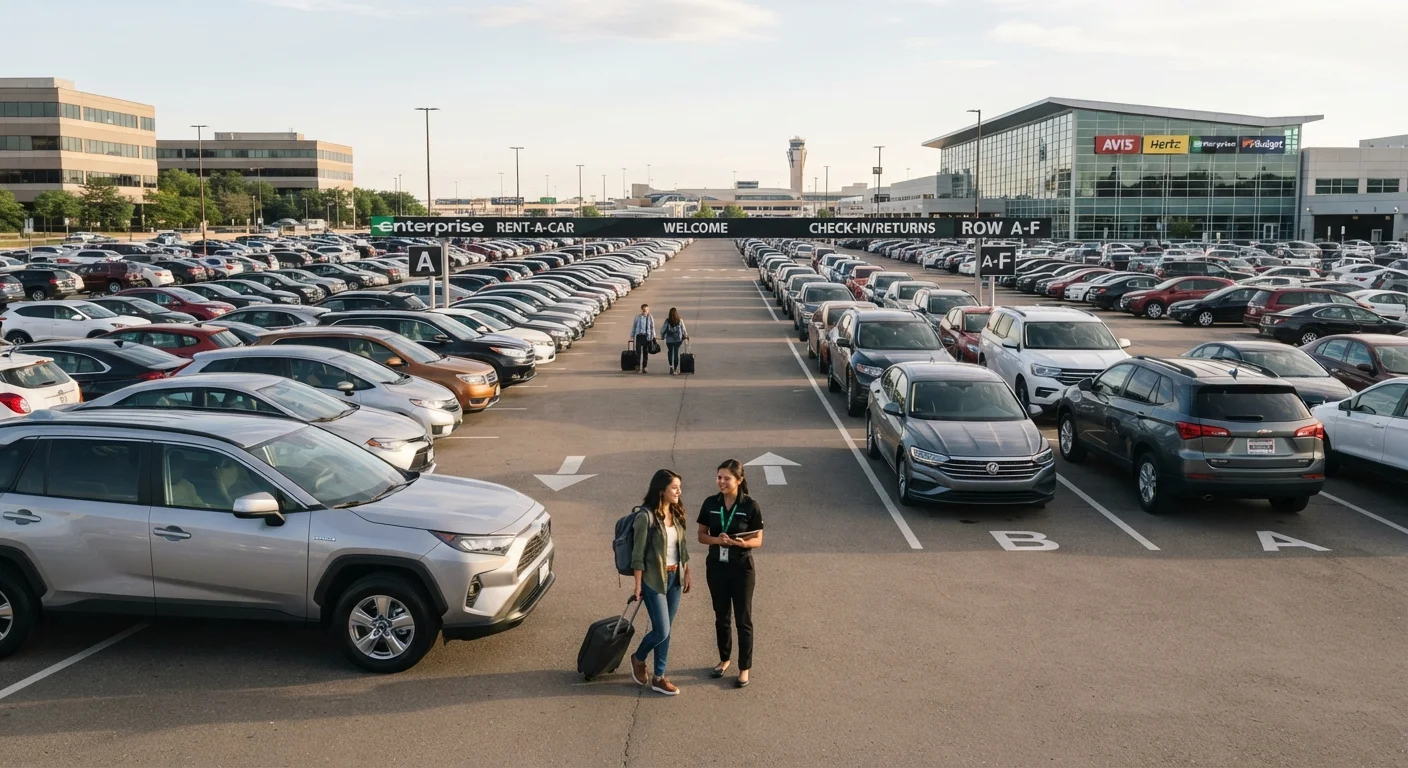
Ask a lot agent to walk the car with you before you drive away. Any damage you've identified verbally — and any that they spot — should be added to the condition form in writing. Get an updated copy with the agent's initials if possible.
Back Up Your Photos Before You Return
Upload your pickup photos to cloud storage or email them to yourself immediately after leaving the lot. If your phone is lost or damaged during the trip, you'll still have access to the documentation you need. A few seconds of backup now prevents a significant headache later.
What to Do If You Find Undocumented Damage
If you spot damage not already marked on the vehicle condition form, stop before moving the car. Go back to the counter or flag down an agent in the lot. Ask them to note the damage in writing on your rental agreement, and request a copy of the updated form before you leave. If an agent is unavailable — for example, during an after-hours pickup — photograph the unmarked damage extensively and email the rental company immediately, creating a timestamped paper trail.
Verbal Agreements Don't Hold Up in Disputes
If an agent tells you "don't worry about that scratch" but it isn't recorded on your rental agreement, you have no written protection. Rental companies process damage claims from condition forms — not from what was said in a parking lot. Always insist on written documentation, no matter how reassuring the agent sounds.
Understanding your coverage options before pickup also matters here. The breakdown of rental car insurance types explains what a collision damage waiver actually covers and where gaps tend to appear — worth reading alongside this documentation routine.
Closing the Loop at Drop-Off
Documentation isn't only a pickup habit. Run the same routine when you return the car: photograph every panel, check the fuel gauge matches your rental terms, and request a receipt acknowledging the vehicle was returned in good condition. If an agent inspects the car while you're present, stay for the full walkthrough rather than leaving before it's complete.
For a detailed breakdown of the return process — including how after-hours drop-offs and fuel disputes typically unfold — see the guide to returning a rental car cleanly. First-timers who are also curious about what changes when renting internationally should review the rules that differ when renting abroad, since documentation expectations can vary by country.