
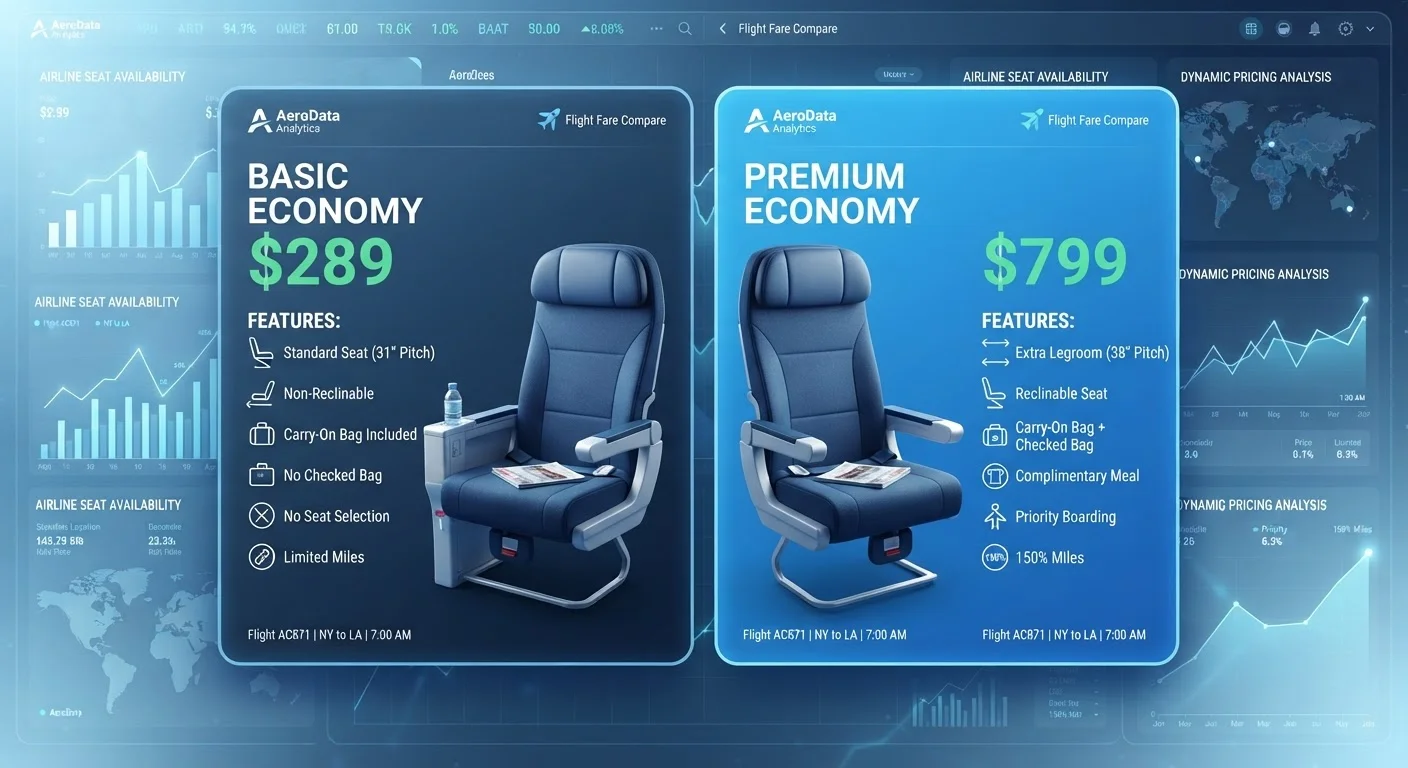
How Airlines Set Prices in Real Time
When you search for a flight, you are not seeing a fixed menu. Airlines use revenue management systems - sophisticated software that monitors how quickly seats are selling, what competitors are charging, and how many days remain before departure. Based on this data, the system automatically adjusts prices, sometimes multiple times a day.
Think of it like a venue selling concert tickets. Early buyers often access a lower price tier; once those sell out, the next tier opens at a higher rate. Airlines operate the same way, dividing each cabin into fare classes - internal codes that each represent a price point and a set of booking rules. Cheaper fare classes have limited seats, and once they fill, the next class becomes the cheapest option available, even though the seat itself is identical.
Up to 475
Fare changes per route per day
Research by airline pricing analysts has documented that major carriers can adjust fares hundreds of times daily on competitive routes, reflecting continuous algorithmic responses to booking activity.
~3-6 weeks
Common advance booking window for domestic fares
Industry analysts generally observe that domestic U.S. fares tend to be more accessible in the three-to-six-week window before departure, though this varies significantly by route and season.
The Key Factors That Drive Price Differences
Several overlapping variables determine which fare class is available to you at any given moment:
- How far in advance you book: Lower fare classes are often available earlier. As a departure date approaches and seats fill, the remaining inventory tends to be in higher-priced tiers.
- Travel dates and season: Flights around major holidays or during peak summer travel typically have higher base demand, meaning cheap fare classes sell out faster.
- Day of week and time of departure: Business-heavy routes often show higher prices on Monday mornings and Friday evenings, when demand from corporate travelers spikes.
- Route competition: On routes served by multiple airlines, pricing pressure can keep fares lower. On routes with limited competition, airlines have less incentive to discount.
- How you're booking: The same flight can appear at slightly different prices on the airline's own site versus an online travel agency, due to negotiated fares or varying service fees.
These factors interact constantly, which is why a price you saw this morning may be gone by tonight. For a fuller picture of what affects your total outlay, see our guide on hidden costs that inflate a flight's real price.
Use Flexible Date Search Tools
Most airline websites and flight search tools offer a calendar or grid view showing fares across a range of dates. Spending a few minutes scanning nearby dates - even shifting by a day or two - can reveal significantly lower fare classes that haven't yet sold out. This is one of the most practical ways to use dynamic pricing in your favor rather than against you.
What This Means for First-Time Bookers
Understanding dynamic pricing won't eliminate uncertainty, but it changes how you approach booking. A few practical principles help:
- Check prices across a range of dates when your schedule has any flexibility. Even shifting a departure by one or two days can move you into a lower demand period.
- Don't assume a price will still be there tomorrow. If the fare fits your budget and travel needs, waiting rarely guarantees a better outcome - especially on popular routes.
- Compare the airline's own site with at least one other channel. Prices can differ, and direct booking sometimes comes with added flexibility on changes or cancellations.
- Watch for fees beyond the base fare. A lower headline price can quickly climb once seat selection, baggage, and payment surcharges are added. This connects directly to understanding fixed versus variable travel costs when budgeting your trip.
“Revenue management is fundamentally about selling the right seat to the right customer at the right time for the right price. The complexity is in defining 'right' across thousands of flights simultaneously.”
— Airline Revenue Management: An Overview, Widely cited framing in aviation economics and operations research literature
Pricing in air travel is complex, but it is not random. Once you understand what drives it, you can make booking decisions that feel less like guessing and more like informed choices. For a broader look at how pricing surprises appear across travel categories, common booking myths that cost travelers money is worth reading before your next trip.