
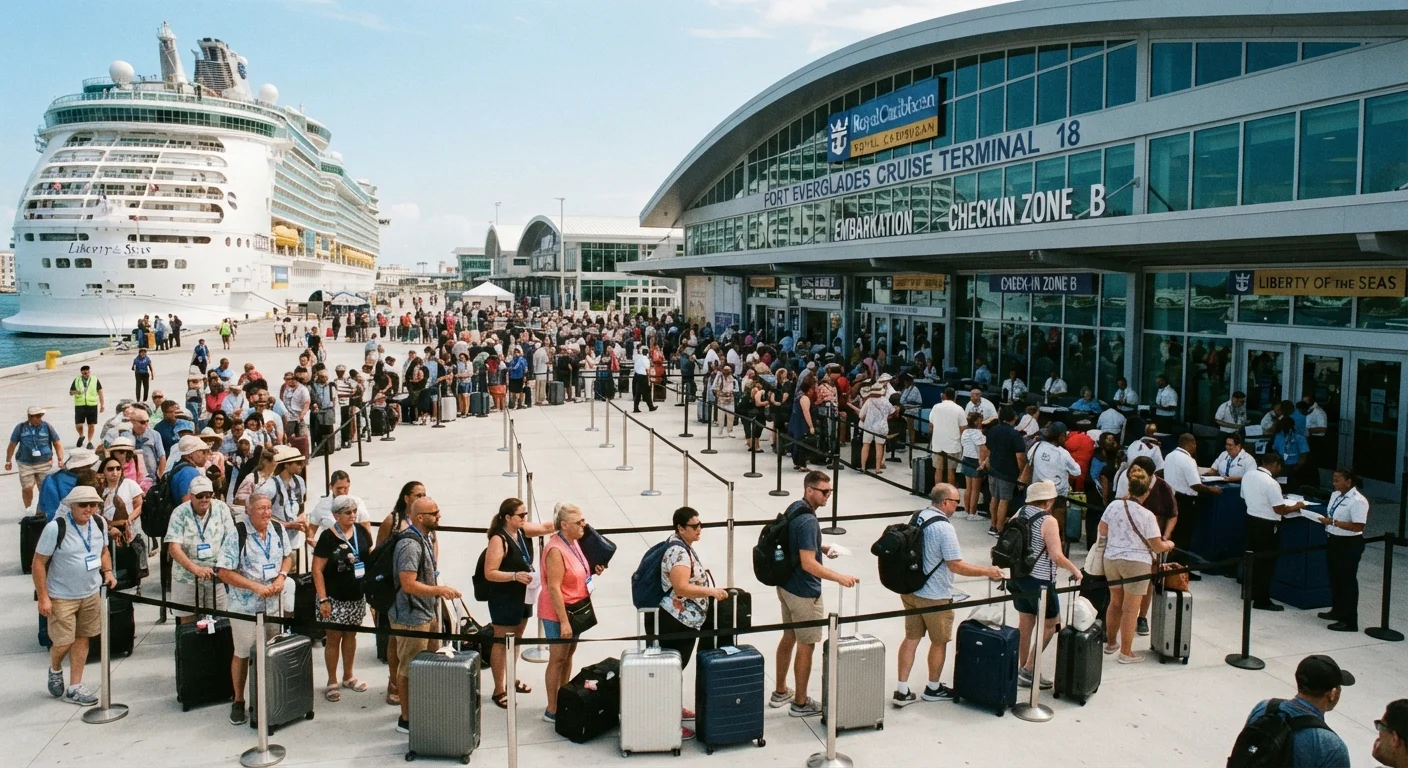
Why Embarkation Day Trips Up So Many First-Timers
Embarkation day - the first day of your cruise, when you board the ship - sets the pace for everything that follows. Get it right and you step aboard relaxed, oriented, and ready to enjoy yourself. Get it wrong and you spend your first afternoon stressed, separated from your luggage, or standing in avoidable queues.
The challenge is that embarkation doesn't work like any travel experience most first-timers have had before. It's not quite like checking into a hotel, and it's not quite like boarding a flight. It has its own logic, its own timeline, and its own common pitfalls. Understanding those in advance is the single most effective thing you can do to start your cruise well.
For a broader orientation to the full cruise journey, the complete first-cruise walkthrough from booking to disembarkation is a useful companion to this article. Here, we focus specifically on the mistakes that cluster around that very first day.
Your Travel Documents Must Be Accessible
Passports, boarding passes, and any required health or vaccination documentation should never go into checked luggage. If your bags are delayed reaching your cabin - which is normal and can take several hours - you'll need these documents in hand at security and check-in. Keep them in a dedicated folder in your day bag.
The Most Common Embarkation Day Mistakes - and How to Fix Them
The errors below follow a predictable pattern: they almost always stem from assumptions carried over from other types of travel. Recognizing that a cruise terminal operates differently is half the battle.
Ignoring your assigned boarding time and showing up whenever it feels convenient.
Why it happens: First-timers often assume the terminal operates like an airport where you arrive as early as possible. Cruise lines assign staggered boarding windows specifically to control crowd flow.
Packing medications, a change of clothes, and valuables into checked luggage instead of a carry-on bag.
Why it happens: It feels natural to pack everything in one large suitcase, especially if you're accustomed to hotel check-ins where your bag arrives quickly.
Skipping the online check-in process before departure day.
Why it happens: The pre-cruise portal can feel tedious, and many passengers put it off assuming it can be handled at the terminal.
Not setting up an onboard spending account before or during check-in.
Why it happens: New cruisers don't always realize that nearly all onboard purchases - drinks, spa services, specialty dining - are charged to a shipboard account, not paid with cash at each transaction.
Spending the entire embarkation afternoon confined to the cabin or waiting in the buffet line.
Why it happens: Without a plan, passengers default to the most obvious spaces - their room or the main buffet - which are also the most crowded immediately after boarding.
Don't Assume Your Cabin Is Ready Immediately
Staterooms are typically not available until early-to-mid afternoon on embarkation day, even if you board in the morning. Many first-timers head straight to their cabin, find it unready, and feel stranded. Plan to enjoy lunch, explore the ship, and visit the pool deck while you wait for the all-clear announcement.
Beyond these individual mistakes, the underlying theme is preparation. The more you complete before arriving at the terminal - documents organized, online check-in finished, day bag packed sensibly - the smoother embarkation becomes. Once you're aboard, resist the pull of the cabin and the buffet, and use those first hours to get genuinely familiar with the ship. That early investment pays dividends every day of the sailing. For what to expect once you're underway, explore the Onboard Life hub for guidance on daily ship routines.
2-4 hrs
Typical cabin luggage delivery wait on embarkation day
Cruise lines generally advise passengers to expect luggage delivery to staterooms within two to four hours of boarding, sometimes longer on large ships.
30-90 min
Time saved by completing online check-in before arrival
Most cruise lines report significantly faster terminal processing for passengers who complete all pre-registration steps through their online portal in advance.