
Understanding the Health Challenges Specific to Cruising
A cruise combines several environments - open sea, intense sun, and all-you-can-eat dining - that don't typically appear together in everyday life. Understanding each challenge in advance is the first step toward handling it calmly if it arises.
Motion at sea is the concern most first-timers raise, and reasonably so. Modern large ships are stabilised and far steadier than older vessels, but the ocean is still moving. Rough patches are most common when crossing open water rather than sailing in sheltered channels. If you've ever felt nauseous in a car or on a plane, take that as a signal to prepare rather than a reason not to go.
Sun exposure is frequently underestimated. At sea, there's no tree cover, UV reflects off the water, and a pleasant breeze can mask how hot and bright conditions actually are. Sunburn can set in faster than most people expect.
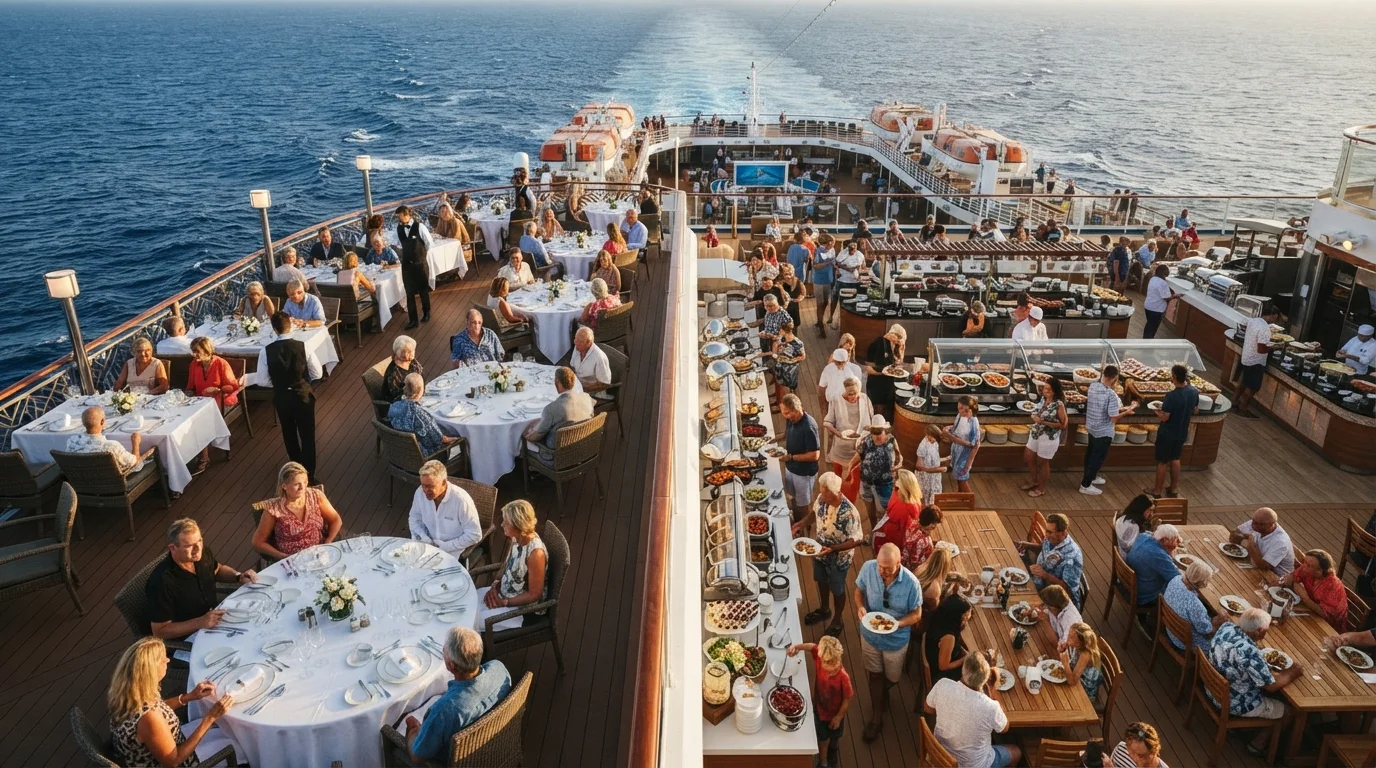
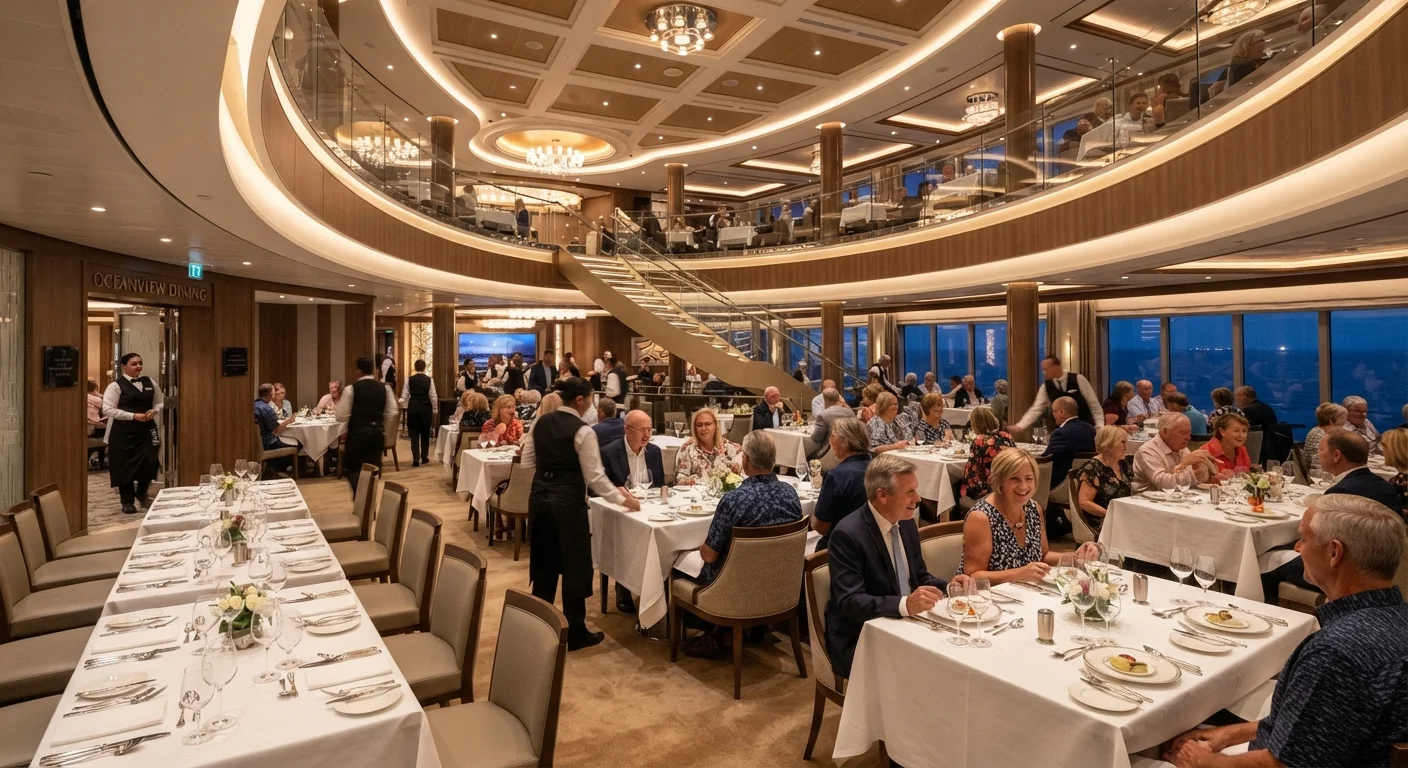
Dietary overstimulation - the buffet effect - is real but easy to manage once you recognize it. The combination of unfamiliar foods, irregular meal timing, and constant availability can disrupt digestion and energy levels if left unchecked. Our guide to onboard dining options explains how cruise ship meals are structured so you can plan ahead rather than react in the moment.
Ship Medical Facilities Are Not Free
Most cruise ships have a medical center staffed by licensed professionals, but visits and medications are billed at private rates - often significantly higher than what you would pay at home. Travel insurance with medical coverage is strongly recommended. Before sailing, verify what your plan covers at sea and keep digital copies of any prescriptions you carry.
How to Manage Motion Sickness Before and During the Cruise
Motion sickness occurs when your eyes and inner ear send conflicting signals to the brain. The good news is that most people adapt within 24-48 hours of being at sea - a process called sea legs. The goal is to stay comfortable during that adjustment window.
Choose a cabin location strategically
Cabins on lower decks and near the ship's center (midship) experience the least movement. Avoid cabins at the very front (bow) or back (stern) of the ship if motion sensitivity is a concern. Interior cabins on middle decks are a practical, often affordable choice for motion-conscious travelers.
Pack over-the-counter motion sickness remedies
Common options include antihistamine-based tablets (such as dimenhydrinate or meclizine) and acupressure wristbands. Bring whatever remedy you've used successfully before travel - ship stores stock limited supplies and charge accordingly. If you've never tried any remedy, consult a pharmacist or physician before your trip to discuss what suits your situation.
Use deck positioning and fresh air during rough patches
If you feel unwell, go to an outdoor deck and fix your gaze on the horizon - a stable visual reference helps resolve the sensory conflict causing nausea. Stay toward the middle of the ship. Fresh air and a fixed focal point are among the most consistently useful interventions at sea.
Eat light, stay hydrated, and avoid lying down immediately after meals
An empty stomach can worsen nausea, but a very full one can too. Light, bland foods - crackers, bread, plain rice - are easier to manage during rough conditions. Staying hydrated is important both for motion sickness and general wellbeing; aim for water as your primary drink. Avoid lying flat immediately after eating, which can exacerbate digestive discomfort.
Give your body time to adapt
Most people who experience motion sickness on the first day or two find it resolves as their body adjusts to ship movement. Resist the urge to stay confined to your cabin; gentle movement on deck is usually better than lying still. If symptoms are severe or persistent, visit the ship's medical center - the onboard staff are experienced with this and can discuss options.
For a deeper look at what actually works versus common myths, see our article on managing seasickness on a cruise.
Sun Safety and Staying Hydrated Onboard
Sun protection at sea follows the same principles as on land, just with higher urgency. Apply broad-spectrum SPF 30 or higher before going on deck, reapply every two hours (and immediately after swimming), and don't forget often-missed areas: the tops of feet, ears, and the back of the neck.
Seek shade during peak UV hours - typically between 10 a.m. and 2 p.m. - especially on sea days when there is no port activity to move you off the deck. A wide-brimmed hat and UV-blocking sunglasses make a meaningful practical difference.
Build in Daily Shade Breaks
Even if you feel fine, schedule deliberate shade breaks during sea days - set a timer if needed. Cumulative sun exposure builds up across a multi-day voyage in a way that a single beach afternoon does not. A 20-minute rest indoors mid-afternoon can prevent fatigue and sunburn that otherwise sidelines you for the next day's port stop.
Hydration is equally important. Air-conditioned interiors and warm deck temperatures both deplete fluids faster than a normal day at home. Water is typically available at no extra charge throughout the ship; make a habit of carrying a reusable bottle. Alcohol and caffeinated beverages are dehydrating, so balance them with water rather than treating them as hydration.
Pacing Yourself at the Buffet and Across Dining Venues
The buffet is one of cruising's great pleasures, and it doesn't need to become a health hazard. A few structural habits help enormously. Treat breakfast and lunch as normal meals rather than opportunities to sample everything available. Use smaller plates when offered, eat slowly, and check in with how you actually feel before going back for more.
Variety is worth embracing - trying regional foods at each port or exploring the ship's specialty menus is part of the experience - but introduce unfamiliar dishes gradually rather than all in one sitting. Digestive discomfort mid-voyage is avoidable with a little pacing. See our overview of how cruise dining is organised for guidance on using all available venues, not just the buffet.
If you have dietary restrictions or food allergies, notify the cruise line in advance at booking. Most ships accommodate common needs, but last-minute requests are harder to fulfill at sea. For social dynamics around shared meal spaces, cruise ship etiquette offers useful context.
This article provides general wellness information for educational purposes only and is not a substitute for professional medical advice. Consult a qualified healthcare provider before your trip, particularly if you have pre-existing health conditions or concerns about medications. Always verify health-related entry requirements and vaccination guidance with official government and public health sources before travelling.