Why Neighborhoods Matter More in San Francisco Than Almost Anywhere Else
San Francisco packs enormous variety into 49 square miles. Two neighborhoods separated by a single hill can have completely different weather, vibe, price levels, and transit access. First-time visitors who book a hotel without thinking about location often discover too late that they've chosen a base that makes their daily plans harder — not easier.
This guide cuts through the confusion. Below you'll find plain-language descriptions of San Francisco's most visitor-relevant neighborhoods, what each is genuinely known for, and the practical considerations that matter before you arrive.
| City Area | 49 square miles (City and County of San Francisco) |
| Number of Distinct Neighborhoods | Approximately 37 (officially recognized) (San Francisco Planning Department) |
| Primary Transit Systems | Muni (bus and streetcar), BART (rapid transit), cable cars (SFMTA) |
| Airport Connection | SFO to downtown via BART in roughly 30 minutes (BART system data) |
| Average Summer High Temperature (Downtown) | Around 65°F (18°C) (National Weather Service historical averages) |
| Sunniest Neighborhood Area | Mission District (eastern microclimate) (SF Microclimate data, general meteorological consensus) |
The Core Neighborhoods You Need to Know
Think of the city in rough geographic clusters. The northeastern quadrant — Fisherman's Wharf, North Beach, and Chinatown — is where most first-time itineraries begin. These neighborhoods are heavily visited, well-served by transit, and walkable between each other. Fisherman's Wharf sits on the waterfront and is the launch point for Alcatraz ferry tickets; expect crowds year-round. North Beach, just south of it, is the city's Italian-American neighborhood and home to a dense cluster of cafés and bookshops with real local character. Chinatown, one of the oldest in North America, borders North Beach to the south and offers some of the most affordable food in the city.
The Union Square and Tenderloin area sits at the center of the city. Union Square is the hotel and shopping district — convenient and central, though not especially charming. The Tenderloin, directly adjacent, has a higher concentration of social services and street-level activity that first-timers can find disorienting; it's worth understanding that boundary before choosing accommodations.
The Mission District, in the city's southeast, is the cultural heart of San Francisco's Latino community and one of the most food-dense neighborhoods in the city. It's sunnier than most of SF (a real advantage) and well connected by BART. Dolores Park is a beloved gathering spot. The nearby Castro has been an iconic LGBTQ+ neighborhood since the 1970s and remains an active, walkable community with strong local identity.
Microclimate
A localized climate pattern that differs from the surrounding area. San Francisco is famous for its neighborhood-level microclimates, where fog, temperature, and wind can vary dramatically within just a few blocks.
BART
Bay Area Rapid Transit — the regional heavy-rail system connecting San Francisco neighborhoods (especially the Mission and Civic Center) to the airport and East Bay cities like Oakland and Berkeley.
Muni
The San Francisco Municipal Railway — the city's own network of buses, streetcars, and the historic cable cars. It covers neighborhoods that BART does not reach.
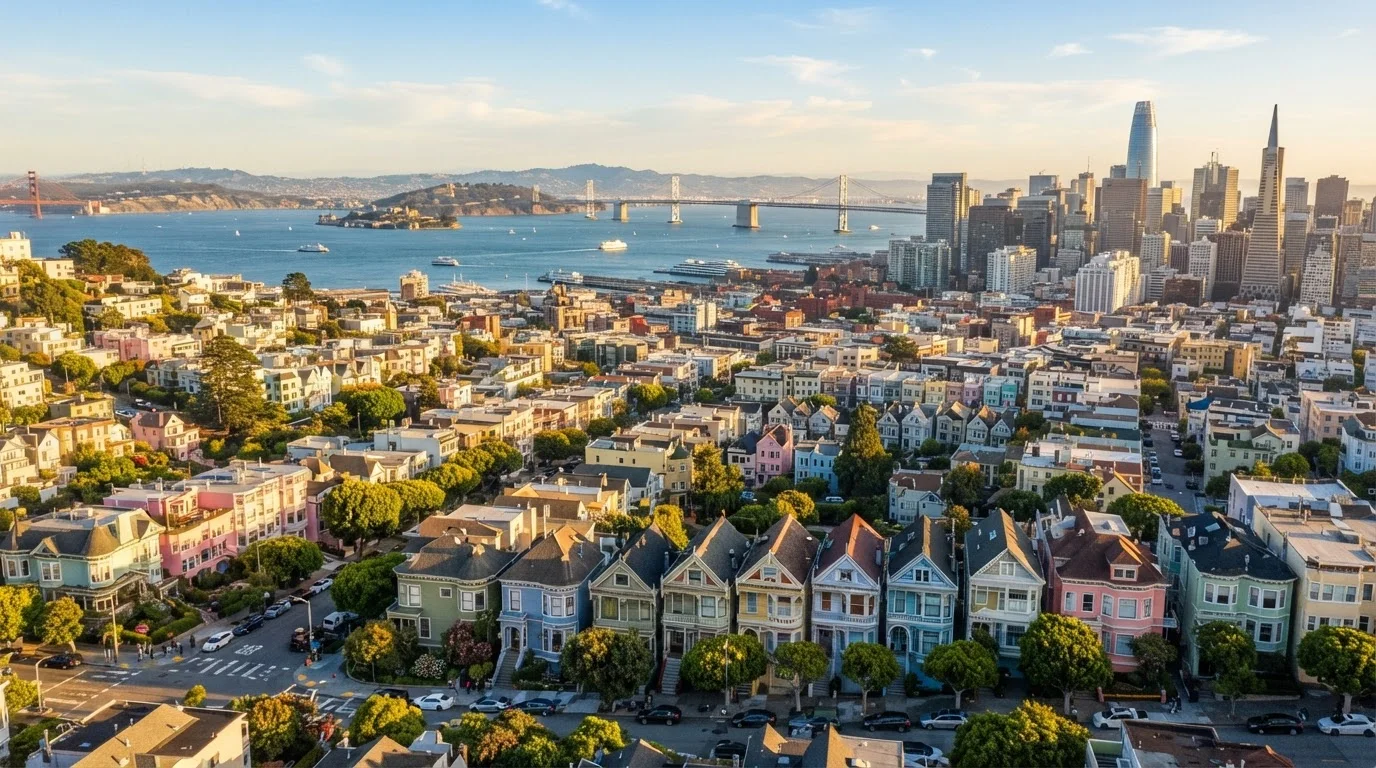
Victorian Row Houses
The iconic painted wooden houses built in the late 19th century, found throughout neighborhoods like the Haight, Castro, and Alamo Square. Many survived the 1906 earthquake and are a defining visual feature of the city.
The Haight-Ashbury neighborhood retains its counterculture history and is a good walk from Golden Gate Park, the city's expansive green corridor. The Richmond and Sunset districts flank the park on its north and south sides respectively — these are quieter, residential neighborhoods with excellent food options but fewer tourist services. The Marina, near the northern waterfront, is a younger, upscale neighborhood with beautiful bay views and easy access to the Palace of Fine Arts and Crissy Field.
Practical Considerations Before You Choose a Base
San Francisco's Famous 'Foggy Summer' Effect
Many first-time visitors are surprised to find July and August cooler and foggier than April or October. This is driven by a weather pattern locals call 'Karl the Fog' — a marine layer that rolls in from the Pacific most afternoons, especially affecting western and northern neighborhoods. Packing a light jacket is genuinely necessary year-round, regardless of the season you visit.
San Francisco's geography creates microclimates. The western neighborhoods — Sunset, Outer Richmond, and areas near Twin Peaks — are frequently fogged in and cooler, even in summer. The Mission and Dogpatch neighborhoods on the eastern side tend to be sunnier and warmer. This isn't a minor detail: it affects comfort, packing decisions, and how much time you'll want to spend outdoors.
Transit coverage varies significantly. The BART rapid transit system connects the Mission, Civic Center, and Union Square areas to the airport and East Bay. The Muni streetcar and bus network covers the rest, but some lines run infrequently. If you plan to rely entirely on public transit, neighborhoods along the N-Judah or J-Church Muni lines offer solid coverage. If you plan to rent a car, be aware that street parking is limited and expensive citywide, and several neighborhoods have permit-only zones.
Hills are a real factor. The stretch between Fisherman's Wharf and the Castro involves serious elevation. Nob Hill and Russian Hill are scenic but physically demanding on foot. Factor this into daily planning, especially if you're traveling with children, older adults, or anyone with mobility considerations.
At a Glance: Neighborhood Summaries
| Neighborhood | Best For | Transit Access | Weather Note |
|---|---|---|---|
| Fisherman's Wharf | Waterfront access, Alcatraz ferries | Good (F-line, multiple bus routes) | Foggy and windy in summer |
| North Beach | Cafés, walkable character, history | Good (multiple bus lines) | Moderate, sheltered somewhat by hills |
| Chinatown | Affordable food, cultural sights | Excellent (central location) | Moderate |
| Union Square | Hotel access, central base | Excellent (BART, Muni, cable car) | Moderate |
| Mission District | Food, murals, nightlife, BART access | Excellent (BART) | Sunniest in the city |
| Castro | LGBTQ+ history, local character | Good (F-line, J-Church) | Variable, generally mild |
| Haight-Ashbury | Counterculture history, park access | Moderate (N-Judah nearby) | Can be cool and foggy |
| Marina | Bay views, outdoor recreation | Moderate (bus lines) | Breezy, clearer than western areas |