Why 3pm Is the Standard — And Why It's Not a Hard Rule
When a hotel advertises a 3:00 p.m. check-in time, it's communicating a logistical reality, not setting a welcome mat out at exactly that moment. The gap between when guests check out (typically late morning) and when new guests check in (mid-afternoon) is when housekeeping cleans, inspects, and restocks every room. That process takes time — and the volume of rooms turning over simultaneously means some rooms will be ready earlier and others later.
Think of it as a rolling readiness window rather than a fixed unlock hour. A hotel with 200 rooms doesn't flip all of them at once. A room vacated at 8:00 a.m. by an early riser could easily be ready by noon. A room where guests checked out at 11:59 a.m. might not be ready until 3:30 p.m. or later. The posted check-in time is the hotel's commitment that most rooms will be ready by then — not a promise about any specific room.
Check-In Time vs. Arrival Time
These two terms mean different things. Your arrival time is when you physically show up at the hotel — you can arrive any time. Your check-in time is when your room is expected to be ready. Arriving early is perfectly acceptable; you simply enter a queue for room readiness rather than walking straight to your room.
What to Do When You Arrive Early
Arriving before check-in time is completely normal and hotels are prepared for it. Here's what you can typically do:
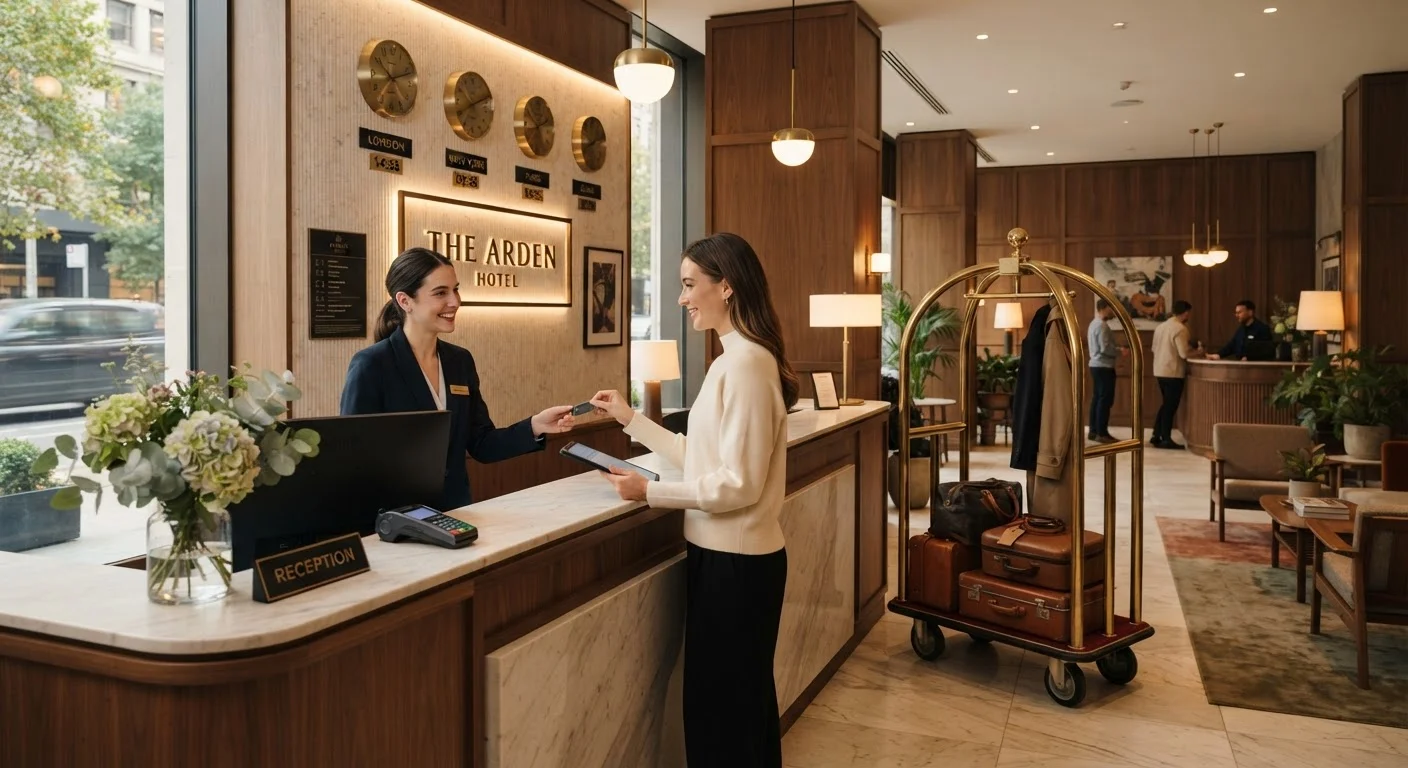
- Drop your luggage: The front desk or bell desk can hold your bags securely while you wait. You don't need to drag your suitcase around the city.
- Ask about room status: Politely ask whether your specific room type might be ready earlier. Front desk staff can check the housekeeping queue. There are no guarantees, but it costs nothing to ask.
- Provide your contact information: Give the hotel a phone number so they can text or call you the moment your room is ready. Many properties now send automated notifications.
- Use hotel amenities: Lobby seating, on-site cafes, pools, or fitness centers may be accessible before your room is assigned. Confirm with the front desk which facilities are available to you upon arrival.
Set a Text Notification and Explore
If your room isn't ready at arrival, don't wait in the lobby. Leave your number with the front desk, drop your bags with the bell desk, and go explore. Hotels in most cities are near restaurants, parks, or shops worth seeing. You'll enjoy your wait far more — and your room will be ready before you know it.
How to Improve Your Chances of an Early Room
There's no guaranteed method, but a few approaches can genuinely help:
Contact the hotel before arrival. Calling the property directly — not the central booking line — a day or two before you arrive lets staff note your request. Some hotels can pre-assign rooms and flag yours for priority cleaning.
Book through the hotel's own channels. Properties sometimes have more flexibility for guests who booked directly, as third-party reservations can create communication gaps. For a deeper look at how booking timing affects your stay, see our guide on how booking windows affect room availability.
Understand loyalty program tiers. Many hotel loyalty programs list early check-in as a perk for mid- or upper-tier members. This isn't a guarantee, but priority room assignment is a real operational benefit at properties that participate.
Consider a guaranteed early arrival option. Some hotels allow guests to pay for the night before, essentially reserving the room from the previous evening. This is worth weighing on itineraries where an early check-in is critical — such as a red-eye arrival. For a full picture of what to expect at the front desk, our article on hotel check-in procedures walks through the entire process.
3–4 hrs
Typical gap between check-out and check-in deadlines
Most hotels set check-out by 11:00 a.m. or noon and check-in at 3:00–4:00 p.m., a window designed around housekeeping capacity.
~30 min
Average time to clean a standard hotel room
Industry housekeeping benchmarks suggest a standard room takes roughly 20–45 minutes to service, with suites and heavy-use rooms taking longer.
Late Arrivals: What You Need to Know
Early arrival is one challenge; arriving very late is another. If your travel day runs long — delayed flights, traffic, or an unexpected layover — your hotel reservation could be at risk if you haven't guaranteed it with a credit card. Most hotels will hold a card-guaranteed room through the following day, but properties with limited overnight staffing may have different policies.
The safest approach is to call the hotel as soon as you know you'll be arriving late. This flags your reservation as active and gives you a chance to confirm the front desk will be staffed to receive you. If you're navigating a complex itinerary with a flight connection before your hotel stay, confirming all logistics in advance — including your accommodation — is a habit that pays off.